
In the highly competitive world of polymer processing, scrap rates are the silent killers of profitability. Far too many plant managers accept a 5% to 10% rejection rate as a “normal” cost of doing business. This mindset is fundamentally flawed. When you consistently produce parts with sink marks, color streaks, warpage, or black specks, you are not just losing raw material; you are burning machine time, labor, and energy. If your goal is to survive in the current industrial landscape, you must aggressively engineer the flaws out of your production line.
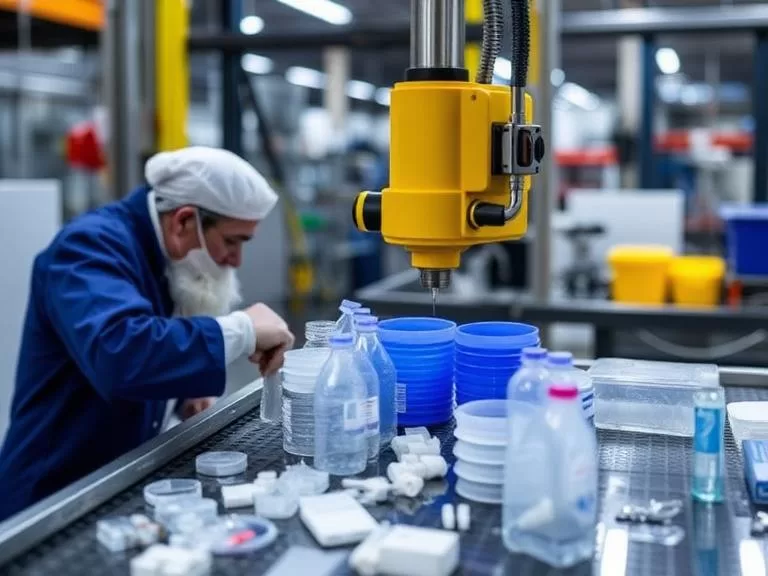
From our experience troubleshooting complex extrusion and injection molding setups across the globe, the vast majority of surface and structural defects stem from a failure to control the fundamental variables: moisture, temperature, and raw material quality. Operators frequently blame the machinery when the true culprit is poorly dispersed colorants or mismatched carrier resins. You cannot produce a flawless part using compromised chemistry. In this definitive guide, we will break down exactly how to Reduce Defects in Plastic Manufacturing, providing you with actionable, commercial-grade strategies to optimize your yield and secure your margins.
Quick Answer: How to Cut Your Scrap Rate Immediately
To immediately Reduce Defects in Plastic Manufacturing, you must attack the three primary causes of polymer failure. First, institute rigorous pre-drying protocols to eliminate moisture-induced silver streaks (splay). Second, stop purchasing low-grade colorants; partner with the best plastic masterbatch manufacturers to ensure perfect pigment dispersion and prevent color streaking. Finally, strictly match the Melt Flow Index (MFI) of your masterbatch to your virgin resin to prevent flow lines, short shots, and delamination. Proper raw material selection solves 80% of processing defects before the resin even enters the feed throat.
Table of Contents
- What is Defect Reduction in Polymer Processing?
- How Injection & Extrusion Defects Occur
- 8 Ways to Reduce Defects in Plastic Manufacturing
- Commercial Benefits of Defect Control
- Limitations and Operational Realities
- Who Needs This & Who Does Not
- Common Processing Mistakes
- Buying Considerations for Raw Materials
- Essential Comparison & Strategy Tables
- Expert Recommendation from Charming Masterbatch
- Frequently Asked Questions (FAQ)
What is Defect Reduction in Polymer Processing?
Defect reduction is a systematic engineering approach aimed at eliminating structural and aesthetic anomalies in molded or extruded plastic products. It requires isolating variables within the thermodynamics of the melt, the mechanics of the mold or die, and the chemical compatibility of the polymers involved. When we discuss how to Reduce Defects in Plastic Manufacturing, we are talking about eradicating specific, identifiable failures: flash, sink marks, weld lines, burn marks, warping, and color inconsistencies.
How Injection & Extrusion Defects Occur
Defects do not happen by accident; they are the physical manifestation of poor processing parameters. In an injection molding cycle, if the melt temperature is too high, the polymer chains degrade, resulting in burn marks and brittle parts. If the injection pressure is too low, the molten plastic solidifies before filling the mold cavity, resulting in a “short shot.”
In extrusion, visual defects like die lines and gel spots occur when undispersed pigment agglomerates or degraded polymer fragments drag along the die lip. This is incredibly common when operators try to cut costs by using inferior colorants. Understanding the chemistry of your additives—for example, knowing exactly what is PP masterbatch and how its carrier resin interacts with your base polypropylene—is the only way to prevent phase separation and peeling.
8 Ways to Reduce Defects in Plastic Manufacturing
1. Enforce Strict Moisture Control (Pre-Drying)
Moisture is the enemy of polymer processing. Hygroscopic resins (like ABS, PC, and Nylon) absorb ambient humidity. If this moisture is not removed via a desiccant dryer before processing, it turns into steam inside the heated barrel. This steam expands, creating “splay” (silver streaks) across the surface of your part and compromising its tensile strength. You must dry your materials to the exact dew point specified by the resin manufacturer.
2. Source High-Dispersion Masterbatch
Color streaking, cloudiness, and weak spots are usually the fault of poorly dispersed pigments. Cheap masterbatches contain large pigment agglomerates that refuse to melt uniformly. In most professional situations, upgrading your supplier is the fastest fix. When evaluating color masterbatch manufacturers 2025, demand extrusion data that proves their twin-screw compounding process achieves microscopic dispersion levels.
3. Match the Melt Flow Index (MFI)
A common error is mixing a base resin and a masterbatch that have drastically different Melt Flow Indices. If the masterbatch melts significantly faster or slower than the base polymer, it will not homogenize. This causes delamination (peeling layers) and severe flow lines. Always ensure the carrier resin of your masterbatch is physically and thermally compatible with your virgin material.
4. Regulate Regrind Ratios
Incorporating regrind (recycled scrap) is essential for cost control, but high percentages of regrind introduce degraded, shortened polymer chains into the melt. This causes brittleness and unpredictable shrinkage. We recommend limiting regrind to 15-20% for cosmetic parts and blending it thoroughly with virgin resin to maintain structural integrity.
5. Calibrate Barrel Temperatures and Cooling Times
If your parts are warping after ejection, your cooling time is too short or your mold temperatures are uneven. Conversely, if you are experiencing burn marks (black specks), your barrel temperature is too high or your residence time is too long, causing the polymer to carbonize. Regular thermal imaging of your molds and calibration of your heater bands is mandatory.
6. Utilize Functional Additive Masterbatches
Defects aren’t always visual; sometimes they are functional. If your film is sticking together, or your molded parts are collecting dust on the shelf, you have a functional defect. Utilizing slip agents, anti-block, or anti-static masterbatches solves these issues at the molecular level, upgrading the commercial viability of the final product.
7. Implement Preventative Mold and Screw Maintenance
Scratched molds cause surface drag. Worn non-return valves on the injection screw cause inconsistent shot sizes, leading to flash (overpacking) or short shots (underpacking). You must institute a rigid preventative maintenance schedule to tear down, clean, and inspect the screw, barrel, and mold surfaces monthly.
8. Standardize Quality Control (QC) Protocols
You cannot fix what you do not measure. In our testing, plants that implement hourly visual and dimensional checks catch processing drifts before they ruin a massive batch. Ensure your operators are trained to identify the difference between a flow mark and a weld line, as the corrective actions for each are completely different.
Commercial Benefits of Defect Control
Prioritizing ways to Reduce Defects in Plastic Manufacturing yields immediate financial returns. Dropping your scrap rate from 8% to 2% directly increases your net profit margin. It reduces the wear and tear on your granulators, lowers your energy consumption per sellable unit, and protects your brand reputation from catastrophic field failures. Furthermore, when you partner with elite plastic masterbatch suppliers worldwide, the consistency of your coloring allows you to run machines faster, increasing overall throughput.
Limitations and Operational Realities
We must use commercial and practical judgment: achieving a 0.0% defect rate is an operational impossibility. Variations in ambient humidity, power grid fluctuations, and microscopic raw material inconsistencies will occasionally cause a rejected part. The limitation of strict defect control is the upfront cost. High-dispersion masterbatch costs slightly more per kilogram. Desiccant dryers consume significant electricity. However, the cost of manufacturing a defective part, shipping it, and paying for a client return is infinitely higher than investing in proper processing protocols.
Who Needs This & Who Does Not
For commercial users and heavy-duty applications: If you are manufacturing automotive components, medical devices, pressure pipes, or agricultural films, strict defect reduction protocols are non-negotiable. A void in a pressure pipe or uneven UV distribution in an agricultural film will lead to catastrophic, litigious failures. You must source your materials from the elite tier of masterbatch companies global list to guarantee compliance.
Who does not need to overcomplicate: For beginners or low-tier manufacturers producing cheap, disposable, non-load-bearing items (like single-use basic novelty toys or low-grade trash bags), hyper-analyzing microscopic sink marks or slight color variations is a waste of engineering time. The end-user will not notice, and the market will not pay a premium for perfection in these specific categories.
Common Processing Mistakes
The most egregious mistake we see on the factory floor is attempting to fix a color issue by simply increasing the dosing percentage of a cheap masterbatch. If your black parts are looking gray or streaky, turning the doser up from 2% to 6% will not solve the poor dispersion—it will just compromise the mechanical strength of the plastic. Instead, you must understand what is carbon black masterbatch, evaluate its particle size, and source a high-concentration, well-dispersed alternative from reputable black masterbatch manufacturers 2025.
Buying Considerations for Raw Materials
When seeking to Reduce Defects in Plastic Manufacturing, your procurement strategy must shift from buying the cheapest pellet to buying the most stable pellet. Evaluate suppliers on their compounding technology. Do they use advanced twin-screw extruders? Can they provide a Certificate of Analysis (COA) for every batch? Whether you are sourcing locally from masterbatch manufacturers Gujarat, or importing from top plastic masterbatch manufacturers USA, demand to see their quality control lab capabilities before signing a contract.
Essential Comparison & Strategy Tables
| Defect Type | Primary Cause | Immediate Solution |
|---|---|---|
| Splay / Silver Streaks | Moisture trapped in the raw resin. | Ensure desiccant dryers are functioning at the correct dew point. |
| Color Streaking | Poor pigment dispersion in masterbatch. | Upgrade to a premium, high-dispersion masterbatch supplier. |
| Short Shots | Low injection pressure or low melt temp. | Increase injection speed/pressure; verify MFI compatibility. |
| Burn Marks (Black Specks) | Polymer degradation due to high heat. | Lower barrel temperatures; clean screw and non-return valve. |
| Feature | Low-End Masterbatch | Premium Masterbatch |
|---|---|---|
| Pigment Dispersion | Poor; contains large agglomerates. | Excellent; microscopic, uniform distribution. |
| Effect on Processing | Causes die buildup, screen pack clogging. | Runs clean, extends time between screen changes. |
| Dosing Requirement | High (4% – 8%) to achieve opacity. | Low (1% – 3%) due to high pigment concentration. |
| Impact on Defect Rate | Significantly increases cosmetic rejects. | Stabilizes color consistency and mechanical strength. |
| The Pros (Advantages) | The Cons (Challenges) |
|---|---|
| Drastically reduces scrap and wasted raw material costs. | Requires initial capital investment in better drying/dosing equipment. |
| Enhances brand reputation by delivering flawless end products. | Demands higher upfront costs for premium raw materials. |
| Increases machine uptime by reducing die/mold cleaning frequency. | Necessitates rigorous operator training and slower startup protocols. |
Expert Recommendation from Charming Masterbatch
In most professional situations, attempting to dial in your machine parameters to compensate for terrible raw materials is a losing battle. You cannot out-engineer bad chemistry. If you are serious about wanting to Reduce Defects in Plastic Manufacturing, you must start with a flawless base.
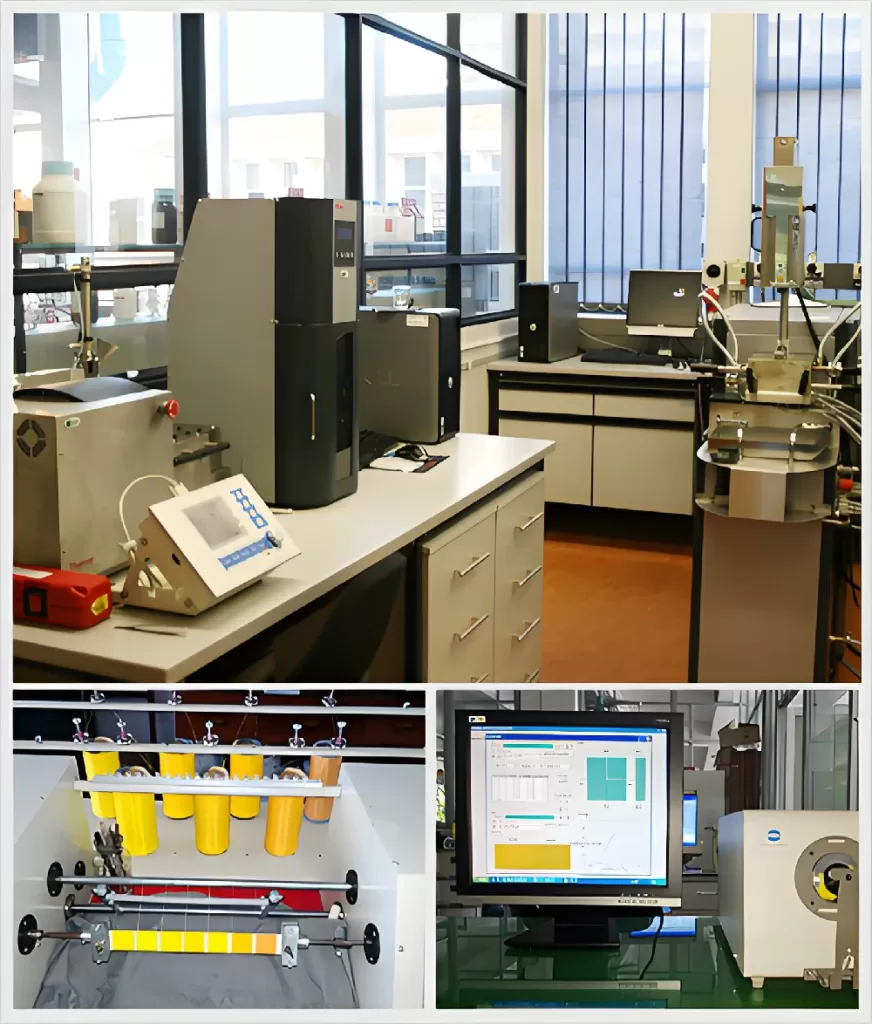
We recommend establishing a partnership with a manufacturer that prioritizes dispersion science. With advanced twin screw machines from Germany and decades of experience in Masterbatch processing and pigment dispersion technology, Charming provides stable high quality color Masterbatch and creative functional Masterbatch solutions for our customers.
You do not have to settle for localized mediocrity. Charming Masterbatch is well known in China market, and exports to Europe, South America, Southeast Asia, Middle East, North Africa etc about 18 countries and markets worldwide. Whether you are comparing plastic masterbatch manufacturers India or global conglomerates, the proof is in the processing stability.
Not only products, Charming provides complete technical support service and individual development cooperation, which can help our customers solve practical problems and develop new projects with creative solutions. Upgrade your masterbatch, and watch your scrap rates plummet.
Frequently Asked Questions (FAQ)
Authoritative Industry References
To further refine your quality control processes, we advise consulting the following industry standards and organizations:
- International Organization for Standardization (ISO) – For rigorous guidelines on quality management systems (ISO 9001) and specific plastics testing protocols.
- Plastics Industry Association – For comprehensive resources on advanced polymer processing, machinery standards, and industry best practices.
- Society of Plastics Engineers (SPE) – The leading technical society providing peer-reviewed research on polymer thermodynamics, additive manufacturing, and defect troubleshooting.