
In the highly competitive landscape of global plastics manufacturing, achieving the absolute perfect balance between material cost savings, weight reduction, and structural integrity is the ultimate goal. Historically, manufacturers relied on raw chemical powders to achieve foam structures. Today, doing so is an operational liability. For commercial users producing high-end footwear, automotive interiors, or heavy-duty packaging, utilizing raw powder foaming agents is a chaotic, inconsistent, and often hazardous approach. The modern industry standard has shifted decisively toward encapsulated masterbatch solutions.
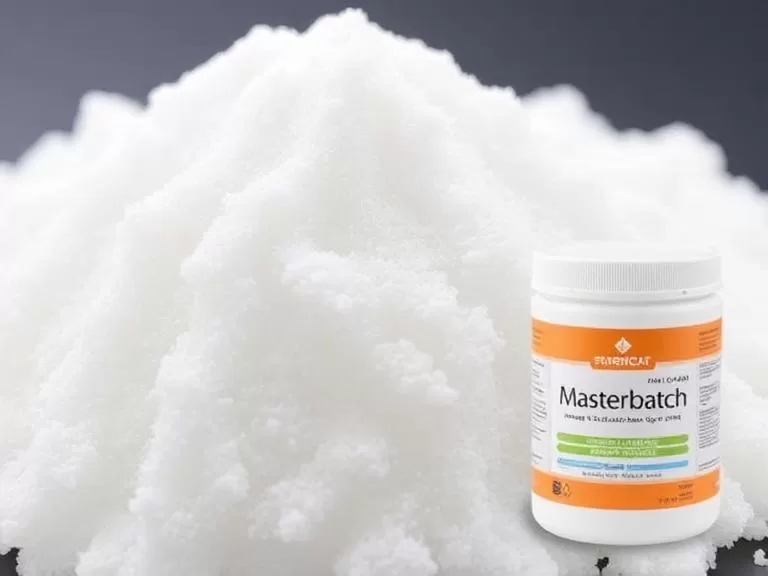
If you are struggling with poor cellular structure, inconsistent product expansion rates, or excessive chemical dust in your facility, understanding the precise mechanics of EVA foaming agent masterbatch is critical to optimizing your production line. In this comprehensive guide, we strip away the technical marketing jargon and deliver an expert, highly opinionated analysis of this vital polymer additive. We will explain not only what it is, but whether it is actually worth buying and upgrading your entire extrusion or injection molding process to accommodate it.
Quick Answer: What is EVA Foaming Agent Masterbatch?
An EVA foaming agent masterbatch is a concentrated, pelletized additive consisting of a highly reactive chemical blowing agent (such as Azodicarbonamide) uniformly dispersed within an Ethylene Vinyl Acetate (EVA) polymer carrier. When exposed to specific processing temperatures in an extruder or mold, the active chemical decomposes to release massive volumes of gas. This creates a microscopic, uniform cellular foam structure within the base plastic. We recommend this masterbatch as a mandatory upgrade for any manufacturer seeking to safely reduce part weight, lower material costs, and drastically improve shock absorption without dealing with toxic airborne powders.
Table of Contents
- 1. What is EVA Foaming Agent Masterbatch?
- 2. How Does It Work? The Science of Chemical Foaming
- 3. Benefits: Why Upgrade from Powders?
- 4. Limitations and Common Mistakes
- 5. Who Should Use It (And Who Does Not Need It)
- 6. Comparison Table: Masterbatch vs. Raw Powder
- 7. Pros and Cons Analysis
- 8. Buying Considerations and Expert Guide
- 9. Expert Recommendation: Why Choose Charming Masterbatch
- 10. The Bottom Line
- 11. Frequently Asked Questions (FAQs)
What is EVA Foaming Agent Masterbatch?
At its core, an EVA foaming agent masterbatch, frequently referred to as a blowing agent concentrate, is an advanced chemical delivery system. It takes highly reactive, volatile chemical blowing agents and safely encapsulates them within a low-melting-point EVA polymer matrix. From our experience, handling the raw chemical powders traditionally used for foaming is a logistical nightmare. They clump together, they disperse unevenly throughout the polymer melt, and they pose severe respiratory and combustible hazards on the factory floor.
By compounding these active ingredients—which can constitute anywhere from 20% to 50% of the masterbatch by total weight—into an EVA carrier resin, manufacturers create a stable, safe, pelletized additive. The EVA carrier is purposefully chosen for its exceptional compatibility with a vast spectrum of polyolefins, including Polyethylene (PE) and Polypropylene (PP). In fact, if you are currently investigating what is PP masterbatch or what is PVC masterbatch, you will frequently note that EVA is utilized as a universal carrier precisely because of its excellent low-temperature flexibility and rapid dispersion rates.
How Does It Work? The Science of Chemical Foaming
The mechanism of an EVA foaming agent masterbatch relies entirely on precise thermal decomposition. When the masterbatch pellets are fed into your extruder or injection molding machine alongside your base resin, the immense heat from the barrel and the extreme shear force of the screw begin to melt the EVA carrier. As the internal temperature crosses the critical decomposition threshold of the active blowing agent (typically between 150 degrees Celsius and 210 degrees Celsius, depending on the specific formulation and presence of chemical kickers), an irreversible reaction occurs.
This reaction is usually exothermic, meaning it rapidly releases heat alongside massive volumes of nitrogen or carbon dioxide gas. Under the immense pressure of the machine barrel, this gas is forced to dissolve completely into the polymer melt. The exact moment the melt exits the extrusion die, or enters the atmospheric pressure of the mold cavity, the pressure drops instantaneously. The dissolved gas violently expands out of solution, nucleating into thousands of microscopic bubbles and forming a uniform, closed-cell or open-cell structure. In our testing, the accuracy of this expansion phase dictates the entire quality of the final product. A properly formulated masterbatch ensures these bubbles nucleate perfectly evenly, preventing the large, catastrophic voids that plague amateur manufacturing operations.
Benefits: Why Upgrade from Powders?
For commercial users, transitioning away from raw chemical powders to a high-quality EVA foaming agent masterbatch offers overwhelming, measurable operational advantages. First and foremost is profound weight reduction. By replacing solid, heavy plastic mass with microscopic pockets of gas, you can successfully reduce the final weight of your goods by up to 30%. This directly slashes your raw material costs and your downstream freight and shipping expenses. It is an immediate return on investment.
Second, upgrading drastically improves your factory’s working environment. Extruded pellets do not create hazardous, airborne chemical dust. This means your facility remains OSHA-compliant, clean, and your machine operators remain safe from respiratory distress. Third, the dispersion quality is mathematically flawless. Because the active foaming ingredient is pre-dispersed inside the EVA carrier using sophisticated twin-screw extruders, every single millimeter of your molded product receives the exact identical concentration of foaming agent. This completely eliminates the dreaded “hot spots” that cause structural snapping and product failure. For a deeper understanding of how critical carrier resins are to dispersion, our masterbatch composition guide breaks down the exact interactions between additives and base polymers.
Limitations and Common Mistakes
Despite its vast superiority over raw powders, EVA foaming agent masterbatch is not a magic bullet, and understanding its thermal limitations is vital for maintaining strict quality control. One major limitation is the incredibly strict temperature window required for processing. If your barrel temperature is too low, the blowing agent will absolutely not decompose, leaving hard, unreacted chemical particles embedded in your final product. If your temperature is too high, the gas will release prematurely inside the feed throat, escaping into the atmosphere and completely ruining the foam structure.
In most professional situations, the most common mistake we witness is manufacturers aggressively pushing the dosage rate too high in a desperate attempt to save money on the base resin. Adding excessive foaming agent will severely and permanently compromise the tensile strength, tear resistance, and rigidity of the plastic, leading to catastrophic mechanical failures in the field. Furthermore, neglecting the chemical interaction between the foaming agent and other colorants is a costly oversight. For instance, if you are asking what is carbon black masterbatch, you must know that high loadings of carbon black pigment can actually absorb the thermal energy required for the foaming agent to decompose, thereby necessitating a higher processing temperature profile.
Who Should Use It (And Who Does Not Need It)
We emphatically recommend this product for manufacturers entrenched in the footwear industry producing shoe midsoles, outsoles, and premium sandals, where superior cushioning and ultra-lightweight properties are strictly non-negotiable. It is equally essential for companies extruding industrial weather stripping, automotive door seals, yoga mats, and shock-absorbing protective packaging foams. Wire and cable manufacturers also frequently rely on it to create foamed dielectric insulation. If you are currently evaluating plastic masterbatch manufacturers USA or vetting plastic masterbatch manufacturers India, you will rapidly discover that foaming agents represent their highest-volume functional additive for these specific sectors.
Conversely, who does not need it? You absolutely do not need this product if you are manufacturing rigid, high-density structural components where maximum tensile strength and load-bearing capacity are required. Automotive engine brackets, pressurized water pipes, and heavy-duty storage pallets cannot mathematically tolerate the cellular voids created by any foaming agent. Furthermore, if your product requires perfect optical transparency, foaming agents will render the plastic completely opaque and cloudy. If you merely want to alter the aesthetic appearance of a product without foaming it, you are vastly better off consulting the top color masterbatch manufacturers 2025 and accurately matching your hues against a verified plastic color chart with codes.
Quick Summary Table: Masterbatch vs. Raw Powder Foaming Agents
| Feature / Metric | EVA Foaming Agent Masterbatch | Raw Chemical Powder (AC / OBSH) |
|---|---|---|
| Dispersion Quality | Excellent (Uniform, pre-dispersed) | Poor (Prone to severe clumping) |
| Workplace Safety | High (Dust-free pellets) | Low (Toxic, combustible airborne dust) |
| Dosing Accuracy | Precise (Easily metered by volumetric feeders) | Inconsistent (Sticks to hopper walls) |
| Upfront Cost | Moderate to High | Low |
| Final Product Reject Rate | Very Low | High (Due to surface defects and voids) |
Pros and Cons of EVA Foaming Agent Masterbatch
| The Pros | The Cons |
|---|---|
| Reduces total part weight and slashes raw resin costs. | Requires strict temperature control across machine zones. |
| Improves thermal and acoustic insulation properties. | Reduces the overall tensile and compressive strength of the plastic. |
| Eliminates hazardous dust, ensuring factory safety compliance. | The EVA carrier is incompatible with ultra-high-heat engineering resins. |
| Provides superior shock absorption for impact applications. | Improper venting can cause dangerous back-pressure in extruders. |
Buying Considerations and Expert Guide
When you are preparing to purchase an EVA foaming agent masterbatch, making a decision based solely on the cheapest price per kilogram is a guaranteed route to production failure. For heavy-duty applications, you must rigorously evaluate the specific chemical metrics of the batch. You need to verify the gas yield (typically measured in milliliters per gram); a higher yield means you use less masterbatch to achieve the same foam volume. You must also demand the exact decomposition temperature from your supplier so you can match it to your extruder’s heating profile.
Furthermore, ask your supplier explicitly whether the chemical reaction is endothermic or exothermic. Endothermic agents absorb heat, cool the melt slightly, and produce much smoother surface finishes, making them the superior choice for thin films. Exothermic agents generate heat and massive gas volumes, making them perfect for thick, cross-sectional parts like shoe soles. Lastly, if you are attempting to process high-temperature engineering plastics like polyesters, the EVA carrier will degrade and burn. In those specific high-heat scenarios, you must abandon EVA and research what is PBT masterbatch to find a suitable, heat-resistant alternative.
| Specification | What to Look For | Why It Matters |
|---|---|---|
| Gas Yield (ml/g) | 130 ml/g to 220 ml/g depending on the application. | Determines the expansion ratio. High yield means greater weight reduction. |
| Decomposition Temp | Matches your base resin’s melt temperature precisely. | Prevents premature gas release in the hopper or unreacted powder in the mold. |
| Melt Flow Index (MFI) | An MFI that aligns with your specific injection or extrusion setup. | Ensures the masterbatch melts and blends seamlessly without altering your base viscosity. |
| Nucleating Agents | Presence of fine talc or silica in the formulation. | Helps control bubble size, creating a dense, fine, and uniform microcellular structure. |
Expert Recommendation: Why Choose Charming Masterbatch

When your entire production line and product integrity rely on absolute chemical consistency, gambling your capital on unverified, budget suppliers is a catastrophic risk you cannot afford to take. We unequivocally recommend partnering directly with an established, high-tech manufacturer that understands the complex thermodynamics of polymer foaming.
拥有先进的德国双螺杆设备以及数十年的母粒生产经验与颜料分散技术,彩艳一直为客户提供高品质的色母粒产品和创新的功能母粒解决方案。
彩艳母粒在国内化纤市场名声在外,广为业界熟悉,同时也出口到欧洲、美洲、中东、北非、东南亚等18个国家和地区市场。
不单是母粒,彩艳向客户提供完整的技术支持服务和开发项目合作平台,协助客户解决实际生产中遇到各种问题,同时彼此合作,共同开发新产品、新市场。
我们乐于分享经验与技术,为客户创造价值,为此我们深感自豪。
For beginners and veterans alike, Charming Masterbatch custom-formulates our EVA foaming solutions to match your exact processing machinery parameters, ensuring maximum gas yield, rapid dispersion, and an utterly flawless cellular structure every single time you start your extruders.
The Bottom Line
Upgrading your facility to utilize a high-quality EVA foaming agent masterbatch is quite simply one of the highest-ROI operational decisions a modern plastics manufacturer can make. It permanently solves the severe dispersion and handling nightmares associated with raw powder chemicals, while immediately unlocking massive material cost savings through calculated weight reduction. By paying strict, uncompromising attention to decomposition temperatures, gas yields, and carrier compatibility, you will dramatically elevate the physical quality, consistency, and profitability of your foamed plastic products.
Frequently Asked Questions (FAQs)
Is EVA foaming agent masterbatch toxic?
The masterbatch itself, in its pelletized form, is highly stable, non-toxic to handle, and eliminates the severe inhalation hazards associated with raw chemical blowing agent powders. However, during the thermal decomposition process in the machine barrel, certain blowing agents (like AC) can release ammonia and carbon monoxide gases. Proper industrial ventilation and venting zones on the extruder are absolutely mandatory.
Can I use EVA foaming masterbatch in Polypropylene (PP)?
Yes. The EVA (Ethylene Vinyl Acetate) carrier resin has excellent compatibility with most polyolefins, including PE and PP. However, because PP processes at a significantly higher temperature than standard PE or EVA, you must ensure you purchase a foaming agent formulation with a decomposition temperature specifically calibrated to match the higher melt temperature of your PP resin.
Why did my foamed plastic part collapse or shrink after molding?
Post-molding shrinkage or cellular collapse is almost always the result of a severe mismatch between the gas pressure inside the cells and the cooling rate of the polymer matrix. If the polymer does not solidify fast enough to trap the gas, the bubbles collapse. To fix this, you must lower your mold temperature, increase your cooling cycle time, or switch to a masterbatch containing better nucleating agents.
Authoritative References
- European Chemicals Agency (ECHA) – Regulatory compliance and safe handling guidelines for chemical blowing agents in polymer masterbatches.
- Google Patents – Innovations and standard formulations regarding injection-moldable EVA foam compositions.
- Society of Plastics Engineers (SPE) – Technical papers on thermal decomposition rates of Azodicarbonamide in thermoplastic extrusion.