
Plastics in their raw, native polymer state are rarely suitable for high-performance end-use applications. Without the intervention of highly specialized chemical compounds, a raw base resin like Polypropylene (PP) or Polyvinyl Chloride (PVC) would rapidly degrade under sunlight, shatter upon impact, or pose severe ignition risks. From our experience in the global polymer compounding sector, understanding exactly how to modify these base resins is the absolute key to commercial manufacturing success. In this comprehensive guide, we will analyze 8 critical plastic additives examples, detailing exactly what they are, how they function at a molecular level, and whether investing in premium-grade formulations is actually worth the capital expenditure.
Quick Answer: What Are Plastic Additives?
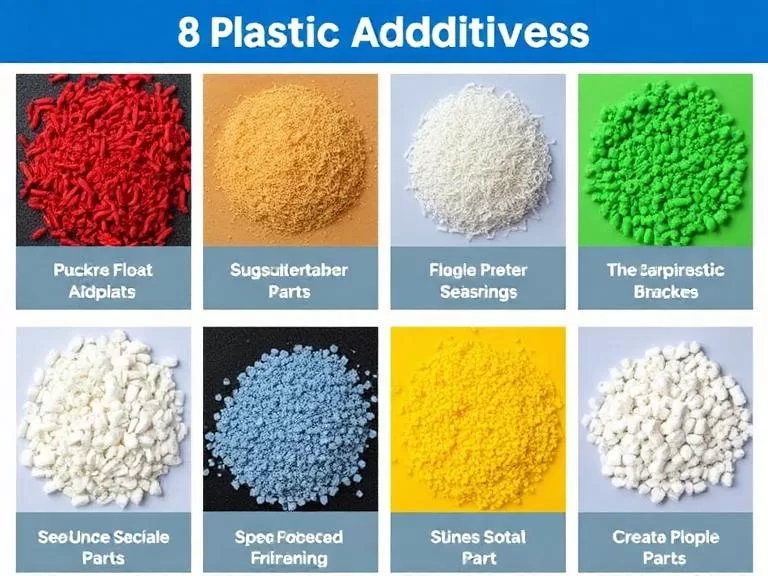
Plastic additives are specialized chemical compounds blended into raw polymer resins during extrusion or injection molding to fundamentally alter the material’s physical, chemical, or aesthetic properties. The 8 most common plastic additives examples include color masterbatch, plasticizers, UV stabilizers, antioxidants, flame retardants, antistatic agents, slip agents, and mineral fillers. Whether you are producing flexible packaging films or heavy-duty automotive components, utilizing the correct additive package is essential to meet structural requirements and regulatory compliance. For commercial users, high-quality additives are absolutely worth buying, as they prevent premature product failure and elevate the final market value of the manufactured part.
Table of Contents
- What Are Plastic Additives and How Do They Work?
- 8 Essential Plastic Additives Examples
- Commercial Benefits of Using High-Quality Additives
- Limitations and Hidden Trade-Offs
- Who Should Use Specialized Additives?
- Who Does Not Need Them?
- Common Mistakes in Polymer Compounding
- Crucial Buying Considerations
- Summary and Comparison Tables
- Expert Recommendation from Charming Masterbatch
- Frequently Asked Questions (FAQ)
What Are Plastic Additives and How Do They Work?
At a molecular level, plastics are macromolecules formed by long, intertwined chains of repeating monomer units. While these chains provide the basic structural shape, they require chemical assistance to survive real-world conditions. Additives work by either physically embedding themselves between these polymer chains or by chemically reacting with them.
For example, a physical modifier like a plasticizer forces its way between rigid PVC molecules, increasing the free volume and transforming a hard pipe into a flexible medical tube. Conversely, a chemical modifier like an antioxidant actively neutralizes destructive free radicals that would otherwise sever the carbon-carbon bonds within the polymer. Modern manufacturing relies on an intricate balance of these compounds to ensure the final product meets rigorous industry standards.
8 Essential Plastic Additives Examples
1. Colorants and Masterbatch
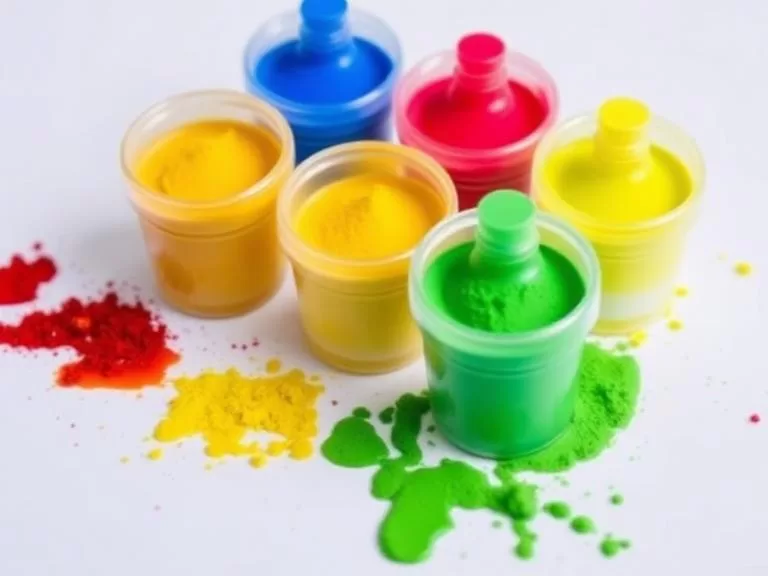
Colorants are responsible for transforming raw, translucent resins into vibrant, consumer-ready goods. In most professional situations, manufacturers avoid using raw powder pigments due to severe dispersion issues, airborne dust hazards, and contamination risks. Instead, the industry standard is to utilize masterbatch—a highly concentrated mixture of pigments uniformly encapsulated in a carrier resin.
If you are questioning what is carbon black masterbatch, it is a highly specialized color additive that provides deep, opaque black hues while simultaneously offering excellent ultraviolet (UV) protection. Working with top-tier black masterbatch manufacturers 2025 ensures your products maintain absolute color consistency across massive, multi-ton production runs.
2. Plasticizers
Plasticizers are critical chemical agents used to turn brittle, rigid polymers into pliable, flexible materials. Without plasticizers, Polyvinyl Chloride would remain a rigid structural material. With them, it becomes flexible enough for wire insulation, synthetic leather, and blood bags. If you are learning what is PVC masterbatch, understanding plasticizer compatibility is the first step, as they are inherently linked to flexible compounding. They are worth using whenever a rigid polymer needs increased elasticity and elongation before breaking.
3. UV Stabilizers and Light Absorbers
Ultraviolet radiation from sunlight causes aggressive photo-degradation in plastics, leading to aesthetic chalking, micro-cracking, and a catastrophic loss of tensile strength. UV stabilizers, particularly Hindered Amine Light Stabilizers (HALS), act as continuous radical scavengers to halt polymer breakdown. Meanwhile, UV absorbers physically convert destructive light energy into harmless low-level heat. For heavy-duty applications like agricultural greenhouse films or outdoor stadium seating, premium UV additives are not optional; they are a strict engineering requirement.
4. Antioxidants (Oxidation Inhibitors)
During melt processing techniques like extrusion or injection molding, plastics are subjected to intense heat and mechanical shear forces. This environment creates free radicals that initiate rapid thermal degradation. Antioxidants halt this destructive chain reaction. Primary antioxidants (such as sterically hindered phenols) scavenge the free radicals immediately, while secondary antioxidants (like phosphites) decompose hydroperoxides into stable compounds. We recommend robust antioxidant packages for any high-temperature manufacturing process to preserve the mechanical integrity and optical clarity of the final part.
5. Flame Retardants
Global safety regulations dictate that plastics used in consumer electronics, automotive interiors, and aviation must resist ignition and actively slow the spread of fire. Flame retardants function either by releasing water vapor to cool the combustion zone, creating a protective carbon char layer on the surface, or chemically interrupting the combustion process in the gas phase. For commercial users, upgrading to modern, halogen-free flame retardants is highly recommended to meet strict environmental compliance while maintaining life-saving safety standards.
6. Antistatic Agents
Because plastics are excellent electrical insulators, they easily accumulate static surface charges during friction. This static electricity attracts severe dust buildup and can cause catastrophic sparks in explosive industrial environments. Antistatic agents are migrating additives; they move to the surface of the molded plastic and interact with atmospheric moisture to create a microscopic conductive layer that safely dissipates electrical charges. In our testing, electronics packaging and delicate medical device housings benefit immensely from these specific additives.
7. Slip Agents and Lubricants
Processing aids like slip agents (commonly erucamide or oleamide) reduce the coefficient of friction on the surface of the finished plastic. This is an absolute necessity in the flexible packaging industry, where plastic films must slide effortlessly over each other and through high-speed automated packaging machinery without sticking or jamming. Internal lubricants reduce friction between the polymer melt and the metal extrusion screws, preventing thermal degradation and reducing machine energy consumption.
8. Fillers and Reinforcements
Fillers such as calcium carbonate, talc, or barium sulfate are added to plastics primarily to reduce the total volume of expensive base resin needed, thereby lowering overall production costs. However, when mechanical properties must be elevated, reinforcements like chopped glass fibers or carbon nanotubes are utilized. While basic mineral fillers lower costs, premium reinforcements upgrade a standard commodity polymer into a high-performance engineering material capable of replacing metal components.
Commercial Benefits of Using High-Quality Additives
The commercial benefits of investing in premium chemical modifiers are substantial. High-quality additives drastically extend the lifecycle of plastic products, improve consumer aesthetic appeal, ensure compliance with international safety protocols, and optimize the manufacturing process by significantly reducing machine wear and tear. When you source materials from reputable color masterbatch manufacturers 2025, you receive a highly engineered product that combines extreme color density with vital thermal stability, providing a dual-benefit that easily justifies the initial procurement cost.
Limitations and Hidden Trade-Offs
Additives must be carefully and scientifically balanced. Overloading a polymer with rigid flame retardants can severely degrade its impact resistance, making the final product dangerously brittle. Furthermore, certain legacy additives, such as heavy-metal-based stabilizers or brominated fire retardants, face strict environmental and health regulations globally. Manufacturers must constantly audit their formulations to ensure compliance without sacrificing physical performance.
Who Should Use Specialized Additives?
For commercial users producing consumer goods, automotive parts, agricultural films, and sterile medical devices, utilizing a precise additive package is absolutely mandatory. If you are manufacturing products exposed to extreme weather, severe mechanical stress, or strict aesthetic requirements, you must buy specialized additives. Partnering with recognized plastic masterbatch suppliers worldwide ensures you have access to globally compliant, highly dispersed chemical modifiers that will not fail in the field.
Who Does Not Need Them?
For beginners experimenting with basic 3D printing filaments at home, or individuals molding rudimentary, non-structural indoor prototypes for hobbyist purposes, investing in complex, custom industrial additive packages is completely unnecessary. Basic, pre-compounded commodity resins available off the shelf are more than sufficient for these low-stakes, non-commercial applications.
Common Mistakes in Polymer Compounding
In our experience, the most devastating mistake manufacturers make is poor additive dispersion. If an additive is not evenly distributed throughout the polymer matrix during the melt phase, it creates localized weak points, leading to structural cracking or color streaking. Another common error is ignoring carrier resin compatibility. For example, if you are analyzing what is PP masterbatch, you must understand that it is a masterbatch specifically formulated with a Polypropylene carrier to ensure perfect thermodynamic compatibility with base PP resins. Using an incompatible carrier will cause delamination, surface peeling, and catastrophic part failure.
Crucial Buying Considerations
When evaluating your additive procurement strategy, you must consider the international regulatory landscape, the required processing temperatures of your machinery, and the harshness of the end-use environment. Always demand Technical Data Sheets (TDS) and Material Safety Data Sheets (MSDS) before finalizing a purchase. For heavy-duty manufacturing operations, ensure your suppliers adhere strictly to quality management systems and environmental directives.
Summary and Comparison Tables
| Additive Type | Primary Function | Common Application |
|---|---|---|
| Masterbatch / Colorants | Provides aesthetic color and opacity. | Consumer packaging, toys, automotive interiors. |
| Plasticizers | Increases flexibility and elasticity. | PVC tubing, synthetic leather, cables. |
| UV Stabilizers (HALS) | Prevents sunlight-induced degradation. | Agricultural films, outdoor furniture. |
| Antioxidants | Prevents thermal oxidation during processing. | All high-heat injection molded parts. |
| Flame Retardants | Slows ignition and combustion spread. | Electronics housings, aviation components. |
| Antistatic Agents | Dissipates electrical surface charges. | Electronic packaging, medical devices. |
| Slip Agents | Reduces surface friction for easy movement. | High-speed plastic film packaging. |
| Fillers / Reinforcements | Reduces cost or increases mechanical strength. | Automotive under-hood components, pipes. |
| Feature | Commodity Fillers (e.g., Calcium Carbonate) | Engineering Reinforcements (e.g., Glass Fiber) |
|---|---|---|
| Primary Goal | Cost reduction and volume replacement. | Massive increase in tensile strength and rigidity. |
| Impact on Cost | Lowers the overall cost per kilogram. | Significantly increases the cost of the compound. |
| Effect on Processing | Increases density, can cause machine wear. | Requires specialized hardened extruder screws. |
| Pros | Cons |
|---|---|
| Dramatically extends the functional lifespan of the plastic. | Increases the raw material procurement costs. |
| Allows commodity plastics to perform like expensive engineering resins. | Requires precise dosing equipment to avoid over-concentration. |
| Ensures compliance with strict safety and fire regulations. | Incompatible additives can cause material delamination. |
| Improves the cosmetic finish and perceived value of the product. | Certain legacy additives face tightening environmental bans. |
| Factor | What to Look For | Why It Matters |
|---|---|---|
| Dispersion Technology | Twin-screw extrusion compounding. | Guarantees that pigments and chemicals are uniformly mixed without clumping. |
| Carrier Resin Matching | Exact match to your base polymer (e.g., PE carrier for PE resin). | Prevents structural weakness and ensures a perfect thermodynamic blend. |
| Technical Support | In-house laboratory testing and custom color matching. | Allows you to troubleshoot processing issues quickly and develop unique formulations. |
Expert Recommendation from Charming Masterbatch
Charming Masterbatch is well known in the China market, and exports to Europe, South America, Southeast Asia, the Middle East, and North Africa across about 18 countries and markets worldwide.
Not only providing products, Charming provides complete technical support service and individual development cooperation, which can help our customers solve practical problems and develop new projects with creative solutions.
From our experience, we strongly recommend that manufacturers stop treating additives as a generic commodity and start viewing them as an engineered, value-driving solution. Whether you need deep coloration or UV protection, upgrading to high-dispersion masterbatches will significantly lower your factory rejection rates. If you want to elevate your brand’s reputation and ensure long-term product durability, investing in premium additives is one of the most intelligent commercial decisions you can make.
Frequently Asked Questions (FAQ)
Are plastic additives toxic to humans?
Not all additives are toxic, but certain legacy chemicals (like specific phthalates and heavy metal stabilizers) have raised health concerns regarding leaching. Modern manufacturers adhere to strict global regulations to utilize safe, bio-compatible, and approved alternatives, especially in food-contact and medical applications.
What is the difference between a dye and a pigment in plastics?
Dyes are soluble chemicals that dissolve entirely into the polymer matrix, resulting in brilliant, transparent colors. Pigments are insoluble organic or inorganic particles that must be physically dispersed within the plastic, providing high opacity and superior resistance to fading under UV light.
How do UV stabilizers protect outdoor plastics?
UV stabilizers work by either absorbing harmful ultraviolet radiation and converting it into harmless low-level thermal energy, or by acting as free-radical scavengers that chemically neutralize the destructive elements before they can break the polymer’s molecular bonds.
Authoritative References & Industry Standards
To ensure the highest level of technical accuracy and industry compliance, the engineering concepts and additive functions discussed in this guide are aligned with the standards established by the following authoritative organizations:
- ASTM International – Providing standardized testing methodologies for polymer degradation, such as ASTM D2565 for Xenon-Arc UV exposure testing.
- International Council of Chemical Associations (ICCA) – Governing global initiatives on chemical safety, additive transparency, and environmental sustainability in the plastics sector.
- Society of Plastics Engineers (SPE) – The leading global organization dedicated to the advancement of polymer science, compounding technology, and manufacturing best practices.