
In plastic injection molding, blown film, and profile extrusion plants, blaming the machine operator whenever scrap rates spike is a costly management mistake. Machine technicians frequently adjust barrel temperatures, increase injection pressures, or tweak cycle times to counteract surface flaws, only to create secondary defects elsewhere on the part. When scrap climbs above acceptable thresholds, the underlying culprit is rarely human error alone. The true root causes trace directly to improper raw material rheology, moisture saturation, mechanical mold design limits, or poor masterbatch pigment dispersion.
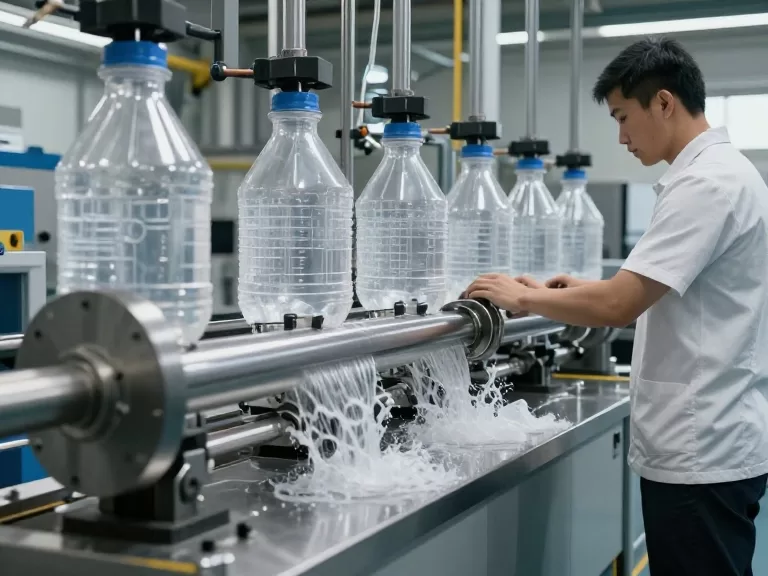
Eliminating scrap requires technical diagnosis rather than guesswork. Identifying the exact physical mechanisms behind defects separates high-margin converters from processing plants trapped in endless troubleshooting cycles. Understanding how material properties, masterbatch carrier compatibility, and thermal processing interact is critical. We analyze the nine most disruptive problems that can occur during plastic production, providing practical corrective actions to stabilize machine cycles, protect tool steel, and safeguard delivery margins.
Quick Answer: What Causes the Main Production Defects in Plastics?
The primary problems that can occur during plastic production stem from three core areas: improper thermal-pressure balance (causing sink marks, flash, and warpage), moisture and volatile gas entrapment (causing silver streaking, splay, and internal voids), and substandard raw material or masterbatch formulation (causing color streaking, flow lines, and short shots). In most professional situations, over 70% of optical and cosmetic failures originate from poor pigment dispersion and incompatible carrier resins in cheap masterbatches, or uncalibrated resin drying before processing. Correcting resin moisture to below 0.02% for hygroscopic polymers and switching to high-dispersion twin-screw compounded masterbatches eliminates the vast majority of visual defects without requiring expensive tooling overhauls.
Table of Contents
- The Mechanics of Defect Formation: Materials, Tooling, and Processing
- Quick Summary: The 9 Major Defects at a Glance
- In-Depth Analysis: 9 Critical Quality Problems in Plastic Production
- Root Cause Matrix: Material Formulation vs. Machine Process vs. Tool Design
- Pros and Cons of In-House Process Tuning vs. Sourcing Premium Masterbatch
- Who Needs Advanced Compounding vs. Who Can Rely on Standard Resins
- Compounding Excellence: Charming Masterbatch Precision Solutions
- Common Mistakes Processors Make When Troubleshooting Defects
- Commercial Sourcing Considerations for Defect-Free Production
- Expert Recommendation and Technical Production Verdict
- Frequently Asked Questions (FAQ)
- Authoritative References
The Mechanics of Defect Formation: Materials, Tooling, and Processing
Plastic production operates at the intersection of non-Newtonian fluid mechanics, thermal transfer, and polymer chemistry. When plastic pellets and color concentrates enter the feed throat, they must melt into a homogeneous, non-degraded fluid under screw shear. That melt is forced through runners and gates into a steel mold cavity, where it must freeze under holding pressure before ejection.
A breakdown in any step of this cycle produces specific structural or cosmetic defects. If the polymer melt experiences uneven cooling rates across thick and thin walls, differential shrinkage induces internal stresses that warp the finished part. If the masterbatch contains agglomerated pigment clumps that failed to disperse during compounding, the melt will display color streaks, pinholes in thin films, or high screen pack backpressure. From our experience on extrusion and injection lines, adjusting machine barrel parameters can mask minor material inconsistencies, but running poorly compounded, low-grade color concentrates will inevitably trigger production scrap.
Quick Summary: The 9 Major Defects at a Glance
The table below summarizes the nine most prevalent problems that can occur during plastic production, detailing physical symptoms, primary root causes, and corrective actions:
| Production Defect | Visual & Structural Symptom | Primary Root Cause | Direct Shop-Floor Solution |
|---|---|---|---|
| 1. Warpage & Distortion | Twisted part geometry, non-flat surfaces | Non-uniform mold cooling; differential volumetric shrinkage | Balance mold cooling circuits; adjust packing pressure |
| 2. Sink Marks | Localized surface depressions over thick ribs | Insufficient holding pressure; thermal contraction | Increase pack/hold time and pressure; core out thick ribs |
| 3. Flash (Burrs) | Excess thin plastic film along parting lines | Clamping tonnage exceeded; over-packing; worn tooling | Increase clamp force; lower injection pressure; repair tool |
| 4. Short Shots | Incompletely filled mold cavities or thin ribs | Melt freeze-off; low injection speed; poor venting | Raise melt/mold temperature; increase injection velocity |
| 5. Color Streaking & Specks | Uneven color bands; undispersed pigment dots | Poor pigment dispersion; incompatible masterbatch carrier | Switch to twin-screw masterbatch; raise screw backpressure |
| 6. Splay Marks & Silver Streaks | Splash-like silver marks radiating from gate | Moisture in resin; thermal degradation of volatiles | Dry resin to <0.02% moisture; lower melt temperature |
| 7. Weld Lines (Knit Lines) | Visible hairline seams where flow fronts meet | Cold melt fronts meeting with inadequate bonding pressure | Increase melt/mold temperature; relocate gates |
| 8. Jetting | Worm-like squiggly streaks near gate | Melt squirts into open cavity without wall contact | Slow initial injection speed; re-engineer to fan/overlap gate |
| 9. Burn Marks (Dieseling) | Charred black/brown plastic at blind flow ends | Trapped air compresses and superheats under pressure | Clean and deepen mold parting-line vents; slow injection |
In-Depth Analysis: 9 Critical Quality Problems in Plastic Production
1. Warpage and Dimensional Distortion
Warpage occurs when different sections of a molded part shrink at different rates during cooling. As internal stresses pull unevenly, the part twists, bows, or fails dimensional tolerance checks. This problem is common in semi-crystalline polymers like polypropylene and polyamides, which exhibit higher volumetric shrinkage than amorphous polymers like ABS or polycarbonate.
In our testing on molding floors, unbalanced mold cooling circuits are the most frequent cause of warpage. If the core side of a mold runs 15 degrees Celsius hotter than the cavity side, the hotter side cools slower, creating asymmetrical tension that curls the part toward the warmer half. Processors must balance cooling line flow rates and ensure water turbulence (Reynolds number > 4,000) through every channel. For polyolefins, selecting an engineered additive package from trusted what is PP masterbatch formulations helps control crystallization rates and prevents severe post-mold distortion.
2. Sink Marks
Sink marks appear as localized surface depressions or dimples, typically occurring on outer aesthetic surfaces directly opposite thick internal ribs, bosses, or mounting posts. As molten plastic cools, the outer skin touching the cold mold steel freezes first. The thicker interior core remains molten longer; as it eventually solidifies and contracts, it pulls the frozen outer skin inward, forming a visible dip.
Fixing sink marks requires mechanical part redesign and process tuning. In heavy-duty applications, rib thickness should not exceed 50% to 60% of the adjacent nominal wall thickness. On the machine controller, technicians must verify that the screw cushion remains stable (5 to 10 mm) at the end of the shot. If the screw bottoms out against the barrel nose, the machine cannot transfer holding pressure to pack out thick sections during thermal contraction.
3. Flash (Burrs or Parting Line Fins)
Flash is the unwanted escape of molten plastic beyond the mold cavity into the parting line, slide joints, or ejector pin clearances. When flash occurs, parts require manual trimming, adding labor costs and risking knife damage to critical sealing surfaces.
Flash occurs when internal cavity pressure exceeds the machine’s available clamp tonnage, forcing the mold halves slightly apart. It also occurs when worn mold parting surfaces allow low-viscosity melt to seep into clearances larger than 0.02 mm (for polyolefins) or 0.005 mm (for nylon). Importers and converters should avoid cranking up clamp tonnage to maximum limits, as this crushes mold vents and accelerates tool wear. Instead, drop the transfer position, lower peak injection pressure, and inspect tool parting surfaces for debris or damage.
4. Short Shots
A short shot occurs when the molten plastic freezes before completely filling the mold cavity, resulting in incomplete components with missing corners, unformed screw bosses, or porous edges. This defect halts assembly lines and ruins batch yields.
Short shots happen when the flow resistance through thin walls exceeds available injection pressure, or when inadequate mold venting traps air pockets that physically block incoming melt. While increasing injection pressure is an intuitive fix, running melt too fast into unvented cavities triggers severe burning. A sustainable solution involves verifying the polymer’s Melt Flow Index (MFI), increasing mold temperature to extend flow length, and cleaning mold vents of oxidized plastic deposits.
5. Color Streaking and Undispersed Pigment Specks
Color streaking is one of the most frustrating cosmetic problems that can occur during plastic production. It manifests as marbled swirls, color banding, or tiny undispersed pigment specks scattered across finished surfaces. For consumer electronics, automotive trim, and luxury packaging, color streaking causes immediate quality rejection.
In most professional situations, color streaking is caused by low-tier masterbatch compounded on basic single-screw extruders where pigment agglomerates were never sheared down to sub-micron particle sizes. If the masterbatch carrier resin has a lower melt flow index than the base polymer, the masterbatch cannot disperse uniformly in the machine barrel. Sourcing from reputable color masterbatch manufacturers 2025 that utilize high-shear co-rotating twin-screw machines ensures smooth pigment integration and eliminates color banding.
6. Splay Marks (Silver Streaking or Moisture Splashes)
Splay marks look like silvery, feather-like streaks radiating outward from the gate across the surface of the molded part. They are often mistaken for cosmetic flow lines, but splay marks represent structural degradation caused by moisture, trapped air, or overheated volatile gases.
Moisture splay is the most common variant. Hygroscopic engineering resins—such as PA6, PA66, PBT, PET, and polycarbonate—absorb atmospheric water into their molecular matrix. When heated to processing temperatures above 250 degrees Celsius, this trapped water vaporizes into high-pressure steam bubbles. As the melt front passes through the gate, these steam bubbles burst against the cold mold steel, leaving silver streaks while triggering hydrolytic chain scission that permanently degrades the plastic’s mechanical strength. Using desiccant dryers to pull resin moisture below 0.02% (200 ppm) is mandatory before processing engineering polymers.
7. Weld Lines (Knit Lines and Meld Lines)
Weld lines occur wherever two separate melt fronts meet after flowing around an internal obstacle, such as a core pin, hole, or multi-gate layout. If the converging melt fronts are too cold or meet with insufficient pressure, they cannot fuse completely, leaving a visible hairline groove and creating a severe structural weak point.
In structural parts, weld lines can reduce tensile impact strength by up to 50% along the seam. Improving weld line strength requires keeping the leading melt fronts hot so polymer chains can interdiffuse across the interface. Technicians should raise mold surface temperatures, increase injection velocity near the meeting point, and ensure proper venting directly behind the weld line so trapped air does not prevent the melt streams from bonding.
8. Jetting
Jetting occurs when molten plastic shoots through a narrow gate into an open, thick mold cavity like an uncontrolled squirt of toothpaste, rather than expanding in a uniform flow front. The initial jet cools against cavity air; as subsequent melt fills the cavity, it folds over the solid snake-like thread, leaving distinct squiggly patterns on the surface.
Jetting ruins surface cosmetics and creates internal stress planes. It is common with high-viscosity resins pushed through sub-gates or edge gates directed into open space. To eliminate jetting, program the injection controller for profiled filling: start with a slow injection speed until the melt establishes contact with cavity walls, then accelerate into the main filling phase. Toolmakers can also redesign gates into fan, chisel, or submarine configurations that direct melt flow against an opposing cavity wall.
9. Burn Marks (Dieseling Effect)
Burn marks appear as charred, blackened, or dark brown patches on the plastic, typically at the final fill point of the mold cavity or inside deep ribs. In severe cases, the plastic produces a visible puff of smoke inside the mold, eroding the surrounding tool steel over time.
This defect is caused by dieseling: the rapid, adiabatic compression of trapped air. As molten plastic fills the cavity at high speed, displaced air must escape through mold vents. If vents are clogged, missing, or too shallow, the trapped air pocket compresses. Under rapid compression, the air temperature spikes above 1,000 degrees Celsius in fractions of a second, igniting the plastic melt. The fix requires cleaning existing parting-line vents, deepening vents to the maximum allowable depth without causing flash, and adding vacuum venting systems for complex, high-speed tools.
Root Cause Matrix: Material Formulation vs. Machine Process vs. Tool Design
Troubleshooting defects effectively requires isolating whether a problem stems from raw material quality, controller processing settings, or physical mold design:
| Observed Defect | Raw Material & Additive Factors | Machine Controller Parameters | Physical Mold & Tooling Design |
|---|---|---|---|
| Color Streaks & Specks | Poor pigment dispersion; carrier resin MFI mismatch | Low backpressure; screw speed too low | Missing static mixing nozzles; poor runner shear |
| Warpage & Distortion | Anisotropic shrinkage; uncalibrated filler loading | Short cooling time; uneven pack pressure | Imbalanced cooling channels; unequal wall thickness |
| Sink Marks & Voids | Excessive thermal volumetric shrinkage | Cushion bottoming out; low holding pressure | Rib thickness >60% of wall; undersized gates |
| Splay & Silver Marks | Undried resin; low-temp volatile additives | Barrel temp too high; screw shear overheating | Gate shear too high; moisture condensation on steel |
| Burn Marks (Dieseling) | Excess volatile additives or lubricants | Excessive injection velocity; over-clamping | Clogged, shallow, or missing parting-line vents |
Pros and Cons of In-House Process Tuning vs. Sourcing Premium Masterbatch
When facing cosmetic and dispersion defects, plant managers must choose between adjusting machine settings or upgrading raw material and masterbatch quality:
| Quality Strategy | Operational Advantages (Pros) | Practical Limitations (Cons) |
|---|---|---|
| In-House Machine Process Tuning (Adjusting temps, backpressure, speeds) | Zero additional material procurement cost. Can be executed immediately by floor technicians. Helps mask minor variations in base polymer lots. | Extends cycle times, reducing hourly output capacity. Increases barrel wear through elevated backpressures. Cannot fix fundamentally poor pigment agglomerates. |
| Sourcing Premium Twin-Screw Masterbatch (Engineered carrier & micro-dispersion) | Eliminates color specks and streaks at the source. Maintains fast cycle times with low machine backpressures. Ensures consistent batch-to-batch Delta E color accuracy. | Slightly higher initial raw material cost per metric ton. Requires qualifying verified compounding suppliers. |
Who Needs Advanced Compounding vs. Who Can Rely on Standard Resins
In our experience evaluating processing operations, material specifications must match end-use product performance requirements.
Who Needs Premium Formulations and Engineered Masterbatch:
- Automotive Tier-1 and Tier-2 Molders: Interior and exterior components face strict Delta E color tolerances and rigorous impact testing. Surface blemishes or weak weld lines result in immediate batch rejections.
- Thin-Wall Packaging and Blown Film Converters: Film extrusion running at high line speeds cannot tolerate pigment clumps. An undispersed agglomerate creates instant pinholes and bubble breaks. Sourcing from verified plastic masterbatch suppliers worldwide protects continuous film production.
- UV-Exposed Outdoor Equipment Producers: Outdoor furniture, agricultural films, and stadium seating require homogeneous chemical dispersion of UV stabilizers and antioxidants to prevent environmental stress cracking.
- Conductive and Technical Electronic Housings: Enclosures requiring static dissipation depend on specialized compounds. Explore technical formulations in our guide on what is carbon black masterbatch and review leading black masterbatch manufacturers 2025.
Who Can Use Standard Economy Resins:
- Hidden Industrial Drainage and Non-Visual Conduits: Buried pipe fittings, drainage grates, and internal structural spacers prioritize low material cost over aesthetic surface finish.
- Low-Volume Utility Components: Thick-walled utility totes and disposable shop bins can tolerate minor sink marks and flow lines without compromising basic utility.
Engineered Masterbatch Solutions: Charming Masterbatch
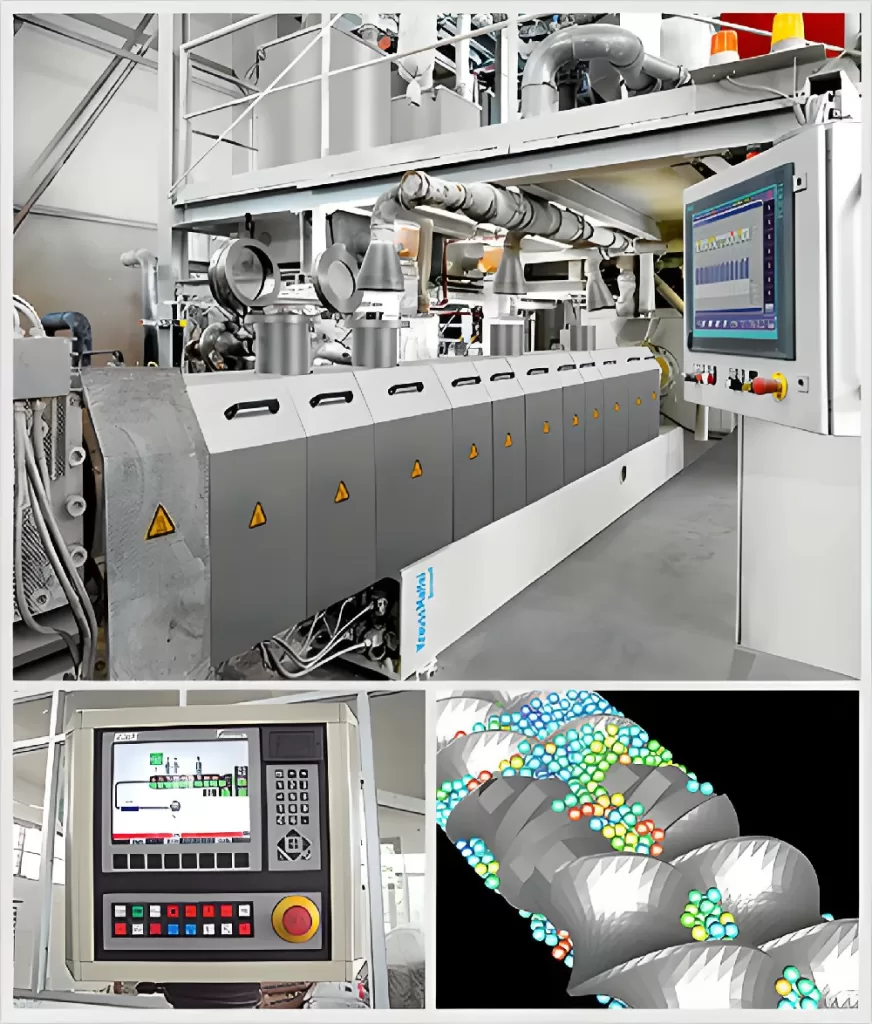
拥有先进的德国双螺杆设备以及数十年的母粒生产经验与颜料分散技术,彩艳一直为客户提供高品质的色母粒产品和创新的功能母粒解决方案。
彩艳母粒在国内化纤市场名声在外,广为业界熟悉,同时也出口到欧洲、美洲、中东、北非、东南亚等18个国家和地区市场。
Not only products, Charming provides complete technical support service and individual development cooperation, which can help our customers solve practical problems and develop new projects with creative solutions. We are so proud that we can share our experience and technology with customers and grow up together.
Compounding Technology: Advanced German Co-Rotating Twin-Screw Extruders
Dispersion Quality: Sub-Micron Pigment Shearing (Zero Agglomerates)
Global Footprint: Exporting to 18+ Countries Across 5 Continents
Product Portfolio: Custom Color Masterbatch, Black/White Masterbatch, Functional Additives
Technical Services: On-Site Processing Support, Formulation Optimization, Defect Diagnostics
Carrier Matching: Resins Formulated for PE, PP, PS, ABS, PC, and Polyamides
Evaluate regional and international sourcing options through our reviews of top masterbatch manufacturers worldwide, discover leading suppliers via the masterbatch companies global list, review specialized players in plastic masterbatch manufacturers USA, examine Asian hubs via colour masterbatch manufacturers India, compare manufacturers across masterbatch manufacturers Gujarat, explore regional networks via top masterbatch manufacturers Pakistan, and assess the broader industry through our guide to the best plastic masterbatch manufacturers.
Common Mistakes Processors Make When Troubleshooting Defects
From our experience auditing struggling plastics facilities, technicians frequently commit four costly troubleshooting mistakes that prolong downtime:
- Changing Multiple Process Variables Simultaneously: When a part displays splay and flash, technicians often adjust melt temperature, clamp tonnage, and holding pressure all at once. If the defect disappears, nobody knows which parameter fixed it. When defects return on the next shift, the team must restart trial-and-error adjustments from scratch. Change only one variable at a time and allow the machine twenty cycles to stabilize.
- Overheating the Barrel to Fix Short Shots: Cranking barrel temperatures beyond the resin’s processing window lowers melt viscosity to fill cavities, but it also triggers thermal degradation. The overheated polymer chains degrade, resulting in brittle parts, discolored yellow surfaces, and off-gassing that corrodes mold steel.
- Neglecting Dryer Desiccant Dew Points: Believing a hopper dryer is functioning simply because the display reads 80 degrees Celsius is a common trap. If the desiccant bed is saturated or cracked, the dryer circulates hot, humid air through the resin. Always measure the actual dew point (which should be -40 degrees Celsius or lower) with a calibrated inline dew point meter.
- Using Universal Masterbatch in Engineering Polymers: Using generic low-melt carrier masterbatch in high-temperature engineering plastics like ABS, PBT, or nylon causes phase separation. The mismatched carrier resin bleeds to the surface, creating splay marks, delamination around the gate, and compromised impact strength.
Commercial Sourcing Considerations for Defect-Free Production
Before issuing purchase orders for polymer resins, color concentrates, or additives, purchasing teams should verify these four technical criteria with suppliers:
- Carrier Resin Matching: Require masterbatch suppliers to formulate concentrates using an identical or chemically compatible carrier resin with a Melt Flow Index slightly higher than your base resin. This ensures uniform mixing at standard screw shear rates.
- Filter Pressure Value (FPV) Certification: Mandate that color concentrate suppliers provide FPV test certificates according to DIN EN 13900-5. Low FPV numbers confirm that pigments are thoroughly dispersed, preventing clogged screens and surface specks.
- Lot-Specific Moisture and Ash Content Reports: Demand certified, batch-specific Certificates of Analysis (COA) displaying tested moisture percentages and inorganic filler levels. Generic non-lot spec sheets obscure batch-to-batch variations.
- Technical Troubleshooting Support: Partner with manufacturers that offer dedicated technical service engineers capable of evaluating mold designs, screw geometries, and temperature profiles on-site to help resolve unexpected processing challenges.
Expert Recommendation and Technical Production Verdict
In most professional situations, treating defects as isolated machine problems is an expensive approach. The majority of quality problems that can occur during plastic production are interlinked results of material formulation, drying discipline, and thermal-pressure dynamics.
We recommend establishing a disciplined, three-step quality protocol across your plant floor: first, enforce strict incoming resin verification, including dew-point-monitored drying for all hygroscopic polymers; second, audit mold venting and cooling circuit balance before approving tools for production; and third, stop using low-grade, single-screw universal masterbatches that cause chronic dispersion defects. Partnering with a specialized compounding manufacturer like Charming Masterbatch ensures your color and functional additives are processed on German co-rotating twin-screw equipment, delivering clean pigment dispersion, consistent thermal stability, and low defect rates across every production run.
Frequently Asked Questions (FAQ)
What are the most common quality problems that can occur during plastic production?
The nine most common quality problems in plastic production are warpage, sink marks, flash, short shots, color streaking and specks, splay marks (silver streaking), weld lines, jetting, and burn marks (dieseling). These defects stem from imbalances in machine processing parameters, poor tool design, uncalibrated drying, or low-grade masterbatch dispersion.
How can processors stop color streaking and pigment specks in molded parts?
To eliminate color streaking, processors should increase screw backpressure and screw speed to improve melt mixing, verify that the masterbatch carrier resin matches the base polymer’s melt flow index, and switch to color concentrates manufactured on high-shear co-rotating twin-screw extruders that disperse pigments to sub-micron particle sizes.
Why do sink marks appear opposite thick internal ribs?
Sink marks occur because thick internal sections take longer to cool than adjacent thin nominal walls. As the molten plastic in the thick core cools and contracts, it pulls the frozen outer skin inward. To prevent sink marks, maintain holding pressure during cooling, ensure a stable screw cushion, and design rib thickness to be no more than 50% to 60% of the nominal wall thickness.
What is the difference between moisture splay and thermal splay?
Moisture splay occurs when undried hygroscopic resin carries water into the heated barrel, where it flashes into steam bubbles that burst against the mold surface, leaving silver streaks. Thermal splay occurs when excessive barrel temperatures or high screw shear degrade the polymer or additive package, generating volatile gases that produce similar splash marks accompanied by material yellowing.
How does poor mold venting cause burn marks (dieseling)?
When molten plastic fills a mold cavity at high velocity, it pushes air toward blind pockets or parting lines. If mold vents are missing, clogged, or too shallow, the trapped air compresses rapidly. This adiabatic compression superheats the air pocket to temperatures above 1,000 degrees Celsius, charring the plastic and damaging the tool steel.
Authoritative References
- Society of Plastics Engineers (SPE): Injection Molding and Extrusion Troubleshooting Standards
- ASTM International: Standard Test Method for Melt Flow Rates of Thermoplastics by Extrusion Plastometer (ASTM D1238)
- International Organization for Standardization: Plastics – Determination of Water Content (ISO 15512)