
Plastic manufacturing is under pressure to deliver more than consistent output and competitive pricing. Customers increasingly expect manufacturers to reduce material waste, improve energy efficiency, use recycled resources responsibly, and demonstrate measurable environmental progress. At the same time, production costs, quality requirements, and delivery schedules leave little room for sustainability initiatives that do not make commercial sense.
The reality is that sustainable plastic manufacturing is not simply about replacing virgin plastic with recycled materials. It requires improvements throughout the production process, from raw material selection and masterbatch formulation to extrusion, molding, packaging, and waste management.
From our experience in masterbatch processing and pigment dispersion, the most effective sustainability improvements are those that solve two problems simultaneously: reducing environmental impact and improving production efficiency. A manufacturer should not sacrifice product consistency or production reliability to achieve a sustainability target.
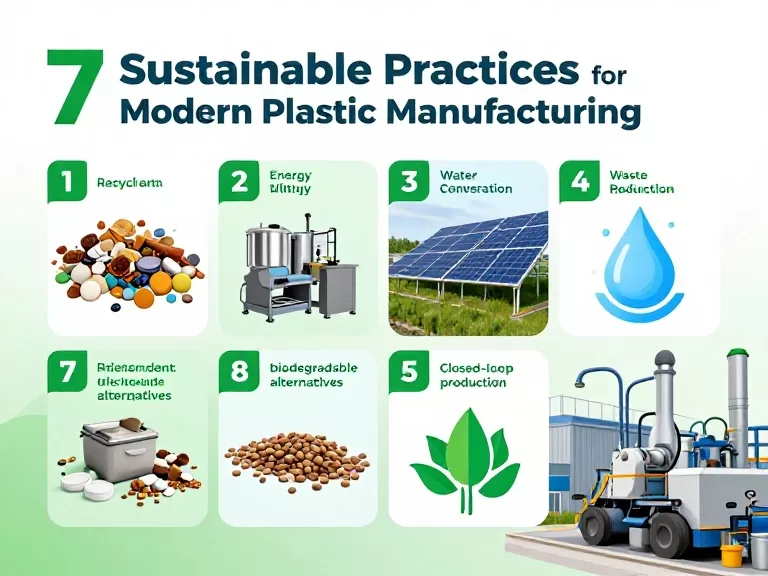
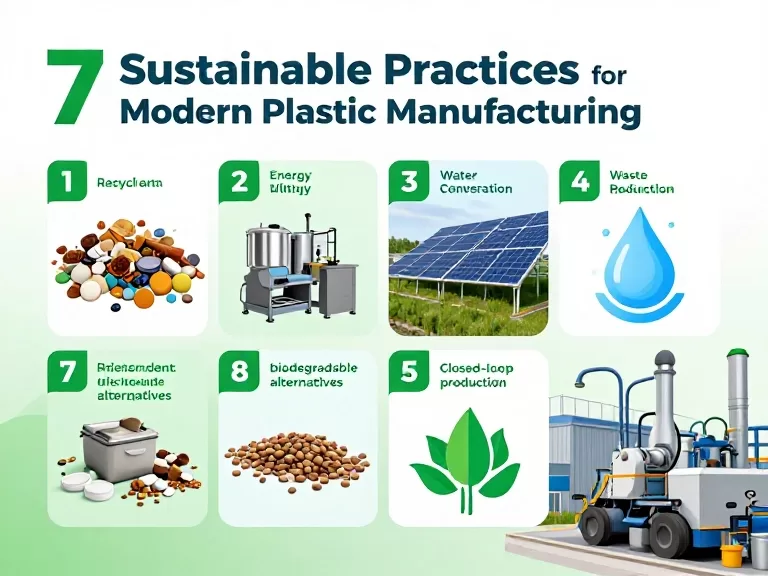
This guide examines seven practical practices for modern plastic manufacturing, explains their commercial benefits and limitations, and shows how manufacturers can decide which improvements deserve investment first.
Quick Answer: What Are the Best Sustainable Practices for Modern Plastic Manufacturing?
The most effective practices for sustainable plastic manufacturing are:
- Increase the use of recycled and responsibly sourced raw materials.
- Improve energy efficiency across extrusion and molding equipment.
- Reduce production waste through better process control.
- Use advanced masterbatch technology to optimize material consumption.
- Design products for recyclability and material recovery.
- Improve water management and adopt cleaner production methods.
- Measure environmental performance through supply-chain monitoring and continuous improvement.
Our recommendation: Start with material efficiency, production waste reduction, and energy consumption. These areas often offer the most direct opportunities to reduce operating costs while improving environmental performance.
Table of Contents
- Understanding Sustainable Plastic Manufacturing
- Quick Summary of the Seven Practices
- Use Recycled and Responsibly Sourced Materials
- Improve Energy Efficiency
- Reduce Production Waste
- Optimize Masterbatch and Additive Usage
- Design Products for Recyclability
- Improve Water Management and Cleaner Production
- Measure and Monitor Environmental Performance
- Comparing the Seven Sustainable Practices
- Pros and Cons of Sustainable Manufacturing
- How to Implement a Sustainability Strategy
- Common Sustainability Mistakes
- Choosing a Sustainable Masterbatch Manufacturer
- Our Expert Recommendation
- Frequently Asked Questions
- References
Understanding Sustainable Practices for Modern Plastic Manufacturing
Sustainable plastic manufacturing refers to production methods that minimize resource consumption, reduce pollution, improve material efficiency, and support the responsible use and recovery of plastic products throughout their lifecycle.
It involves much more than choosing environmentally marketed raw materials. A manufacturer can use recycled resin and still operate an inefficient production line that generates excessive scrap, consumes unnecessary electricity, and produces materials that are difficult to recycle.
In most professional situations, sustainability should be evaluated across three interconnected areas:
- Environmental performance: Material consumption, carbon emissions, energy use, water consumption, production waste, and recyclability.
- Operational performance: Production stability, machine efficiency, material utilization, product consistency, and downtime.
- Commercial performance: Manufacturing costs, customer requirements, regulatory compliance, supplier reliability, and long-term competitiveness.
These factors are connected. For example, improving pigment dispersion can help manufacturers achieve more consistent color with fewer rejected products. Better process control can reduce both raw material consumption and the energy required to produce replacement batches.
Important distinction: Sustainable manufacturing does not automatically mean using the cheapest recycled material or eliminating every additive. The objective is to achieve the required product performance with fewer resources, less waste, and a more responsible production process.
Quick Summary: Seven Sustainable Practices for Plastic Manufacturers
| Practice | Main Objective | Business Benefit | Implementation Priority |
|---|---|---|---|
| Recycled materials | Reduce virgin resin consumption | Material efficiency and resource conservation | High where suitable supply exists |
| Energy efficiency | Reduce electricity consumption | Lower operating costs | High |
| Waste reduction | Minimize scrap and rejected products | Higher material utilization | Very high |
| Masterbatch optimization | Improve dispersion and additive efficiency | Consistent quality and optimized dosing | High |
| Recyclable product design | Improve material recovery | Better alignment with circular economy requirements | High for new product development |
| Water management | Reduce water consumption and contamination | Lower resource costs and environmental impact | Depends on process |
| Environmental monitoring | Measure resource use and emissions | Better management and customer transparency | High |
1. Use Recycled and Responsibly Sourced Raw Materials
One of the most practical sustainable practices for modern plastic manufacturing is increasing the use of recycled plastic where product specifications and application requirements allow it.
Virgin polymers require new fossil-based or other primary feedstocks. Recycled materials can reduce demand for virgin resources and support a more circular plastics economy. However, recycled resin is not automatically suitable for every product.
How Manufacturers Can Introduce Recycled Plastics
Manufacturers should begin by identifying product categories where recycled resin can meet performance requirements without creating unacceptable quality risks.
Common opportunities include:
- Non-food-contact plastic packaging.
- Industrial containers and storage products.
- Plastic pallets and material handling components.
- Construction-related plastic products.
- Selected household and consumer goods.
- Protective packaging and secondary packaging components.
The key is to establish clear specifications for recycled resin before introducing it into production. Important parameters include melt flow rate, moisture content, contamination, color consistency, mechanical properties, and thermal stability.
Why Material Consistency Matters
Recycled polymers may have different processing characteristics from virgin materials. Contamination, previous thermal exposure, and variations in feedstock quality can affect extrusion behavior and final product performance.
For example, a packaging manufacturer introducing recycled polyethylene into an existing extrusion process may experience color variation, inconsistent film appearance, or unstable processing conditions.
We recommend conducting controlled trials rather than replacing virgin resin across an entire production line immediately.
Expert insight: The commercial value of recycled material depends on its actual performance in the finished product. A cheaper resin that causes higher rejection rates or frequent machine interruptions may increase total production costs rather than reduce them.
When This Practice Is Worth Implementing
Recycled material integration is particularly attractive when manufacturers have stable recycled resin suppliers, applications with flexible material specifications, and sufficient testing capabilities.
For highly demanding applications, including products requiring specific food-contact compliance, safety performance, or tightly controlled mechanical properties, material selection must follow the applicable regulations and technical requirements.
2. Improve Energy Efficiency Across Plastic Production Equipment
Energy consumption is a major operating consideration for plastic manufacturers. Extrusion lines, injection molding machines, dryers, compressors, cooling systems, and material handling equipment all contribute to the facility’s electricity demand.
Reducing energy consumption is therefore one of the most commercially attractive sustainable practices for modern plastic manufacturing.
Upgrade to More Efficient Machinery
Older production equipment may consume more energy than necessary because of outdated motors, inefficient heating systems, poor insulation, or limited process automation.
Manufacturers should evaluate equipment based on actual production output and energy consumption rather than motor ratings alone.
Practical upgrades include:
- Installing variable-frequency drives where appropriate.
- Replacing inefficient motors with high-efficiency alternatives.
- Improving barrel and heating-zone insulation.
- Optimizing cooling water circulation systems.
- Reducing unnecessary idle operation.
- Improving compressed-air system performance and repairing leaks.
Optimize Extrusion and Processing Conditions
Machine settings also influence energy efficiency. Excessive temperatures, unstable screw speeds, unnecessary reheating, and long startup periods can increase electricity consumption.
In masterbatch production, extrusion efficiency is especially important because pigment dispersion, polymer compatibility, screw configuration, and processing temperature all influence the final product.
Charming Masterbatch uses advanced twin-screw machines from Germany and established pigment dispersion technology to produce color masterbatch and functional masterbatch solutions. Appropriate equipment configuration and process control are important for maintaining consistent output and avoiding unnecessary processing losses.
Calculate Energy Consumption Per Kilogram
A useful way to evaluate improvement is to track electricity consumption relative to production output.
Energy intensity formula:
Energy Intensity (kWh/kg) = Total Electricity Consumption (kWh) ÷ Total Good Production Output (kg)
For example, if a production line consumes 12,000 kWh and produces 20,000 kg of acceptable material, its energy intensity is 0.60 kWh/kg.
This metric becomes more useful when manufacturers compare the same product, machine, and production conditions over time.
Our recommendation: Before purchasing new machinery, conduct an energy audit. Improving the efficiency of existing equipment may offer a better return on investment than replacing an entire production line.
3. Reduce Production Waste Through Better Process Control
Reducing production waste is one of the fastest ways to improve the sustainability and profitability of a plastic manufacturing operation.
Every rejected product represents wasted material, processing energy, labor, machine time, and potentially additional transportation or disposal costs.
Identify the Main Sources of Plastic Manufacturing Waste
Manufacturers should investigate where material losses occur rather than treating all scrap as one category.
Common sources include:
- Startup and shutdown scrap.
- Incorrect color matching.
- Inconsistent material feeding.
- Improper temperature settings.
- Contaminated raw materials.
- Excessive trimming and cutting losses.
- Defective products caused by unstable processing conditions.
Use Standardized Production Parameters
One effective improvement is creating standardized production settings for repeat orders and frequently manufactured products.
Manufacturers should document important operating parameters, including temperature profiles, screw speeds, feeding rates, cooling conditions, and material ratios.
This is particularly useful for companies producing multiple colors or functional plastic compounds. Consistent formulation records reduce unnecessary adjustments and improve repeatability.
Improve Scrap Segregation and Reprocessing
Not all production waste needs to be discarded. Clean and traceable production scrap may be suitable for controlled reprocessing when the intended application allows it.
However, mixing incompatible polymers, contaminated scrap, or materials with significantly different processing histories can damage product quality.
We recommend establishing separate collection procedures for different polymer types, colors, and additive formulations.
Manufacturers should also monitor how many times materials are reprocessed. Repeated thermal processing can affect polymer properties and should not be assumed to be harmless.
Measure the Scrap Rate
Scrap Rate (%) = Rejected Material Weight ÷ Total Material Input × 100
For example, a factory processing 50,000 kg of material and generating 2,500 kg of scrap has a scrap rate of 5%.
Reducing this rate by improving process stability can create meaningful savings without requiring additional production capacity.
For commercial users, this is often a better first investment than purchasing sustainability-related equipment without identifying the actual production losses.
4. Optimize Masterbatch and Additive Usage
Masterbatch technology plays an important role in sustainable plastic manufacturing because it influences color consistency, functional performance, material compatibility, and production efficiency.
Masterbatch is a concentrated mixture of pigments or functional additives dispersed in a carrier resin. Manufacturers blend it with a base polymer at a specified dosage to achieve the required color or performance characteristics.
Instead of introducing pigments or additives directly into every production batch, manufacturers can use a properly formulated masterbatch to improve dosing accuracy and dispersion.
Improve Pigment Dispersion and Reduce Material Loss
Poor pigment dispersion can result in visible color spots, inconsistent appearance, rejected products, and additional processing adjustments.
A well-developed color masterbatch helps manufacturers achieve more consistent color distribution when the formulation is compatible with the polymer and processing conditions.
This is particularly important for:
- Plastic film and flexible packaging production.
- Injection-molded consumer products.
- Industrial plastic components.
- Household plastic products.
- Automotive and electrical plastic components.
For example, a packaging manufacturer producing large quantities of colored polyethylene film needs reliable color consistency across production batches. An unsuitable masterbatch may create color variation and unnecessary product rejection.
Choosing a suitable formulation and validating the dosing rate can help reduce these problems.
Use Functional Masterbatch for Specific Production Challenges
Functional masterbatch can also support production efficiency and product performance.
Depending on the application, manufacturers may consider:
- UV masterbatch: Helps improve resistance to ultraviolet exposure in suitable outdoor plastic applications.
- Flame retardant masterbatch: Provides flame-retardant functionality when the formulation and finished product meet applicable testing requirements.
- Desiccant masterbatch: Helps address moisture-related processing problems in compatible applications.
- Filler masterbatch: Introduces mineral fillers into polymer formulations to adjust material properties and potentially optimize raw material costs.
- Black masterbatch: Provides black coloration and, depending on formulation, additional functional properties.
These solutions are not interchangeable. Each must be selected according to polymer compatibility, dosage requirements, processing temperatures, and final product specifications.
Manufacturers can explore UV masterbatch applications, desiccant masterbatch technology, and filler masterbatch for plastic manufacturing to understand how different formulations address production requirements.
Do Not Assume a Lower Dosage Always Means Better Sustainability
A common purchasing mistake is comparing masterbatch suppliers exclusively by the recommended addition percentage.
A lower dosage may reduce masterbatch consumption, but only if the product delivers the required performance at that dosage. A formulation that produces inconsistent color or insufficient functionality can create greater overall waste.
For a meaningful comparison, evaluate the following:
- Recommended let-down ratio.
- Pigment or additive concentration.
- Dispersion quality.
- Carrier resin compatibility.
- Thermal stability.
- Finished product performance.
- Total cost per kilogram of acceptable finished product.
Expert insight: We recommend evaluating masterbatch based on total production performance, not just price per kilogram. A consistent formulation that reduces color corrections, startup scrap, and quality complaints can provide better commercial value over time.
Why Masterbatch Supplier Selection Matters
Masterbatch manufacturers should offer more than a standard product catalog. Technical consultation, formulation development, compatibility testing, and troubleshooting support can help plastic processors avoid costly formulation errors.
This is especially valuable for manufacturers developing recycled-content products or introducing new functional requirements.
5. Design Plastic Products for Recyclability
Improving recyclability should begin during product development rather than after manufacturing is complete.
A product may technically contain recyclable plastic but remain difficult to recycle because of incompatible materials, excessive decoration, permanent labels, complex structures, or unsuitable additives.
Prioritize Material Compatibility
Where possible, manufacturers should reduce the number of different polymer types used in a single product.
For example, a packaging structure containing multiple incompatible materials may require specialized separation before recycling. A simpler material structure can make sorting and recovery easier.
Practical design improvements include:
- Using compatible polymers where performance allows.
- Reducing unnecessary multi-material combinations.
- Choosing labels and adhesives suitable for the intended recycling process.
- Avoiding excessive pigments or decorative coatings.
- Designing components that can be separated when necessary.
- Maintaining material identification and traceability.
Consider the Role of Color and Additives
Colorants and functional additives can influence the recycling process. Certain pigments may affect optical sorting, while incompatible additives may influence the properties of recycled material.
Black plastic, for example, can present challenges for some near-infrared sorting systems depending on the pigment chemistry and sorting technology used.
Manufacturers developing products for recycling should discuss color formulation and additive selection with their material and masterbatch suppliers.
For additional color formulation guidance, see our plastic color chart and color selection guide.
Design for the Actual Recycling Infrastructure
Recyclability is not determined by material composition alone. Collection systems, sorting capabilities, local recycling infrastructure, and end-market demand also matter.
A package designed for recycling in one market may not be accepted by recycling facilities in another.
We recommend reviewing the intended sales market before finalizing material specifications. Manufacturers supplying multiple countries should pay particular attention to local packaging requirements and applicable recyclability guidance.
6. Improve Water Management and Adopt Cleaner Production Methods
Water management is another important part of sustainable plastic manufacturing, particularly for facilities operating cooling systems, washing processes, material preparation, and auxiliary equipment.
Although some plastic production processes consume relatively little water directly, cooling and cleaning operations can create substantial demand depending on facility configuration.
Introduce Closed-Loop Cooling Systems
Where technically appropriate, closed-loop cooling systems can reduce the need for continuous freshwater intake.
Instead of discharging cooling water after one use, the system circulates water through cooling equipment and reuses it.
Manufacturers should monitor:
- Water circulation efficiency.
- Cooling tower performance where applicable.
- Water quality and contamination.
- Leakage and evaporation losses.
- Maintenance requirements.
Improve Cleaning and Wastewater Management
Plastic manufacturing facilities may generate wastewater from equipment cleaning, floor washing, material preparation, and other supporting activities.
Proper wastewater management should prevent uncontrolled discharge of oils, suspended solids, pigments, additives, and other contaminants.
Depending on local requirements and the nature of the wastewater, manufacturers may need filtration, separation, treatment, or authorized disposal systems.
Adopt Cleaner Production Practices
Cleaner production also involves reducing unnecessary chemical use, preventing material spills, maintaining equipment, and controlling emissions from processing operations.
Manufacturers should evaluate the environmental characteristics of processing aids, cleaning agents, lubricants, and other auxiliary materials.
For commercial users, water conservation and pollution prevention should be integrated into routine maintenance rather than treated as separate environmental projects.
Practical recommendation: Track water consumption per kilogram of production. This allows manufacturers to identify unusual consumption patterns and evaluate whether cooling-system improvements are delivering measurable results.
7. Measure and Monitor Environmental Performance
Sustainable plastic manufacturing requires measurable results. Without reliable data, manufacturers cannot determine whether their sustainability investments are reducing environmental impact or simply increasing operating costs.
Environmental performance monitoring should cover the production process, raw materials, energy consumption, waste management, and relevant supply-chain activities.
Establish Key Sustainability Indicators
Manufacturers should select indicators that reflect their actual production operations.
| Performance Indicator | Measurement | What It Reveals |
|---|---|---|
| Energy intensity | kWh per kg of good output | Production energy efficiency |
| Scrap rate | Scrap weight as a percentage of input | Material losses |
| Recycled content | Recycled material as a percentage of total polymer input | Use of secondary raw materials |
| Water intensity | Water consumption per kg of output | Water resource efficiency |
| Production yield | Acceptable output divided by total input | Manufacturing efficiency |
| Carbon intensity | CO2-equivalent emissions per functional production unit | Climate impact of production |
Use Environmental Management Standards
Manufacturers seeking a structured approach can consider an environmental management system based on ISO 14001.
ISO 14001 provides a framework for identifying environmental aspects, managing compliance obligations, setting objectives, and improving environmental performance.
It is important to distinguish between implementing environmental management practices and obtaining formal certification. A company should only claim certification when it has completed the applicable certification process.
Improve Supply-Chain Transparency
Customers increasingly want information about the materials and manufacturing processes behind the products they purchase.
Plastic manufacturers should maintain supplier records, material specifications, recycled-content documentation where relevant, and quality testing records.
For companies exporting to different markets, this information can help respond to customer audits and regulatory documentation requirements.
We recommend reviewing sustainability data at least quarterly and linking improvement targets to actual production performance.
Comparing the Seven Sustainable Practices: Which Should Manufacturers Prioritize?
Not every sustainability initiative deserves the same investment. The best starting point depends on factory size, production technology, product requirements, and existing operational weaknesses.
| Sustainable Practice | Initial Investment | Operational Complexity | Potential Commercial Value | Best Suited For |
|---|---|---|---|---|
| Recycled raw materials | Low to medium | Medium to high | Material sourcing flexibility and resource efficiency | Packaging and industrial plastic manufacturers |
| Energy-efficient equipment | Medium to high | Medium | Reduced electricity costs | High-volume production facilities |
| Production waste reduction | Low to medium | Low to medium | Reduced scrap and improved yield | Almost all plastic manufacturers |
| Masterbatch optimization | Low to medium | Medium | Improved dispersion and production consistency | Color and functional plastic processors |
| Recyclable product design | Medium | Medium to high | Improved product recovery potential | Packaging designers and product developers |
| Water management | Low to high | Medium | Lower water consumption and treatment costs | Facilities with significant cooling or washing demand |
| Environmental monitoring | Low to medium | Medium | Better decision-making and compliance management | Manufacturers with multiple production lines |
Our priority ranking: For most manufacturers, production waste reduction should come first, followed by energy efficiency and material optimization. These initiatives address existing operational losses rather than relying exclusively on new product development or major capital expenditure.
Recycled material integration and recyclable product design should then be developed according to customer requirements and the technical capabilities of the factory.
Pros and Cons of Sustainable Plastic Manufacturing
Sustainable manufacturing can deliver important advantages, but it is not a cost-free transformation. Manufacturers should understand the limitations before committing to large-scale changes.
| Advantages | Limitations and Challenges |
|---|---|
| Reduced raw material waste and better material utilization. | New material specifications may require additional testing. |
| Potentially lower electricity and water costs. | Equipment upgrades may require significant capital investment. |
| Better alignment with customer sustainability requirements. | Recycled material quality and availability can fluctuate. |
| Improved production consistency through process optimization. | Employees need training and standardized operating procedures. |
| Better long-term resource management and operational resilience. | Environmental data collection and reporting require ongoing resources. |
| Opportunities to develop more recyclable plastic products. | Local recycling infrastructure may limit actual material recovery. |
The most important consideration is whether a sustainability initiative improves the complete production system. A manufacturer should not introduce a more expensive material or machine simply because it is marketed as environmentally friendly.
How to Implement Sustainable Practices in a Plastic Manufacturing Factory
Successful implementation requires a structured process. Trying to change raw materials, machinery, product design, and supplier relationships simultaneously can create unnecessary disruption.
Step 1: Conduct a Manufacturing Sustainability Audit
Begin by documenting current resource consumption and production losses.
Review raw material purchasing, electricity consumption, water use, scrap generation, machine utilization, and waste disposal procedures.
Identify the three largest sources of avoidable resource consumption. These should become the first improvement targets.
Step 2: Establish Measurable Baselines
Record current performance before making changes. Without a baseline, it is difficult to determine whether an improvement is real.
For example, measure the electricity consumed per kilogram of acceptable output and the percentage of material rejected during production.
Use consistent production conditions when comparing results. Differences in product thickness, polymer type, machine speed, and batch size can distort comparisons.
Step 3: Prioritize Low-Risk Operational Improvements
Start with changes that do not require major capital expenditure.
- Repair compressed-air leaks.
- Improve machine maintenance schedules.
- Standardize processing parameters.
- Separate production scrap by material type.
- Review masterbatch dosing accuracy.
- Reduce unnecessary machine idle time.
These improvements often reveal operational problems that should be resolved before investing in new equipment.
Step 4: Test New Materials and Formulations
Introduce recycled resins, new masterbatch formulations, or alternative additives through controlled production trials.
Evaluate the effects on product appearance, mechanical properties, process stability, and production costs.
Do not approve a new formulation based only on a laboratory sample. Commercial production trials are necessary to confirm that the solution works under actual operating conditions.
Step 5: Evaluate Return on Investment
Sustainability improvements should be assessed using total operating costs.
A practical calculation is:
Annual Net Benefit = Annual Operating Cost Savings – Annual Additional Operating Costs
For capital investments, manufacturers should also consider installation costs, maintenance, training, financing, equipment life, and expected production downtime.
Payback period can be estimated by dividing the initial investment by the annual net cash savings, provided the savings are positive and sufficiently consistent.
Step 6: Monitor Results and Expand Successful Projects
Review performance after implementation and compare actual results against the baseline.
When an improvement proves effective, document the new operating procedures and apply them to other compatible production lines.
Continuous improvement is more reliable than treating sustainability as a one-time factory renovation project.
Common Mistakes Manufacturers Should Avoid
1. Replacing Virgin Resin Without Proper Testing
Recycled resin can provide environmental benefits, but inconsistent material properties may affect production stability. Always verify compatibility and finished-product performance.
2. Buying Equipment Without Measuring Existing Energy Consumption
New machinery may improve efficiency, but manufacturers should first identify the equipment responsible for the largest energy losses. Otherwise, investment may not deliver the expected return.
3. Selecting Masterbatch Based Only on Price
Low-priced masterbatch may create problems with dispersion, color consistency, or compatibility. Evaluate total formulation cost and production performance instead.
4. Assuming Every Plastic Product Is Recyclable
Material identification does not guarantee that a product can be effectively collected, sorted, processed, and reused. Product design must reflect the recycling systems available in the target market.
5. Making Sustainability Claims Without Supporting Data
Claims such as carbon neutral, environmentally friendly, fully recyclable, or sustainable should be supported by appropriate evidence and defined boundaries.
Manufacturers should avoid exaggerated environmental claims that cannot be verified through documentation, testing, or credible assessment methods.
6. Ignoring Employees and Production Operators
Even well-designed sustainability projects can fail when operators do not understand new material handling procedures, equipment settings, or waste separation requirements.
Training and practical operating instructions are essential for maintaining improvements over time.
How to Choose a Sustainable Masterbatch Manufacturer
For plastic processors, selecting the right masterbatch supplier can directly influence material efficiency, production stability, and finished-product quality.
A sustainable manufacturing strategy therefore needs reliable technical partners, not simply suppliers offering environmentally positioned products.
1. Evaluate Manufacturing Technology
Ask about extrusion equipment, screw configuration, pigment dispersion technology, production controls, and quality inspection procedures.
Manufacturing technology influences the consistency of the final masterbatch and its suitability for different plastic processing applications.
2. Check Polymer Compatibility
Masterbatch formulations should be compatible with the base resin and processing conditions.
For example, a formulation designed for polyethylene film production may not automatically be suitable for polypropylene injection molding.
Discuss carrier resin, processing temperatures, dosage, and the intended application before ordering.
3. Request Technical Documentation and Samples
Professional suppliers should be able to provide relevant technical specifications and support sample testing.
Depending on the product, useful information may include:
- Technical Data Sheets.
- Safety Data Sheets.
- Recommended addition ratios.
- Carrier resin information.
- Thermal stability data.
- Color or functional performance specifications.
- Relevant regulatory and compliance documentation.
4. Assess Customization and Technical Support
Standard products are useful for common applications, but manufacturers often need custom formulations to meet specific color, processing, or performance requirements.
A supplier with formulation development capabilities can help address application-specific problems more effectively than a supplier focused exclusively on standard products.
5. Compare Total Cost Rather Than Purchase Price
Calculate the actual cost of masterbatch used per kilogram of acceptable finished product.
Consider dosage, processing performance, production waste, color correction, and quality rejection rates.
A slightly higher-priced masterbatch can be commercially preferable if it reduces production problems and improves consistency.
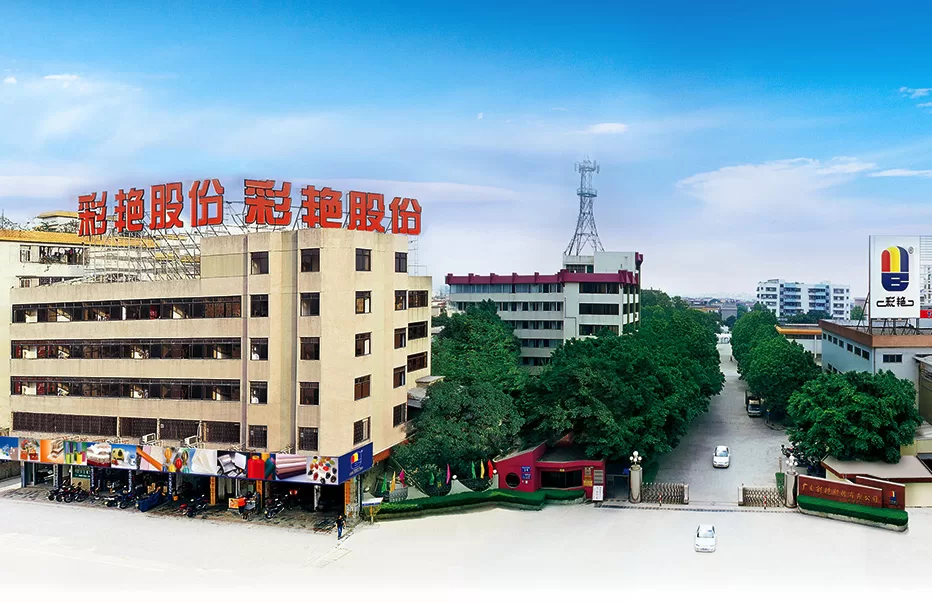
Charming Masterbatch: Technical Solutions for Plastic Manufacturers
Charming Masterbatch combines decades of experience in masterbatch processing and pigment dispersion technology with advanced German twin-screw machinery.
The company provides stable color masterbatch and functional masterbatch solutions for customers across China and international markets, including Europe, South America, Southeast Asia, the Middle East, and North Africa.
Beyond product supply, Charming offers technical support and individual development cooperation to help customers address practical production challenges and develop new applications.
Explore Charming Masterbatch products and solutions.
Our Expert Recommendation: Where Should Plastic Manufacturers Start?
After considering the seven sustainable practices, our recommendation is straightforward: improve the efficiency of existing production before making expensive sustainability investments.
For most plastic manufacturers, the best approach is to prioritize three areas.
First Priority: Reduce Material Waste
Start by measuring scrap, identifying recurring defects, and improving production consistency. Material that never becomes an acceptable finished product represents an avoidable loss of resources and money.
Second Priority: Improve Material and Masterbatch Efficiency
Review resin specifications, masterbatch formulations, dosing accuracy, and processing conditions. Work with suppliers that can provide technical support and application-specific formulation recommendations.
For manufacturers experiencing color inconsistency, poor dispersion, or functional performance issues, improving masterbatch selection may be a practical first step.
Third Priority: Reduce Energy Consumption
Monitor energy consumption per kilogram of acceptable output. Optimize machine settings, maintain heating and cooling systems, and evaluate equipment upgrades based on measurable operating savings.
For manufacturers with more advanced sustainability programs, recycled material integration, recyclable product design, and environmental management systems should become longer-term priorities.
Ultimately, the best sustainable practices for modern plastic manufacturing are not necessarily the most expensive or technically complicated. They are the improvements that produce measurable reductions in resource consumption while maintaining the performance and reliability customers expect.
Final Thoughts
Sustainable plastic manufacturing is becoming an important part of long-term industrial competitiveness. Manufacturers that improve material efficiency, reduce energy consumption, control production waste, and select suitable masterbatch formulations can strengthen both environmental performance and commercial operations.
There is no single solution that works for every factory. The right strategy depends on polymer type, product application, production equipment, customer specifications, and local environmental requirements.
Start with measurable operational improvements, validate new materials carefully, and work with technically capable suppliers. This approach creates a more realistic path toward sustainable plastic production without compromising product quality or manufacturing efficiency.
For manufacturers looking to improve color consistency, optimize additive formulations, or develop functional plastic materials, contact Charming Masterbatch through its product range to explore suitable technical solutions.
Frequently Asked Questions About Sustainable Plastic Manufacturing
1. What are the seven sustainable practices for modern plastic manufacturing?
The seven key practices are using recycled and responsibly sourced materials, improving energy efficiency, reducing production waste, optimizing masterbatch and additive usage, designing recyclable products, improving water management, and monitoring environmental performance. Together, they help manufacturers reduce resource consumption while maintaining production quality.
2. How can plastic manufacturers reduce their environmental impact?
Manufacturers can reduce their environmental impact by improving production yield, minimizing scrap, using suitable recycled polymers, reducing electricity and water consumption, and selecting materials that support recyclability. Measuring energy, water, and material consumption per kilogram of acceptable output helps identify the most effective improvements.
3. Is recycled plastic always more sustainable than virgin plastic?
Not necessarily. Recycled plastic can reduce demand for virgin raw materials, but its overall environmental performance depends on collection, sorting, transportation, processing, material quality, and the finished product’s service life. Recycled material should be evaluated using lifecycle considerations and application-specific performance requirements.
4. How does masterbatch contribute to sustainable plastic manufacturing?
Masterbatch can improve pigment dispersion, dosing accuracy, and functional additive distribution. A suitable formulation may reduce color defects, processing adjustments, and rejected products. However, sustainability benefits depend on actual dosage, polymer compatibility, formulation performance, and production results.
5. What is the most cost-effective sustainable practice for plastic manufacturers?
Reducing production waste is often one of the most cost-effective starting points. It can improve material utilization without requiring major equipment investment. Standardizing processing parameters, improving maintenance, and reducing startup scrap are practical measures that can generate operational savings.
6. Can masterbatch improve the recyclability of plastic products?
Some masterbatch formulations can be developed to support specific product and recycling requirements, but masterbatch does not automatically make a plastic product recyclable. Pigment chemistry, additive compatibility, polymer composition, product design, and local sorting infrastructure all influence recycling outcomes.
7. What should manufacturers look for in a sustainable masterbatch supplier?
Manufacturers should evaluate formulation consistency, pigment dispersion, polymer compatibility, production technology, quality control, technical documentation, and customization capabilities. Suppliers should also provide application guidance and support material testing to help customers select formulations that meet both performance and environmental requirements.
8. Does sustainable plastic manufacturing require expensive machinery?
No. Although equipment upgrades can improve long-term efficiency, many improvements involve better process control, equipment maintenance, material segregation, optimized masterbatch dosing, and waste reduction. Manufacturers should identify their largest operational losses before deciding whether new machinery is necessary.
9. What standards are relevant to sustainable plastic manufacturing?
Relevant frameworks include ISO 14001 for environmental management systems, applicable national and regional packaging regulations, and material-specific testing standards. Manufacturers should identify requirements based on their products, markets, and intended environmental claims rather than assuming one certification covers every sustainability issue.
10. How can a plastic manufacturer measure sustainability improvements?
Useful indicators include electricity consumption per kilogram of output, scrap rate, production yield, recycled material percentage, water consumption per kilogram, and greenhouse gas emissions per functional production unit. Establishing a baseline and reviewing these indicators regularly helps verify whether sustainability initiatives deliver measurable results.
References and Industry Resources
The following authoritative resources provide additional guidance on sustainable materials management, environmental management systems, and European plastics policy.
- U.S. Environmental Protection Agency (EPA) – Sustainable Materials Management. Guidance on reducing material use, improving resource efficiency, and managing materials throughout their lifecycle. https://www.epa.gov/smm
- International Organization for Standardization (ISO) – ISO 14001 Environmental Management. Information about environmental management systems and structured approaches to improving environmental performance. https://www.iso.org/iso-14001-environmental-management.html
- European Commission – Packaging and Packaging Waste. Official European information on packaging waste policy, packaging sustainability, and regulatory developments. https://environment.ec.europa.eu/topics/waste-and-recycling/packaging-waste_en