
In 2026, the demand for hygiene-conscious materials has transitioned from a niche requirement to a fundamental industry standard. Whether in medical devices, food packaging, or high-touch automotive interiors, the integration of high-performance antimicrobial additives for plastics is no longer optional for manufacturers aiming for global market leadership. As a senior expert in masterbatch processing and pigment dispersion, I have observed that the efficacy of these additives depends not just on the chemical agent itself, but on the precision of the carrier system and the stability of the dispersion technology used during manufacturing.
At Charming Masterbatch, we leverage decades of experience and advanced twin-screw machines from Germany to ensure that these complex functional agents are distributed with absolute uniformity. From our experience, a poorly dispersed antimicrobial agent is effectively useless, as it creates “weak spots” where bacteria can colonize. In this authoritative guide, we will analyze the top five antimicrobial additives for plastics currently dominating the 2026 landscape and provide practical insights on how to choose the right solution for your specific polymer matrix.
Table of Contents
- 2026 Market Overview: The Rise of Functional Plastics
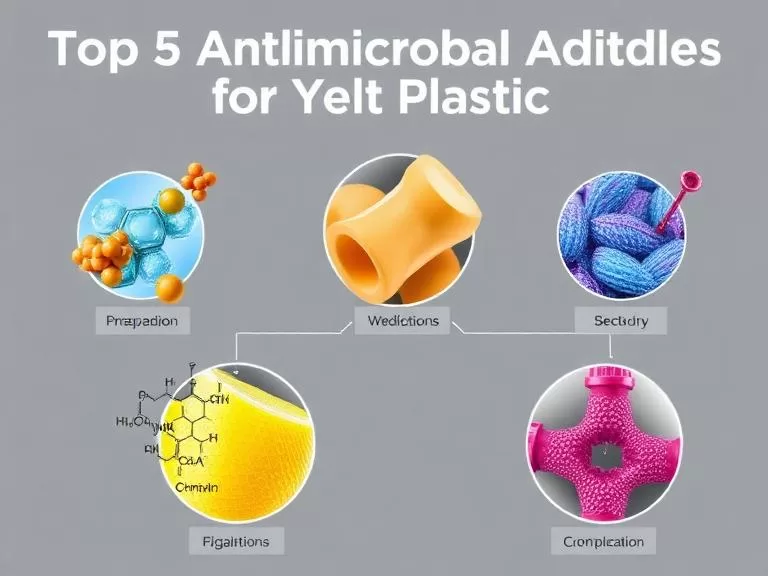
- The Top 5 Antimicrobial Additives for Plastics
- Technical Insights: Dispersion and Twin-Screw Technology
- Selection Guide by Polymer Type (PVC, PBT, etc.)
- Economic Outlook: Pricing and Masterbatch Costs
- Summary Table: Additive Comparison
- Frequently Asked Questions
- References
2026 Market Overview: The Rise of Functional Plastics
The global plastic industry in 2026 has undergone a significant shift toward “Active Protection.” Traditional passive materials are being replaced by polymers that actively inhibit the growth of bacteria, mold, and fungi. This change is driven by stricter regulations in the healthcare sector and a consumer base that prioritizes cleanliness in everyday products. We recommend that engineers look beyond basic surface coatings and instead focus on bulk-integrated antimicrobial additives for plastics, which provide life-long protection even if the product surface is scratched or worn.
When selecting a functional solution, understanding the underlying chemistry is vital. For instance, the choice between organic and inorganic agents can drastically affect the thermal stability and color consistency of your final product. As specialists in pigment dispersion, we know that adding functional additives can sometimes interfere with the color profile. Consulting an expert plastic color chart with codes is a critical step in ensuring that your antimicrobial protection does not compromise your brand’s aesthetic standards.
The Top 5 Antimicrobial Additives for Plastics
1. Silver Ion (Ag+) Technology
Silver remains the most widely used inorganic antimicrobial additive in 2026. Silver ions work by interfering with the bacterial cell wall and disrupting the metabolic processes of microorganisms. From our experience, silver is the preferred choice for medical-grade applications due to its broad-spectrum efficacy and low toxicity to humans. However, silver-based masterbatches require extremely high-quality carriers to prevent graying or discoloration during the high-heat extrusion process.
2. Copper-Based Compounds
Copper has seen a massive resurgence as one of the most effective antimicrobial additives for plastics in high-traffic public environments. Unlike silver, copper is particularly effective against a wider range of viruses. We recommend copper additives for industrial surfacing and public transportation components. The primary challenge with copper is its intense natural pigment, which requires a deep understanding of masterbatch composition guide principles to maintain color fidelity.
3. Zinc Pyrithione
Zinc pyrithione is the industry standard for anti-fungal and anti-mold protection. In 2026, it is predominantly used in outdoor furniture and construction materials. It is highly effective at preventing the “black spot” mold common in humid environments. Because zinc is an inorganic solid, achieving a fine dispersion is critical to prevent mechanical failure in thin films or fibers.
4. Organic Silane Quaternary Ammonium Compounds
Often referred to as “SiQuats,” these organic additives act as a physical “spike” that pierces the cell membranes of bacteria. These are non-leaching additives, meaning they remain permanently bonded to the polymer chain. We recommend SiQuats for applications where environmental leaching is a concern, such as in toys or food-contact materials. However, their thermal stability is lower than inorganic options, making them less suitable for polymers like PBT.
5. Bio-Based Essential Oil Extracts
The “green” trend of 2026 has introduced nano-encapsulated essential oils (like oregano or thyme) into the plastics market. While these are eco-friendly, they present significant processing challenges due to their volatility. At Charming, we utilize our German twin-screw technology to encapsulate these oils within a masterbatch, allowing them to withstand the heat of injection molding while providing a natural antimicrobial barrier.
Professional Insight: “The choice of an antimicrobial agent is only half the battle. If the additive is not dispersed to a sub-micron level, the efficacy drops by as much as 60%. At Charming Masterbatch, we focus on the synergy between the functional agent and the carrier resin to ensure that every square millimeter of the final plastic part is protected.”
Technical Insights: Dispersion and Twin-Screw Technology
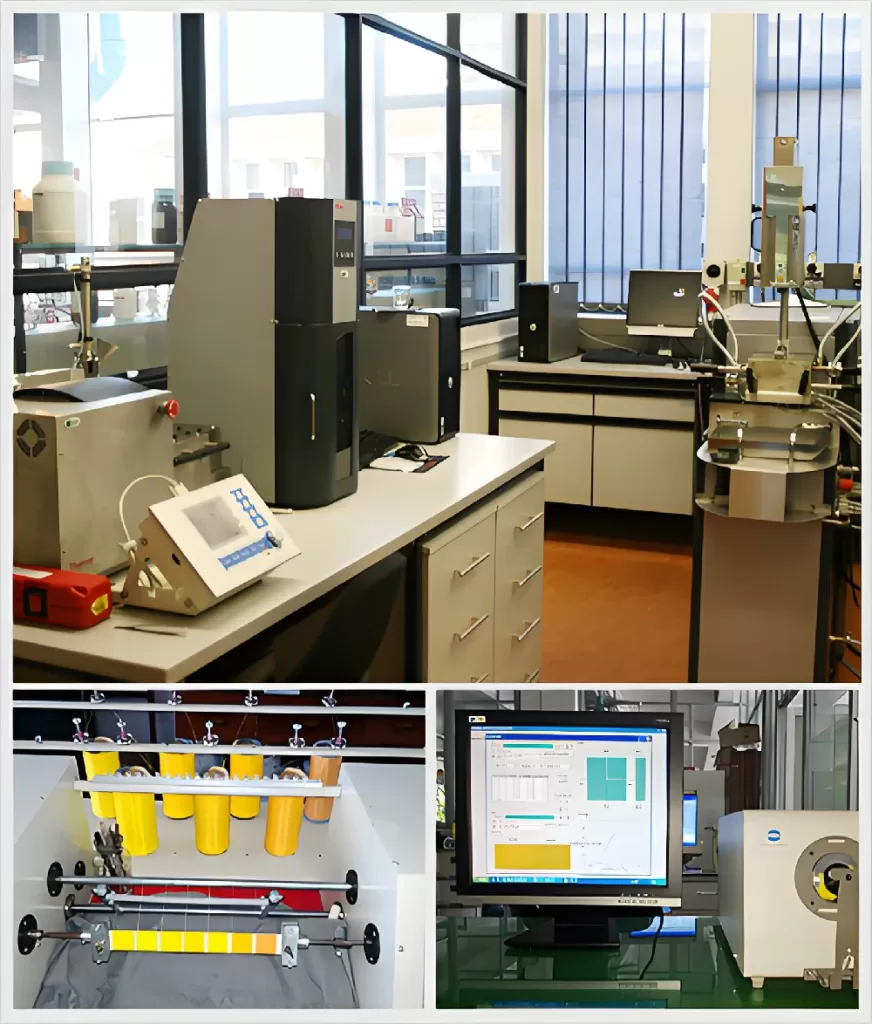
The manufacturing of functional masterbatches containing antimicrobial additives for plastics is a high-precision task. Standard single-screw extruders often fail to provide the shear force necessary to break down additive agglomerates. From our experience, the use of German twin-screw machines is non-negotiable for high-quality functional masterbatches. These machines allow for individual development cooperation, enabling us to tailor the dispersion technology to the specific particle size of the antimicrobial agent.
A major problem in the industry is the interaction between pigments and antimicrobial agents. Some silver-based additives can react with sulfur-containing pigments, leading to a “pinking” or “browning” effect. This is why a comprehensive understanding of what is PVC masterbatch and its chemical compatibility is essential before starting any new functional project.
Selection Guide by Polymer Type (PVC, PBT, etc.)
Different polymers have vastly different processing temperatures and chemical sensitivities, which dictates the choice of antimicrobial additives for plastics. We recommend following this polymer-specific logic:
- PVC (Polyvinyl Chloride): PVC is often used in flexible tubing and flooring. Because PVC is processed at lower temperatures, organic additives like Zinc Pyrithione are highly effective. For more details on the carrier systems, see our guide on what is PVC masterbatch.
- PBT (Polybutylene Terephthalate): PBT is a high-performance engineering plastic used in electronics and automotive parts. It requires additives with extreme thermal stability (up to 280°C). In this case, we exclusively recommend inorganic silver ion technology. Understanding what is PBT masterbatch is crucial for ensuring the functional additive does not degrade the polymer’s mechanical properties.
- Polyolefins (PE/PP): For packaging and consumer goods, a blend of organic and inorganic agents is often the most cost-effective solution.
Economic Outlook: Pricing and Masterbatch Costs
As we move through 2026, the price of antimicrobial additives for plastics has stabilized due to increased manufacturing efficiency in the Asia-Pacific region. However, the cost of the raw chemical agent is only one part of the equation. The “value” is found in the “let-down ratio” (LDR). A high-quality, highly concentrated masterbatch may have a higher price per ton but allows the manufacturer to use less material to achieve the same antimicrobial effect.
For procurement managers planning their 2026 budgets, we recommend consulting our updated analysis on plastic masterbatch price per ton 2026. This helps in understanding the market fluctuations caused by the rising costs of specialty inorganic pigments and functional resins.
Summary Table: Additive Comparison
| Additive Type | Mechanism | Thermal Stability | Primary Application | Durability |
|---|---|---|---|---|
| Silver Ion (Inorganic) | Ion Release / Metabolic Disruption | Excellent (Up to 600°C) | Medical & Food Contact | High (Long-term) |
| Copper (Inorganic) | Oxidative Stress / Viral Inhibition | Excellent | Public Surfaces / Transport | High |
| Zinc Pyrithione | Fungal Cell Wall Disruption | Moderate (Up to 240°C) | Flooring / Construction | Medium |
| Organic SiQuat | Mechanical Cell Piercing | Low (Up to 200°C) | Textiles / Consumer Goods | High (Non-leaching) |
| Bio-Based Oils | Enzymatic Inhibition | Low | Eco-Packaging | Low (Short-term) |
Frequently Asked Questions
Will antimicrobial additives for plastics affect the recyclability of the final product?
From our experience, inorganic antimicrobial additives for plastics like silver and copper do not interfere with the mechanical recycling process of the polymer. However, they must be properly declared in the material safety data sheet to ensure they are handled correctly at end-of-life facilities.
How do I verify the efficacy of the antimicrobial additive?
We recommend testing your final plastic part using ISO 22196 (Measurement of antibacterial activity on plastics) or JIS Z 2801. These tests provide a standardized way to measure the “Log Reduction” of bacteria like E. coli and MRSA over a 24-hour period.
Can I mix antimicrobial masterbatch with standard color masterbatch?
Yes, but it requires careful individual development. At Charming, we often provide combined solutions where the pigment and the antimicrobial agent are processed together in a single masterbatch, ensuring perfect dispersion of both components.
References
- American Chemistry Council (ACC). (2025). Trends in Antimicrobial Polymer Development.
- International Organization for Standardization. (2024). ISO 22196:2024 – Measurement of Antibacterial Activity.
- Journal of Applied Polymer Science. (2026). “The Role of German Twin-Screw Extrusion in Functional Masterbatch Dispersion.”
- Food and Drug Administration (FDA). (2026). Guidelines on Antimicrobial Additives for Food-Contact Plastics.
At Charming Masterbatch, we take pride in being more than just a supplier. We are a technical partner committed to helping our customers solve practical problems and develop new projects with creative solutions. By sharing our experience and technology, we grow together with our global partners across 18 countries, ensuring a cleaner and safer future through the power of functional plastics.