
Written by Charming Masterbatch
In the rapidly evolving world of polymer processing and textile manufacturing, ensuring brilliant coloration and functional stability in spunbond and meltblown fabrics is a complex engineering challenge. As a specialized manufacturer, we constantly encounter inquiries asking precisely what a non-woven masterbatch is and why it requires significantly stricter manufacturing tolerances compared to standard injection molding colorants. From our experience, utilizing the correct non-woven masterbatch dictates the entire success of the fabric spinning process, impacting everything from filter pressure values to final tensile strength.
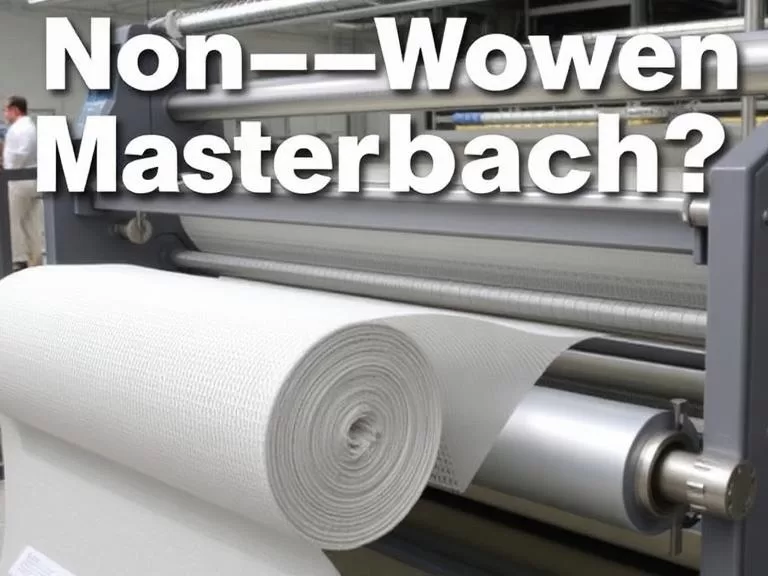
At Charming Masterbatch, we pride ourselves on delivering stable, high-quality color solutions and creative functional masterbatch solutions for our global customers. With advanced twin screw machines imported from Germany and decades of experience in masterbatch processing and pigment dispersion technology, we have optimized the exact chemical and mechanical parameters required to produce the perfect non-woven masterbatch. Today, our products are highly recognized in the Chinese market and we export to over 18 countries across Europe, South America, Southeast Asia, the Middle East, and North Africa. In this comprehensive guide, we will explore the definition, manufacturing intricacies, applications, and crucial performance metrics of non-woven masterbatch.
Table of Contents
- 1. The Definition and Composition of Non-Woven Masterbatch
- 2. The Precision Manufacturing Process
- 3. Key Properties and Requirements for Non-Woven Fabrics
- 4. Types of Non-Woven Masterbatch
- 5. Modern Industry Applications
- 6. Choosing the Right Global Supplier
- 7. Summary Table: Non-Woven Masterbatch Overview
- 8. Frequently Asked Questions (FAQs)
- 9. Industry References
1. The Definition and Composition of Non-Woven Masterbatch
A non-woven masterbatch is a highly concentrated solid additive consisting of pigments, dyes, or specific functional chemical additives encapsulated within a carrier resin. This specialized masterbatch is designed explicitly for the spunbond, meltblown, and spunlace non-woven fabric manufacturing processes. When manufacturers aim to learn how to color plastic permanently within the textile sector, they rely entirely on these precisely formulated compounds.
The formulation of a non-woven masterbatch requires three primary components:
- Premium Pigments: Unlike general plastics, non-woven fibers are drawn to extreme thinness, often measuring less than 2 denier. Therefore, the pigments used in a non-woven masterbatch must possess exceptional color strength, high thermal stability, and be completely free of large agglomerates.
- Carrier Resin: The carrier resin must be perfectly compatible with the base polymer of the fabric. In the non-woven sector, Polypropylene (PP) and Polyethylene Terephthalate (PET) are the most common. A mismatched carrier will disrupt the molecular orientation during fiber spinning.
- Dispersants and Additives: High-performance waxes and dispersing agents are utilized to ensure that the pigment particles are uniformly distributed throughout the carrier resin. This microscopic dispersion is what separates a standard colorant from an elite non-woven masterbatch.
2. The Precision Manufacturing Process
Manufacturing a non-woven masterbatch is a demanding thermodynamic and mechanical process. The margin for error is virtually zero. If pigment particles are not adequately sheared and dispersed, they will instantly block the microscopic holes of the spinneret during the non-woven extrusion process, leading to a phenomenon known as “spin break.”
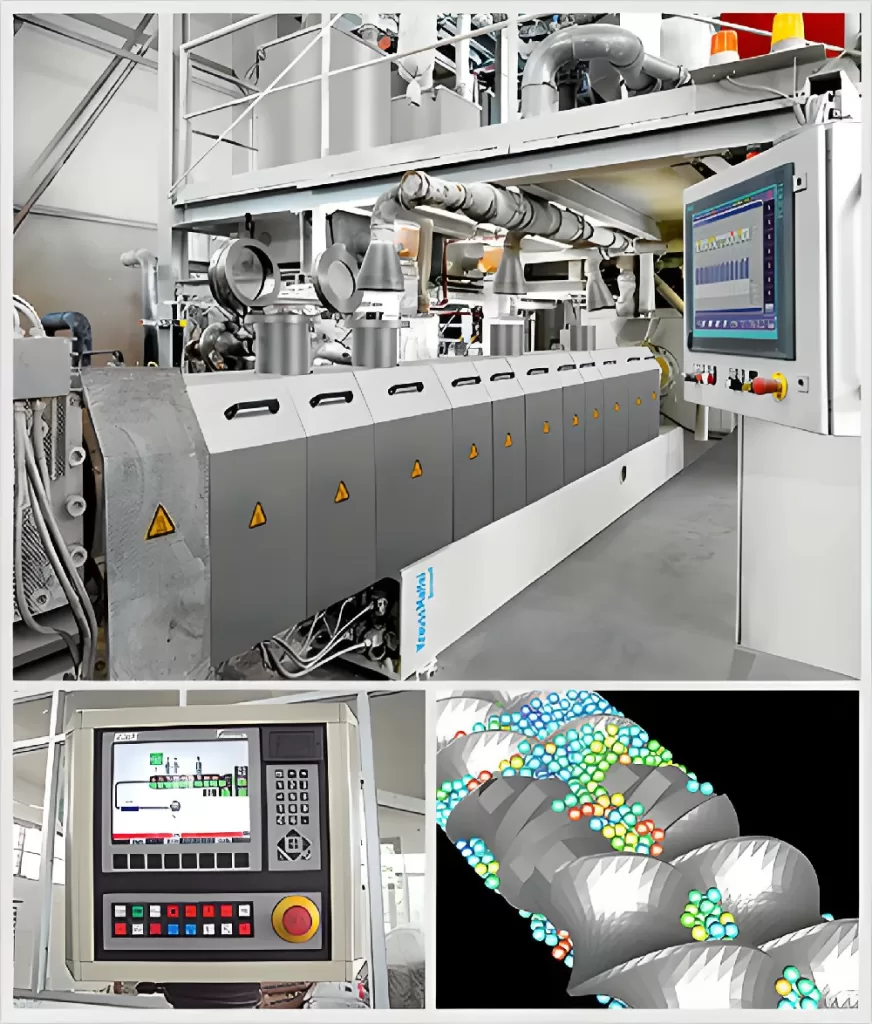
From our experience, the key to flawless dispersion lies in the equipment. At Charming Masterbatch, we utilize advanced twin screw machines from Germany. These machines provide intense, controllable shear forces that break down pigment agglomerates to sub-micron levels without degrading the carrier polymer. The comprehensive masterbatch production process involves precise gravimetric feeding, intensive melt mixing, strand cooling, and uniform pelletizing. Throughout these stages, temperature control is paramount. If the processing temperature exceeds the degradation point of the pigment, the resulting non-woven masterbatch will exhibit severe color shifting and reduced physical properties.
3. Key Properties and Requirements for Non-Woven Fabrics
When evaluating a non-woven masterbatch, engineers and procurement specialists must look beyond simple color matching. We recommend assessing the following critical performance metrics:
- Filter Pressure Value (FPV): This is arguably the most crucial metric for a non-woven masterbatch. The FPV measures the rate at which a masterbatch clogs a standard screen pack under pressure. A low FPV indicates excellent dispersion, ensuring continuous, uninterrupted fiber spinning.
- High Melt Flow Index (MFI) Compatibility: Spunbond and meltblown processes utilize base resins with very high melt flow rates. The non-woven masterbatch must match this rheology to blend seamlessly into the melt stream without altering the viscosity and causing fiber irregularities.
- Thermal Stability: The extrusion temperatures for PP and PET non-wovens are exceptionally high. The pigments within the non-woven masterbatch must withstand these temperatures without migrating, sublimating, or decomposing.
- Environmental Safety: For applications in medical and hygiene sectors, the non-woven masterbatch must be free of heavy metals, comply with REACH regulations, and meet strict FDA or equivalent biocompatibility standards.
4. Types of Non-Woven Masterbatch
While coloration is the most visible application, the non-woven masterbatch industry provides vast functional modifications. At Charming Masterbatch, we categorize these into two primary sectors:
Color Non-Woven Masterbatch
This category includes standard whites (heavily loaded with premium Titanium Dioxide), deep blacks (utilizing nano-scale carbon black), and vibrant custom colors. Our color matching laboratory ensures Delta E tolerances are kept to absolute minimums, providing batch-to-batch consistency for global medical and agricultural brands.
Functional Additive Non-Woven Masterbatch
Understanding what is additive masterbatch is essential for modern fabric engineering. Functional non-woven masterbatch formulations alter the physical characteristics of the fiber. Examples include:
- Hydrophilic Masterbatch: Used primarily in diapers and sanitary napkins to allow moisture to pass through the top sheet rapidly.
- Hydrophobic Masterbatch: Essential for surgical gowns and medical drapes to repel blood and aqueous fluids.
- Flame Retardant Masterbatch: Incorporated into automotive interiors and construction non-wovens to meet strict flammability standards.
- UV Stabilizer Masterbatch: Protects agricultural crop covers and geotextiles from rapid degradation caused by prolonged solar exposure.
5. Modern Industry Applications
The versatility of a high-quality non-woven masterbatch has facilitated the explosive growth of the non-woven textile sector across multiple diverse industries.
In the medical and hygiene sectors, non-woven masterbatch is the foundation for colorful, safe, and fluid-resistant surgical masks, isolation gowns, baby diapers, and adult incontinence products. The brilliant blues, soft greens, and pure whites seen in hospitals are achieved through precise non-woven masterbatch dosing.
In the agricultural sector, specialized black and green non-woven masterbatch formulations are used to produce crop covers, weed barriers, and frost protection blankets. These fabrics rely heavily on our UV stabilization technology to survive multiple harvesting seasons.
Furthermore, the packaging and furniture industries utilize non-woven masterbatch to create reusable shopping bags, mattress covers, and upholstery linings. The demand for creative, vibrant colors in these consumer-facing products drives our continuous R&D efforts.
6. Choosing the Right Global Supplier
Selecting the correct manufacturing partner is a strategic decision that directly impacts your factory’s yield and final product quality. We highly recommend partnering with companies that appear on the lists of the color concentrate manufacturers, characterized by robust quality control and global reach.
Charming Masterbatch does not merely sell products; we provide complete technical support services and engage in individual development cooperation. If you are facing high screen pack pressure, frequent spin breaks, or require a specialized functional additive, we invite you to contact masterbatch supplier experts directly. We are deeply proud to share our decades of experience and technology with our customers, helping them solve practical problems and grow together in a highly competitive global market.
7. Summary Table: Non-Woven Masterbatch Overview
| Characteristic | Specification / Detail | Importance in Non-Woven Production |
|---|---|---|
| Pigment Dispersion | Sub-micron particle size distribution | Prevents spinneret clogging and eliminates fiber breakage during drawing. |
| Filter Pressure Value (FPV) | Ultra-low pressure buildup | Ensures continuous production runs without frequent screen changes. |
| Carrier Compatibility | Usually 100% pure PP or PET | Maintains the tensile strength and elongation properties of the base fiber. |
| Functional Additives | UV, Flame Retardant, Hydrophilic, Softness | Allows single-step modification of fabric performance during extrusion. |
| Thermal Stability | Resistance to degradation at 250°C – 300°C | Prevents color shifting and volatile emissions during high-speed spinning. |
8. Frequently Asked Questions (FAQs)
What makes non-woven masterbatch different from standard injection molding masterbatch?
From our experience, the primary difference is the dispersion quality. Injection molding can tolerate larger pigment particles without failure. However, non-woven fibers are microscopic (often less than 20 microns in diameter). If a standard injection masterbatch is used in a non-woven extruder, the large agglomerates will instantly block the spinneret holes or cause the delicate fibers to snap under tension.
Can I use a PE carrier non-woven masterbatch in a PP spunbond line?
We strongly recommend against this. While Polyethylene (PE) is a common universal carrier in standard plastics, mixing PE into a Polypropylene (PP) non-woven process will create phase separation. This incompatibility drastically reduces the tensile strength of the non-woven fabric and disrupts the molecular alignment of the fibers.
How does Charming Masterbatch ensure batch-to-batch color consistency?
We utilize advanced twin screw machines from Germany combined with highly precise gravimetric dosing systems. Every batch of our non-woven masterbatch is analyzed in our laboratory using spectrophotometers to ensure the Delta E (color variation) remains strictly within acceptable global tolerances before being approved for export.
9. Industry References
To further expand your knowledge regarding polymer engineering, fiber spinning dynamics, and global safety standards for textiles, we recommend consulting the following authoritative resources:
- National Institute of Standards and Technology (NIST) – Polymer Processing Research: Authoritative data on rheology and the thermodynamics of polymer melt extrusion.
- U.S. Food and Drug Administration (FDA) – Medical Devices: Regulatory guidelines outlining the biocompatibility and safety requirements for non-woven fabrics utilized in medical and surgical applications.