
In the rapidly evolving sector of additive manufacturing, achieving brilliant color, functional durability, and absolute extrusion consistency is a continuous engineering challenge. Filament manufacturers must maintain strict dimensional tolerances while ensuring that colorants and functional additives do not compromise the polymer matrix. This is where specialized raw materials come into play. A recurring question among polymer engineers and filament extrusion specialists is: what exactly is 3d masterbatch, and how does it differ from traditional injection molding colorants?
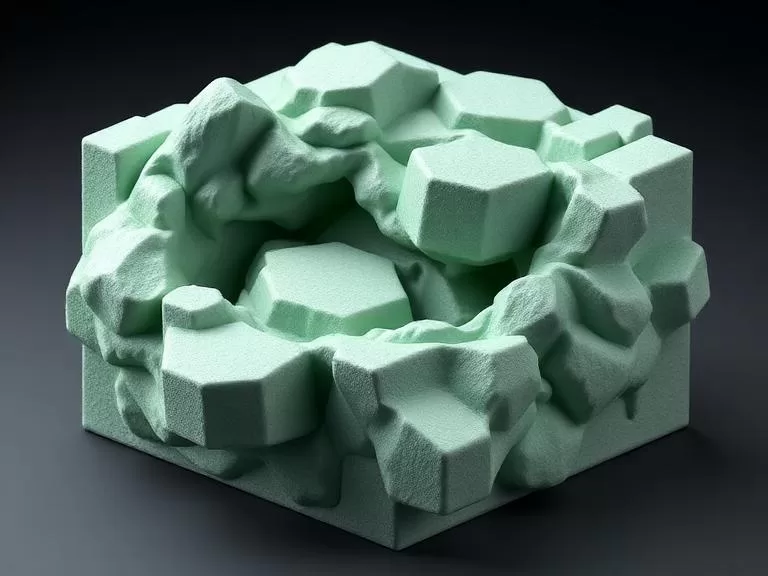
At Charming Masterbatch, we have dedicated our technical resources to perfecting the dispersion of pigments and functional additives for high-precision applications. With advanced twin screw machines from Germany and decades of experience in Masterbatch processing and pigment dispersion technology, Charming provides stable high quality color Masterbatch and creative functional Masterbatch solutions for our customers. In this comprehensive guide, we will analyze the technical definitions, manufacturing processes, and critical performance metrics of 3d masterbatch, providing you with the knowledge needed to optimize your 3D printing filament production lines.
Table of Contents
- 1. The Core Definition: What is 3d masterbatch?
- 2. Technical Distinctions of 3d masterbatch vs. Standard Masterbatch
- 3. The Importance of Dispersion Technology in 3D Printing
- 4. Functional Additives Integrated into 3d masterbatch
- 5. Carrier Resin Compatibility and Melt Flow Index
- 6. The Charming Masterbatch Manufacturing Advantage
- 7. Summary Table: 3d masterbatch vs. Conventional Masterbatch
- 8. Frequently Asked Questions (FAQs)
- 9. Academic and Industry References
1. The Core Definition: What is 3d masterbatch?
A 3d masterbatch is a highly concentrated solid additive used for coloring plastics or imparting specific functional properties during the extrusion of 3D printing filaments, such as Polylactic Acid (PLA), Acrylonitrile Butadiene Styrene (ABS), Polyethylene Terephthalate Glycol (PETG), and Thermoplastic Polyurethane (TPU). Unlike liquid colorants or raw powder pigments, a 3d masterbatch encapsulates the active pigments and chemical additives within a compatible polymer carrier resin.
From our experience, standard commercial masterbatch designed for film blowing or injection molding is highly unsuitable for additive manufacturing. 3D printer nozzles frequently range from 0.2mm to 0.4mm in diameter. Any agglomeration of pigment particles, unmelted carrier resin, or impurities will immediately cause nozzle clogging, ruining the print and potentially damaging the hardware. Therefore, a true 3d masterbatch is engineered at the sub-micron level, ensuring that the dispersion of color and functional additives is perfectly uniform and devoid of any particulate clusters.
2. Technical Distinctions of 3d masterbatch vs. Standard Masterbatch
To fully grasp the mechanics of a 3d masterbatch, one must understand the stringent requirements of filament extrusion. Producing a spool of 1.75mm or 2.85mm filament requires a tolerance of +/- 0.02mm. If the 3d masterbatch causes fluctuations in the polymer melt viscosity, the filament diameter will become erratic, leading to extrusion failure in the end-user’s 3D printer.
We recommend utilizing a 3d masterbatch that boasts an exceptionally low Filter Pressure Value (FPV). The FPV is a critical laboratory metric that measures the pressure buildup across a fine screen filter during extrusion. A low FPV indicates flawless pigment dispersion without agglomerates. Conventional masterbatch may have acceptable FPVs for molding a plastic chair, but for a 3D printing filament, the FPV must be aggressively controlled to prevent micro-clogging during the high-shear extrusion process.
Additionally, moisture content is a severe enemy of 3D printing. Polymers like PLA and PETG are highly hygroscopic. If the 3d masterbatch contains residual moisture from the manufacturing process, it will introduce steam bubbles into the filament, causing popping, stringing, and weak layer adhesion during printing. High-end 3d masterbatch undergoes rigorous desiccant drying and is packaged in vacuum-sealed, moisture-barrier foils.
3. The Importance of Dispersion Technology in 3D Printing
From our experience at Charming Masterbatch, the secret to a flawless 3d masterbatch lies in the compounding phase. Achieving nano-scale dispersion prevents pigment agglomeration, ensuring vibrant color saturation without altering the mechanical strength of the filament.
Pigments naturally want to clump together due to electrostatic forces. In a 3d masterbatch, these clumps must be broken down and evenly distributed. We utilize advanced twin screw machines from Germany to achieve high-shear mixing. The specific geometry of the twin screws, combined with precise temperature profiles, applies the exact mechanical shear needed to tear apart pigment agglomerates and coat them individually with the carrier polymer.
If dispersion is inadequate, the resulting filament will suffer from poor color consistency. This is critical for filament brands that require exact color replication batch after batch. To ensure global color standard compliance, we rely on precise spectrophotometry. For a deeper understanding of how colors are standardized across the polymer industry, we recommend reviewing our comprehensive masterbatch color code chart.
4. Functional Additives Integrated into 3d masterbatch
While color is the most visible aspect, a 3d masterbatch is frequently formulated to deliver functional mechanical properties to the base filament. Additive manufacturing applications are expanding into aerospace, automotive, and outdoor architectural modeling, requiring advanced polymer engineering.
UV Stability and Weathering Resistance
Standard polymers degrade rapidly when exposed to ultraviolet radiation from sunlight, becoming brittle and losing their color. By incorporating hindered amine light stabilizers (HALS) and UV absorbers into a functional 3d masterbatch, filament manufacturers can produce materials suitable for outdoor drone parts or automotive exterior prototypes. To explore this specific functionality, read our detailed guide on UV masterbatch uses and benefits.
Dimensional Stability and Shrinkage Control
Materials like ABS and Polycarbonate (PC) are notorious for warping and shrinking as they cool during the 3D printing process. A specialized filler-based 3d masterbatch can be introduced to lower the coefficient of thermal expansion. Inorganic nano-fillers, when properly dispersed, act as nucleating agents that stabilize the polymer matrix. However, the particle size of the filler must be strictly controlled to prevent nozzle abrasion. Learn more about the intricacies of filled polymers in our article on what is filler masterbatch.
5. Carrier Resin Compatibility and Melt Flow Index
One of the most frequent errors we observe in filament extrusion is the mismatch of carrier resins. A 3d masterbatch must utilize a carrier resin that is metallurgically and thermodynamically compatible with the base polymer. If you are extruding a PLA filament, using a 3d masterbatch with a Polyethylene (PE) carrier will cause phase separation, delamination, and severe mechanical weakness in the printed object.
Furthermore, the Melt Flow Index (MFI) of the 3d masterbatch must closely match the MFI of the virgin resin. If the masterbatch melts significantly faster or slower than the base polymer, it will create surging in the extruder barrel. This surging leads to inconsistent filament diameters. At Charming Masterbatch, we formulate our 3d masterbatch products with exact carrier matching—providing pure PLA carriers for PLA filaments, and specific modified co-polyester carriers for PETG.
6. The Charming Masterbatch Manufacturing Advantage
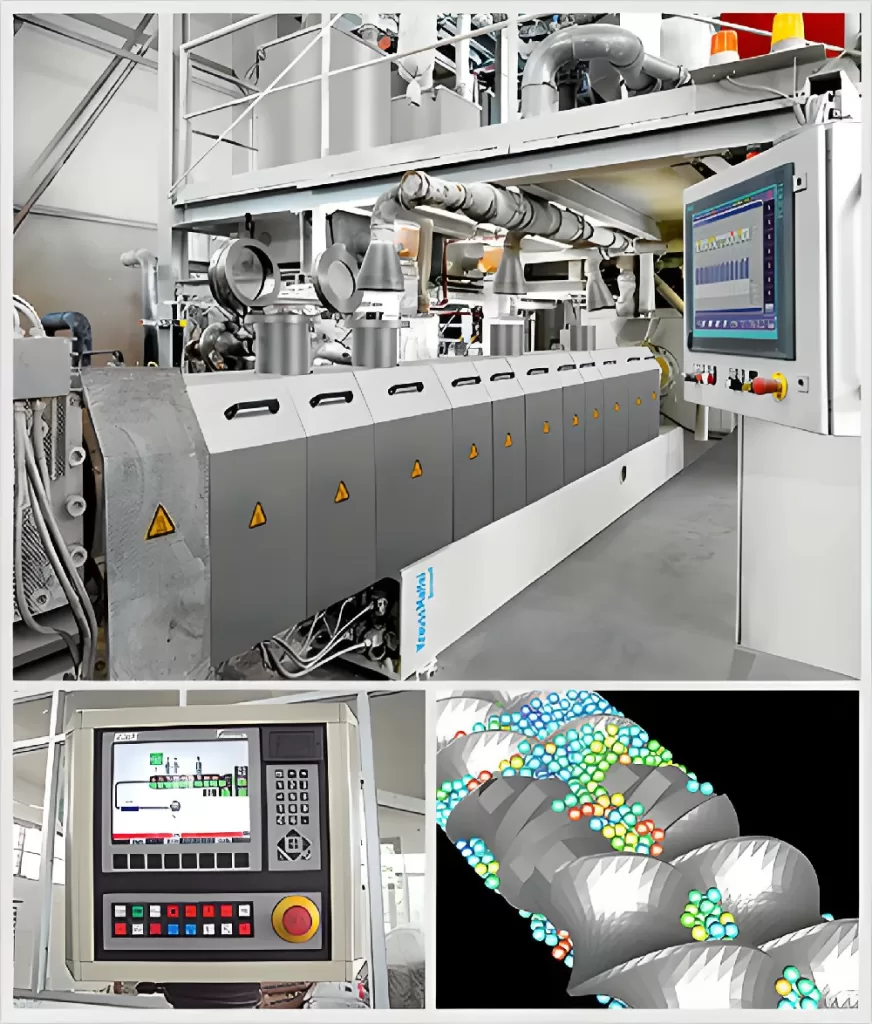
Charming Masterbatch is well known in China market, and exports to Europe, South America, Southeast Asia, Middle East, North Africa etc about 18 countries and markets worldwide. Our footprint in the global polymer additive sector is built on relentless quality control and bespoke engineering.
Not only products, Charming provides complete technical support service and individual development cooperation, which can help our customers solve practical problems and develop new projects with creative solutions. When filament manufacturers approach us to develop a customized 3d masterbatch, we analyze their specific extrusion equipment, target printing temperature ranges, and end-use mechanical requirements.
We are so proud that we can share our experience and technology with customers and grow up together. Whether you are looking for standard vibrant colors or highly specialized black formulations with high jetness and low undertone, finding the right partner is critical. We encourage you to review our insights on sourcing global excellence by exploring the masterbatch suppliers worldwide and our targeted black masterbatch suppliers guide.
7. Summary Table: 3d masterbatch vs. Conventional Masterbatch
| Technical Parameter | Standard Injection Molding Masterbatch | Engineered 3d masterbatch |
|---|---|---|
| Pigment Dispersion | Standard macro-dispersion; minor agglomeration acceptable. | Sub-micron nano-dispersion; zero agglomeration required. |
| Filter Pressure Value (FPV) | Moderate to High. | Exceptionally Low to prevent 3D printer nozzle clogging. |
| Moisture Content | Tolerable limits depending on application. | Strictly controlled (< 0.05%) to prevent filament bubbling. |
| Carrier Resin Selection | Often universal carriers (LLDPE/EVA) to reduce costs. | Strictly matched to base polymer (e.g., Pure PLA for PLA filament). |
| Melt Rheology | Broad tolerance ranges. | Highly calibrated MFI to ensure consistent filament diameter. |
8. Frequently Asked Questions (FAQs)
Why does my 3D printer nozzle keep clogging when using custom colored filament?
From our experience, nozzle clogging is the primary symptom of a low-quality colorant. If the filament manufacturer used a conventional masterbatch instead of a dedicated 3d masterbatch, pigment agglomerates larger than the nozzle diameter (typically 0.4mm) will eventually accumulate in the hotend, blocking the extrusion path entirely.
What is the typical let-down ratio (LDR) for a 3d masterbatch?
We recommend a let-down ratio (dosing rate) between 1% and 4% for 3D printing filaments. High-quality 3d masterbatch formulations are highly concentrated, meaning lower addition rates are required to achieve full opacity. Keeping the addition rate low preserves the native mechanical properties of the virgin polymer matrix.
Can a 3d masterbatch improve the layer adhesion of printed parts?
Yes. By utilizing a 3d masterbatch formulated with specific rheology modifiers and precise carrier compatibility, the polymer melt dynamics are improved. This ensures that the extruded filament retains optimal thermal energy as it exits the nozzle, promoting superior fusion with the previously printed layer.
Does moisture affect 3d masterbatch during storage?
Absolutely. Because 3d masterbatch is often made with hygroscopic carriers like PLA or PETG, it will absorb ambient humidity. We recommend storing all 3d masterbatch supplies in vacuum-sealed bags with desiccants. If moisture is absorbed, it must be pre-dried in a hopper dryer prior to the filament extrusion process.
9. Academic and Industry References
- National Institute of Standards and Technology (NIST) – Additive Manufacturing Materials Research
- ASTM International – Committee F42 on Additive Manufacturing Technologies
- Journal of Applied Polymer Science: Rheological and Morphological Effects of Pigment Dispersion in Fused Deposition Modeling Filaments.
In conclusion, a 3d masterbatch is not merely a colorant; it is a highly engineered chemical compound critical to the success of additive manufacturing. By ensuring optimal dispersion, strict moisture control, and precise rheological matching, filament manufacturers can deliver the reliability that modern 3D printing demands. Partnering with a globally recognized expert like Charming Masterbatch guarantees that your extrusion lines operate flawlessly, producing vibrant, high-performance filaments that lead the market.