
In the world of industrial production, chemical formulation, and specialized manufacturing, efficiency is paramount. Whether you are dealing with liquid chemical solutions or solid polymer additives, creating concentrated batches ahead of time is a standard industry practice. A common question among formulation specialists and manufacturers is precisely how long does master batch lye last when prepared in bulk. Proper preparation, storage, and environmental controls dictate whether your solution remains potent or degrades into an unusable state.
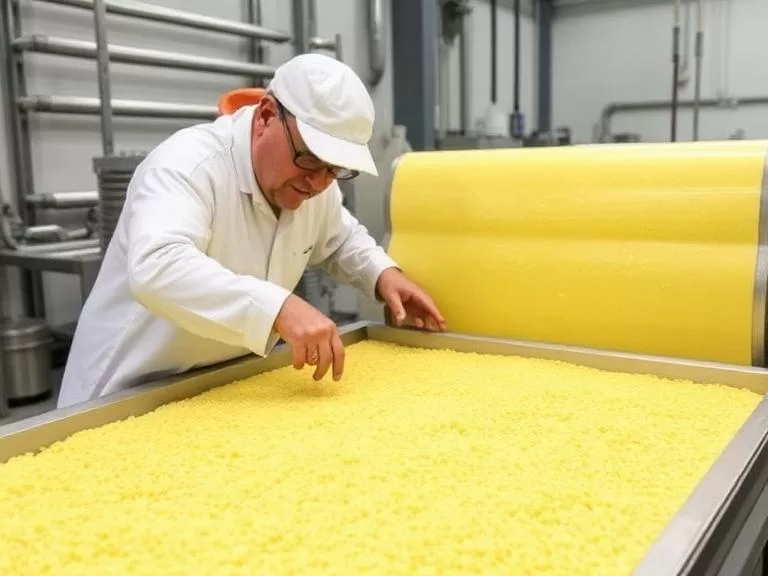
At Charming Masterbatch, we understand the critical nature of stability and shelf life in masterbatching processes. With advanced twin screw machines from Germany and decades of experience in Masterbatch processing and pigment dispersion technology, Charming provides stable high quality color Masterbatch and creative functional Masterbatch solutions for our customers. While our core expertise lies in polymer and plastic masterbatches, the fundamental principles of chemical stability, dispersion, and storage remain universal across manufacturing sectors. In this comprehensive guide, we will explore the longevity of liquid lye (sodium hydroxide) master batches, the factors that cause degradation, and how these principles translate to ensuring longevity in industrial manufacturing.
Table of Contents
- What is a Lye Master Batch?
- How Long Does Master Batch Lye Last?
- Summary Table: Storage and Lifespan
- Factors Affecting How Long Master Batch Lye Last
- Best Practices to Make Master Batch Lye Last
- The Charming Masterbatch Expertise: From Liquid to Polymer Stability
- Frequently Asked Questions (FAQs)
- References
What is a Lye Master Batch?
Before answering the core question regarding how long does master batch lye last, it is essential to define the practice. In chemical processing, particularly in soap making and specialized cleaning agent production, master-batching refers to the process of pre-mixing a large quantity of sodium hydroxide (lye) with distilled water. Instead of mixing individual lye solutions for every single production run, manufacturers create a highly concentrated or pre-measured bulk solution. This saves immense amounts of production time, allows the exothermic reaction to cool completely before use, and reduces the frequency of exposing workers to hazardous raw lye fumes.
Just as Charming Masterbatch creates highly concentrated solid pellets of colorants and functional additives to be diluted into raw polymers, a lye master batch is a concentrated liquid solution intended to be utilized efficiently over multiple production cycles. However, ensuring that your master batch lye last without losing its chemical potency requires strict adherence to environmental controls.
How Long Does Master Batch Lye Last?
From our experience in observing chemical and physical stability in manufacturing, the simple answer to how long does master batch lye last is that it can last indefinitely, provided it is stored under absolutely perfect conditions. Sodium hydroxide in a purely aqueous solution does not inherently expire or break down on its own. However, in practical, real-world manufacturing environments, perfection is rarely achieved.
In standard production environments, we recommend planning for a shelf life of six to twelve months. To see your master batch lye last this long, it must be kept in an airtight, heavy-duty container made of compatible materials. If the storage container is opened frequently, introducing fresh air into the headspace of the vessel, the effective lifespan will decrease significantly. The primary enemy of a master batch lye solution is not time, but carbon dioxide.
Summary Table: Storage and Lifespan
To help you understand the parameters that dictate how long does master batch lye last, we have compiled a summary table detailing different storage scenarios and their expected outcomes.
| Storage Condition | Container Material | Estimated Shelf Life | Expected Chemical Degradation |
|---|---|---|---|
| Airtight, unopened, cool temperature | HDPE (High-Density Polyethylene) | 12+ Months to Indefinite | Minimal to none. Solution remains highly potent. |
| Frequently opened, ambient temperature | HDPE or Polypropylene (PP) | 3 to 6 Months | Moderate. Formation of sodium carbonate crust (lye lint) on the surface. |
| Airtight, cool temperature | Glass or PET Plastic | Not Recommended (Hazardous) | Lye etches glass and degrades PET, risking structural failure and leaks. |
| Open to air / poorly sealed | Any suitable plastic | Less than 1 Month | Severe. Rapid reaction with CO2 causing drastic loss of alkalinity. |
Factors Affecting How Long Master Batch Lye Last
To ensure your master batch lye last as long as your production schedule requires, you must understand the chemical vulnerabilities of sodium hydroxide solutions. There are three primary factors that compromise the stability of your pre-mixed batches.
1. Carbon Dioxide Exposure
As mentioned, the most significant threat to making a master batch lye last is atmospheric carbon dioxide. When sodium hydroxide is exposed to air, it aggressively absorbs moisture and carbon dioxide. This chemical reaction produces sodium carbonate, commonly referred to in the industry as “lye lint” or “lye crust.” As sodium carbonate forms and precipitates out of the solution, the remaining liquid loses its alkalinity and strength. A weak lye solution will ruin subsequent chemical formulations. Therefore, minimizing headspace in your storage container and keeping the lid tightly sealed is the only way to ensure your master batch lye last.
2. Container Compatibility
The container you choose heavily influences how long does master batch lye last. Sodium hydroxide is highly caustic. If you store it in glass, the lye will slowly etch and dissolve the silica, eventually causing the glass to shatter without warning. If you store it in thin PET plastic (like standard water bottles), the caustic nature of the liquid will eat through the plastic. We recommend heavy-duty High-Density Polyethylene (HDPE) or Polypropylene (PP) containers. These plastics are chemically inert to sodium hydroxide and will help your master batch lye last safely.
3. Temperature Fluctuations
While liquid lye solutions are not as thermally sensitive as some complex polymer additives, extreme temperature drops can cause the sodium hydroxide to precipitate out of the water, forming crystals at the bottom of the container. If this occurs, the solution must be carefully warmed and stirred to redissolve the solids before use, otherwise, the concentration will be inaccurate.
Best Practices to Make Master Batch Lye Last
From our experience consulting with various manufacturing facilities, implementing rigorous standard operating procedures is crucial. To make your master batch lye last, we recommend the following practical steps:
- Use airtight spigot containers: Instead of opening a wide-mouth jug to pour the solution, use a container with a dispensing spigot. This prevents fresh air from rushing into the container every time you draw from the batch, significantly helping the master batch lye last longer.
- Filter before use: If you notice a thin white crust (sodium carbonate) forming on the surface, your master batch lye last days might be numbered, but it can often still be used if you filter the liquid through a fine stainless steel mesh to remove the solids.
- Batch sizing: Only master batch an amount that you realistically intend to consume within a three to six-month window. This prevents long-term degradation and wasted materials.
The Charming Masterbatch Expertise: From Liquid to Polymer Stability
The meticulous attention to chemical stability, proper storage, and degradation prevention required to make master batch lye last is directly applicable to the world of polymer and plastics manufacturing. Charming Masterbatch is well known in China market, and exports to Europe, South America, Southeast Asia, Middle East, North Africa etc about 18 countries and markets worldwide. We understand that whether you are dealing with liquid chemical bases or highly concentrated polymer pellets, stability is the foundation of quality.
Not only products, Charming provides complete technical support service and individual development cooperation, which can help our customers solve practical problems and develop new projects with creative solutions. We are so proud that we can share our experience and technology with customers and grow up together.
Color Masterbatch and Dispersion Technology
Just as a lye master batch relies on the perfect dissolution of sodium hydroxide in water, our Color Masterbatch relies on the flawless dispersion of pigments within a carrier resin. Utilizing our advanced twin screw machines, we ensure that our colorants do not agglomerate or degrade during storage, providing vibrant, consistent coloring for your end products.
Functional Masterbatch Solutions
Environmental factors degrade plastics just as CO2 degrades liquid lye. To combat this, we have engineered a suite of Functional Masterbatch products tailored to extend the lifespan and utility of your manufactured goods:
- Antimicrobial: Formulated to prevent the growth of bacteria, fungi, and mold on plastic surfaces, essential for medical and food-contact applications.
- Antistatic: Designed to dissipate electrical charges on the surface of plastics, preventing dust accumulation and dangerous static discharge during manufacturing.
- Flame Retardant: Critical additives that inhibit the ignition and spread of fire in plastic materials, ensuring compliance with strict global safety standards.
- UV stabilizer: Just as certain chemicals degrade under UV light, plastics become brittle and discolored when exposed to the sun. Our UV stabilizer masterbatches absorb or interrupt the photo-degradation process, vastly extending the outdoor lifespan of your plastic products.
Applications in Fiber and Film
Our high-quality formulations are rigorously tested for performance in demanding applications such as Fiber / Filament / BCF / Nowoven and Film / Plastic manufacturing. In these ultra-thin applications, even microscopic inconsistencies or degradations in the masterbatch can cause tear-outs and production failures. Our dedication to stability ensures your production lines run seamlessly.
Frequently Asked Questions (FAQs)
If left exposed to the open air, a master batch lye solution will react rapidly with carbon dioxide in the atmosphere. You will see a heavy crust form within days, and the solution will lose its chemical potency within a few weeks. To ensure your master batch lye last, it must be sealed airtight.
“`
Absolutely not. We strongly recommend against using glass. Sodium hydroxide chemically attacks and etches glass over time. This compromises the structural integrity of the container, leading to dangerous leaks or shattering. Always use HDPE or PP plastics to ensure your master batch lye last safely.
Charming Masterbatch utilizes advanced twin screw machines from Germany and premium carrier resins to encapsulate our additives and pigments perfectly. This prevents moisture absorption and oxidation, ensuring that products like our UV stabilizer and Flame Retardant masterbatches remain highly effective even after extended storage periods.
Those flakes are sodium carbonate, the byproduct of the lye reacting with carbon dioxide. While a small amount is normal over time, excessive flaking means your container is not airtight. Filtering the solution before use will help, but to make the core master batch lye last, you must minimize its exposure to air.
“`
References
1. American Chemical Society (ACS). “Sodium Hydroxide Stability and Storage Guidelines in Aqueous Solutions.” Accessed 2026.
2. Occupational Safety and Health Administration (OSHA). “Hazardous Material Storage: Caustic Solutions and Container Compatibility.”