
Plastic manufacturers face a practical challenge: customers want lower environmental impact, regulators are tightening requirements, and production costs still need to remain competitive. Switching to recycled resin or adding a sustainability claim to a product brochure is not enough. Real progress requires changes to material selection, product design, processing efficiency, waste management, and supply-chain control.
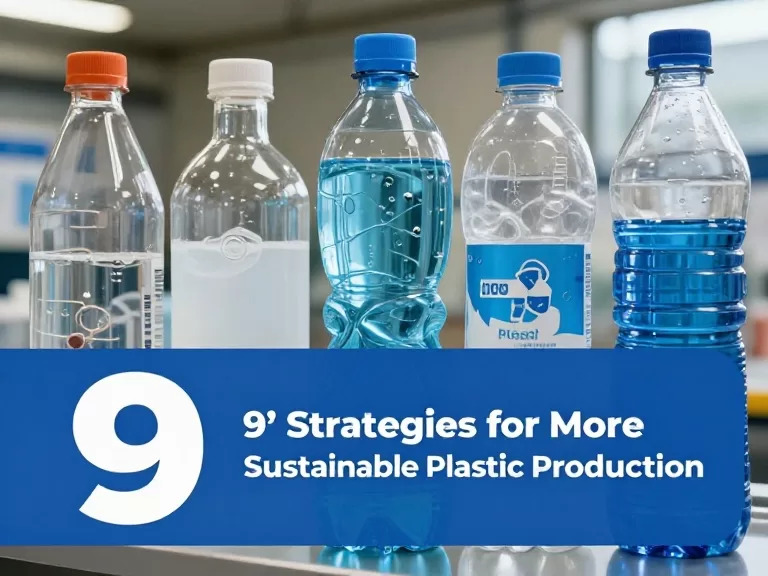
The most effective Strategies for More Sustainable Plastic Production start with reducing material and energy consumption, then improve the use of recycled polymers, design products for recovery, and control the additives and processing methods used on the factory floor. These actions should be measured against product performance and total lifecycle impact—not simply the percentage of recycled content in a sales specification.
Quick Answer: How can plastic production become more sustainable?
Plastic manufacturers can reduce environmental impact through nine practical measures: improve material efficiency, incorporate suitable recycled resin, design products for recycling, optimize processing conditions, reduce production scrap, improve energy and water management, select additives and masterbatch carefully, strengthen supplier traceability, and measure performance using lifecycle data.
Our recommendation: Do not attempt all nine changes at once. Begin with material waste, energy consumption, and process stability. These areas often reveal measurable operational opportunities while creating the production consistency needed for more advanced circular-material projects.
| Quick Summary | Recommended action | Business value |
|---|---|---|
| 1. Material efficiency | Reduce unnecessary part weight, optimize wall thickness, and control material usage. | Lower resin consumption and material cost. |
| 2. Recycled plastics | Introduce suitable post-consumer or post-industrial recycled resin with defined specifications. | Reduce dependence on virgin feedstock. |
| 3. Design for recycling | Use compatible polymers, simpler structures, and recyclable product designs. | Improve material recovery potential. |
| 4. Process optimization | Control temperature, pressure, cycle time, and equipment settings. | Reduce energy use and production defects. |
| 5. Scrap reduction | Monitor startup waste, reject rates, purging, and regrind use. | Improve material yield and production economics. |
| 6. Energy and water | Upgrade equipment, maintain utilities, and monitor consumption. | Reduce operating costs and resource demand. |
| 7. Additive and masterbatch selection | Use compatible, well-dispersed color and functional additives at optimized dosages. | Improve processing stability and product performance. |
| 8. Supply-chain transparency | Qualify suppliers and document material origin and composition. | Reduce compliance and sourcing risks. |
| 9. Lifecycle measurement | Track material, energy, emissions, and end-of-life performance. | Make sustainability claims more credible and actionable. |
Table of Contents
- What sustainable plastic production means
- Strategy 1: Improve material efficiency
- Strategy 2: Use recycled plastics responsibly
- Strategy 3: Design for recyclability
- Strategy 4: Optimize manufacturing processes
- Strategy 5: Reduce production waste
- Strategy 6: Improve energy and water efficiency
- Strategy 7: Optimize masterbatch and additives
- Strategy 8: Strengthen supply-chain management
- Strategy 9: Measure lifecycle performance
- Compare sustainability strategies
- Implementation roadmap and ROI
- The role of Charming Masterbatch
- Frequently asked questions
What Does Sustainable Plastic Production Actually Mean?
Sustainable plastic production means manufacturing plastic products while reducing unnecessary resource consumption, emissions, waste, and environmental risks across the product lifecycle. It includes raw material sourcing, compounding, processing, product design, distribution, use, and end-of-life management.
It does not mean eliminating plastic in every application. Plastic can provide lightweight construction, corrosion resistance, durability, electrical insulation, and product protection. Replacing it with another material without considering weight, transport, service life, and disposal can simply move environmental impacts elsewhere.
For manufacturers, the objective should be to use the right polymer, in the right quantity, with the right processing method, while designing products that can deliver their intended function and remain recoverable where suitable infrastructure exists.
How sustainable plastic manufacturing works
A practical program combines engineering and operational controls. Product designers reduce unnecessary material. Procurement teams qualify recycled and virgin resin suppliers. Production engineers improve process settings and reduce defects. Compounding specialists optimize pigments and functional additives. Quality teams verify that sustainability changes do not compromise mechanical performance, color consistency, safety, or service life.
For commercial users, this is important: a material change that increases scrap, shortens product life, or causes frequent production stoppages may not deliver the expected environmental or financial benefit. Sustainability has to work on the factory floor, not just in a presentation.
Strategy 1: Improve Material Efficiency and Reduce Plastic Consumption
Reducing the amount of plastic required for each product is one of the most direct ways to improve production efficiency. Every unnecessary gram of resin adds material cost and increases the quantity of plastic that must eventually be managed at the end of the product’s life.
Start with a design and process audit. Identify parts with excessive wall thickness, unnecessary ribs, oversized gates, avoidable runners, or material accumulation around structural features. Use simulation and engineering trials to determine whether material can be reduced without compromising strength, stiffness, impact resistance, dimensional stability, or safety.
Practical actions
- Review wall thickness and part geometry before changing resin grades.
- Use mold-flow analysis where appropriate to identify filling and cooling problems.
- Optimize runner and gate design to reduce avoidable material loss.
- Use lightweighting only after structural and durability testing.
- Monitor material consumption per thousand accepted products.
Our recommendation: Begin with high-volume parts where even a small reduction in material per unit can create meaningful annual savings. Do not reduce wall thickness blindly. A lighter product that cracks in use or needs replacement sooner may have a worse lifecycle result than the original design.
Strategy 2: Incorporate Recycled Plastics with Proper Material Control
Using recycled plastic can reduce demand for virgin polymer, but recycled content is not a universal drop-in replacement. Its suitability depends on polymer type, source, contamination, processing history, mechanical properties, color, odor, and the application in which it will be used.
Post-industrial recycled resin is generally recovered from manufacturing processes, such as production scrap. Post-consumer recycled resin comes from products collected after consumer use. Both can support material circularity, but their quality characteristics and traceability requirements differ.
How to introduce recycled resin successfully
- Define the polymer type and acceptable recycled-content percentage.
- Request a technical data sheet and relevant batch quality information.
- Check melt flow rate, density, moisture, ash, contamination, and mechanical properties as appropriate.
- Run controlled trials at different blending ratios.
- Validate color, odor, impact strength, tensile performance, and dimensional stability.
- Keep incoming material batches traceable through production.
For example, a manufacturer producing non-critical packaging components may be able to introduce a higher recycled-content ratio than a producer making a safety-critical or tightly specified engineering component. The correct percentage is determined by performance requirements and applicable regulations, not by an arbitrary sustainability target.
Recycled resin can also create color variation. A black masterbatch or other compatible color solution may help achieve a more consistent appearance, but the formulation must be tested with the actual recycled feedstock. A color additive cannot correct inconsistent base-resin quality.
Our recommendation: Establish a recycled-resin qualification process before increasing the percentage in production. Start with applications that have a suitable performance window, then expand after validating repeatability.
Strategy 3: Design Plastic Products for Recycling
A product may technically contain recyclable plastic but still be difficult to recycle because of its construction. Mixed polymers, inseparable layers, incompatible labels, metal inserts, coatings, and complex assemblies can reduce the quality or economic value of recovered material.
Design for recycling means considering the likely collection, sorting, separation, and reprocessing route before the product enters mass production. It is not enough to choose a resin with a recycling symbol and assume the complete product will be recovered.
Design choices that can improve recyclability
- Use one main polymer family where product performance allows.
- Reduce unnecessary combinations of incompatible materials.
- Make different materials easier to separate when they are essential.
- Review labels, inks, adhesives, coatings, and pigments for compatibility with the intended recycling stream.
- Use clear and accurate material identification.
- Check whether local collection and recycling systems can actually process the design.
For packaging manufacturers, this may mean simplifying a multilayer structure or reviewing whether a label and adhesive interfere with the intended recycling process. For durable goods, it may mean designing components so that dissimilar materials can be separated during disassembly.
The European Union’s Packaging and Packaging Waste Regulation (PPWR) is an important example of the direction of travel. It establishes requirements covering packaging design, recyclability, recycled content, and waste prevention. Businesses selling into regulated markets should review the rules that apply to their product category rather than relying on general sustainability statements.
Our recommendation: Involve the resin supplier, compounder, packaging designer, and recycler early. A design that works in a laboratory but cannot be sorted or processed in the target market is not a practical circular solution.
Strategy 4: Optimize Plastic Processing Conditions and Equipment
Injection molding, extrusion, blow molding, film production, and compounding all consume energy. Poor process control can also increase scrap, extend cycle times, create defects, and force manufacturers to reprocess material.
Process optimization is therefore one of the most commercially attractive sustainability strategies. It can reduce both resource consumption and production costs without requiring a complete change in the polymer formulation.
Where manufacturers should focus
- Temperature control: Use suitable barrel, die, and mold temperatures for the material and product.
- Cycle-time improvement: Identify unnecessary cooling, holding, or idle time without sacrificing part quality.
- Pressure and speed: Optimize injection pressure, screw speed, and extrusion settings through controlled trials.
- Equipment maintenance: Maintain heaters, motors, pumps, screws, barrels, dies, and cooling systems.
- Process monitoring: Record key parameters and identify unexplained variation.
For masterbatch compounding, screw configuration, feeding accuracy, temperature profile, residence time, and dispersion quality are important. Inadequate pigment dispersion can lead to color streaks, inconsistent shade, or rejected products. Excessive processing can also create unnecessary energy consumption or material degradation.
From our experience, the best improvement projects begin with production data. Measure energy per kilogram of accepted output, not merely total electricity consumption. A machine that uses less electricity per hour may still be inefficient if it produces fewer accepted kilograms.
Our recommendation: Establish a stable process window for each important material and product. Use trial data to optimize it rather than changing several parameters simultaneously.
Strategy 5: Reduce Production Scrap, Defects, and Reprocessing
Production waste is often treated as an unavoidable cost of plastic manufacturing. Some scrap is difficult to eliminate, but recurring waste caused by poor setup, contamination, inconsistent feeding, unstable processing, and preventable defects should be treated as a process problem.
Track waste at each stage: startup purging, rejected parts, runner waste, trimming, color changes, material contamination, and off-specification output. This helps identify where material is being lost and whether the cause is related to equipment, operator practice, raw material, or product design.
Practical waste-reduction measures
- Standardize machine startup and shutdown procedures.
- Improve color-change and purge procedures to reduce transition waste.
- Separate clean production scrap by polymer and color.
- Prevent cross-contamination between incompatible materials.
- Use regrind only where technically suitable and permitted by customer requirements.
- Monitor first-pass yield and defect rates by production line.
Regrind should never be treated as automatically equivalent to virgin resin. Repeated thermal and mechanical processing can change material properties. Establish limits for the regrind ratio, particle size, contamination, and application, then validate product performance.
For a manufacturer producing several colors, scheduling similar colors together may reduce purging and cleaning requirements. This is a straightforward production-planning measure that can reduce material waste without changing the product itself.
Our recommendation: Track the cost of scrap, not just its weight. Include material value, machine time, labor, disposal, and the risk of delayed orders. This makes waste reduction easier to prioritize.
Strategy 6: Improve Energy and Water Efficiency in Plastic Factories
Plastic processing relies on electricity and, in some operations, substantial cooling water. Motors, heaters, chillers, compressors, pumps, dryers, and ventilation systems can all contribute to factory energy consumption.
Buying new machinery is not always the first or best step. Many plants can identify savings by monitoring energy use, repairing leaks, improving insulation, maintaining cooling systems, and reducing idle operation.
Energy-efficiency actions
- Install or optimize variable-frequency drives where the operating profile supports them.
- Maintain motors, pumps, compressors, heaters, and cooling equipment.
- Reduce compressed-air leaks and unnecessary pressure settings.
- Insulate heated barrels, pipes, and process equipment where appropriate.
- Schedule production to reduce avoidable warm-up and idle periods.
- Evaluate high-efficiency motors and newer equipment during planned upgrades.
Water-efficiency actions
- Monitor cooling-water consumption and identify leaks.
- Maintain heat exchangers and cooling towers.
- Use closed-loop cooling systems where technically and economically suitable.
- Monitor water quality to prevent scaling and inefficient heat transfer.
- Separate process water from other wastewater streams where practical.
For heavy-duty applications, cooling-system performance can directly affect production stability. Poor temperature control may increase cycle time, cause dimensional variation, or lead to rejected parts. Improving water efficiency should therefore preserve the thermal performance required by the process.
Our recommendation: Install sub-metering on energy-intensive production lines. Compare kilowatt-hours per kilogram of accepted product and review the figures regularly. This is more useful than relying on a factory-wide monthly electricity bill.
Strategy 7: Optimize Masterbatch, Pigments, and Functional Additives
Masterbatch and additives are a relatively small part of many plastic formulations, but they can have a significant influence on color consistency, processing stability, surface quality, product durability, and functional performance. Choosing the right formulation is therefore an important part of sustainable plastic production.
A well-designed masterbatch can help manufacturers achieve the required color or function at an appropriate dosage. A poorly matched product may require higher addition rates, create dispersion problems, cause defects, or reduce the quality of recycled material.
Why masterbatch selection matters
- Carrier-resin compatibility: The carrier should be suitable for the base polymer and processing conditions.
- Pigment dispersion: Consistent dispersion helps reduce streaks, specks, and rejected parts.
- Dosage optimization: The addition rate should be established through testing rather than guesswork.
- Functional performance: UV stabilization, anti-static properties, and other functions should match the product’s actual service conditions.
- Recycled-resin compatibility: Formulations should be validated with the recycled feedstock used in production.
For example, a manufacturer producing outdoor plastic components may need UV stabilization to help maintain product performance during exposure. A suitable formulation can support durability, but it should be tested against the intended polymer, pigment system, exposure conditions, and required service life.
Similarly, calcium carbonate filler masterbatch can be considered for selected applications where stiffness, density, cost, or other material properties are being engineered. It is not automatically a sustainability improvement. Excessive filler loading may affect impact strength, elongation, surface quality, or recyclability, depending on the formulation and application.
Black masterbatch is another example. A compatible, well-dispersed formulation can support consistent color in suitable recycled or virgin polymer applications. However, dark pigmentation can complicate some optical sorting systems, depending on pigment chemistry and the recycling technology used. Manufacturers should consider end-of-life requirements before finalizing the formulation.
Useful technical starting points include understanding black masterbatch and its applications, reviewing UV stabilizers for polymers, and evaluating calcium carbonate filler masterbatch for suitable product requirements.
Our recommendation: Do not choose masterbatch based only on price per kilogram. Compare dosage, dispersion, compatibility, production yield, and final product performance. A formulation that delivers stable results at a suitable addition rate can reduce avoidable waste and improve manufacturing consistency.
Strategy 8: Strengthen Raw Material Sourcing and Supply-Chain Transparency
A factory cannot manage sustainability effectively if it does not know enough about the materials entering production. Resin origin, recycled content, additives, processing aids, and material composition all affect product performance, compliance, and end-of-life treatment.
Supply-chain transparency is especially important when manufacturers sell into multiple regions. A material accepted in one market may face different chemical, food-contact, packaging, or labeling requirements in another.
What to request from suppliers
- Technical data sheets and safety data sheets where applicable.
- Material composition and polymer identification.
- Recycled-content documentation and calculation method.
- Relevant regulatory declarations and test reports.
- Batch identification and traceability information.
- Change-notification procedures for formulation or production changes.
- Evidence supporting environmental or sustainability claims.
Manufacturers should also review the suppliers of colorants, stabilizers, fillers, and other additives. An additive that improves one product property may create a problem elsewhere in the lifecycle. For example, a pigment or coating may affect sorting, reprocessing, or the quality of recovered resin.
For international buyers, supplier qualification should include the ability to maintain consistent specifications across repeat orders. A low-cost material that changes from batch to batch can increase factory waste and create quality problems that outweigh the initial purchasing savings.
Our recommendation: Use a supplier approval process with defined documentation requirements. Treat traceability as a production control, not an administrative exercise completed only when a customer requests it.
Strategy 9: Measure Sustainability Across the Product Lifecycle
Without measurement, manufacturers cannot distinguish real improvements from attractive claims. A recycled-content percentage, lower electricity bill, or lighter product may be useful indicators, but none alone proves that the complete product has a lower environmental impact.
Lifecycle assessment (LCA) provides a structured way to evaluate environmental impacts across defined stages of a product’s life. Depending on the study scope, this may include raw material extraction, polymer production, compounding, manufacturing, transport, use, and end-of-life treatment.
Useful factory and product metrics
| Metric | What to measure | Why it matters |
|---|---|---|
| Material intensity | Kilograms of polymer per accepted product or functional unit. | Shows whether material use is improving. |
| Recycled content | Verified recycled material as a percentage of total polymer input. | Tracks substitution of virgin feedstock. |
| Scrap rate | Rejected or unrecoverable material as a percentage of total input. | Highlights process and quality losses. |
| Energy intensity | Electricity or energy consumed per kilogram of accepted output. | Allows comparison between production lines and periods. |
| Water intensity | Water consumed per kilogram of product or production batch. | Identifies water-efficiency opportunities. |
| Product durability | Service life or performance against defined test requirements. | Prevents material reduction from creating premature failure. |
| Recyclability | Compatibility with actual collection, sorting, and recycling routes. | Connects product design with end-of-life reality. |
Use a consistent measurement boundary. For example, energy intensity should be calculated using accepted production output, not total machine output before rejects. Recycled-content claims should use a documented calculation method and distinguish post-consumer from post-industrial material where relevant.
Our recommendation: Select a small number of meaningful indicators and review them monthly. Expand the measurement system as data quality improves. A focused dashboard is more useful than a long sustainability report built from inconsistent estimates.
Comparing the 9 Strategies: Which Should You Implement First?
Not every sustainability project requires major capital investment. Some improvements can begin with production data and revised operating procedures. Others require material reformulation, new equipment, product redesign, or collaboration with customers and recyclers.
| Strategy | Typical investment level | Implementation difficulty | Potential business benefit | Recommended priority |
|---|---|---|---|---|
| Material efficiency | Low to medium | Medium | Lower resin consumption and product cost. | Very high |
| Recycled resin adoption | Medium | Medium to high | Reduced virgin-material demand and new product options. | High |
| Design for recycling | Medium | High for existing products | Improved end-of-life compatibility and market readiness. | High |
| Process optimization | Low to medium | Medium | Lower energy use, scrap, and cycle time. | Very high |
| Scrap reduction | Low to medium | Low to medium | Higher material yield and fewer rejects. | Very high |
| Energy and water efficiency | Low to high | Medium | Lower utility costs and resource consumption. | High |
| Masterbatch optimization | Low to medium | Medium | Better dispersion, consistent quality, and optimized dosage. | High |
| Supply-chain transparency | Low to medium | Medium | Better traceability and reduced sourcing risk. | High |
| Lifecycle measurement | Medium to high | High | More credible decisions and substantiated claims. | Medium to high |
These priority levels are practical starting points, not universal cost estimates. A factory with high energy costs may prioritize equipment efficiency. A packaging producer selling into the EU may need to prioritize packaging design and recycled-content compliance. A color masterbatch producer may focus first on dispersion, formulation efficiency, and material traceability.
Pros and Cons of More Sustainable Plastic Production
| Pros | Cons and challenges |
|---|---|
| Lower material consumption can reduce raw-material costs and waste. | Redesign and lightweighting require engineering validation and testing. |
| Recycled resin can reduce reliance on virgin feedstock. | Quality, color, odor, and mechanical properties may vary between sources. |
| Process optimization can improve productivity and reduce energy intensity. | Trials, monitoring, maintenance, and equipment upgrades may require investment. |
| Design for recycling can improve compatibility with circular material systems. | Local collection and recycling infrastructure may not support every design. |
| Better supplier traceability can strengthen compliance and customer confidence. | Documentation and verification add procurement and quality-control work. |
| Lifecycle measurement supports more credible environmental decisions. | Reliable data collection and LCA studies can be complex and resource-intensive. |
The commercial case is strongest when sustainability improvements also solve operational problems. Reducing scrap, stabilizing processing, and lowering material consumption are often easier to justify than an expensive material substitution with uncertain performance. More advanced changes should follow once the factory has reliable baseline data.
How to Build a Practical Sustainable Plastic Production Roadmap
A successful program should be staged. Trying to introduce recycled resin, redesign products, upgrade machinery, and change suppliers simultaneously makes it difficult to identify which change caused a performance issue.
Phase 1: Establish a baseline
Collect data on resin consumption, scrap, energy, water, production yield, and product defects. Identify the highest-volume products and most resource-intensive processes. Establish the measurement boundary and make sure the figures are based on accepted output.
Phase 2: Select two or three high-impact projects
For many factories, the first projects should be material reduction, scrap prevention, and process optimization. These are often easier to measure and can improve production economics while creating a more stable manufacturing environment.
Phase 3: Run controlled material trials
Evaluate recycled resin, alternative polymer grades, filler systems, pigments, and functional masterbatch where they fit the product requirements. Record the formulation, process settings, test results, and material batches. Do not approve a formulation based on appearance alone.
Phase 4: Redesign products and qualify suppliers
Review product architecture for recyclability and material efficiency. Qualify suppliers based on documentation, consistency, technical support, and the ability to meet agreed specifications. Involve customers when product changes affect appearance, performance, or compliance.
Phase 5: Verify improvements and communicate accurately
Compare the results with the original baseline. Document the method used, the period measured, and any limitations. Only make public sustainability claims that can be supported by relevant evidence.
Practical decision rule: Do not approve a sustainability change simply because it reduces one input. Approve it when the complete product still meets performance requirements and the measured lifecycle or operational outcome is better.
Cost-Benefit Analysis: Is Sustainable Plastic Production Worth the Investment?
For manufacturers, the financial case should include both direct savings and the cost of implementation. A project that reduces resin consumption by a small percentage can become valuable at high production volumes. Similarly, reducing scrap can improve material yield while freeing machine capacity that would otherwise be spent producing replacement parts.
Consider a plant that produces a high-volume plastic component. Its improvement opportunity may come from reducing part weight, stabilizing molding conditions, and lowering reject rates. These changes can reduce the amount of resin purchased and the amount of energy used per accepted unit. The benefit becomes clearer when tracked over a full production period rather than a single trial.
Costs to include in the business case
- Engineering time and product redesign.
- Material testing and trial production.
- Equipment upgrades, maintenance, or instrumentation.
- Supplier qualification and documentation.
- Inspection, testing, and certification where required.
- Potential changes to packaging, labeling, and customer approval.
Benefits to measure
- Reduced virgin resin consumption.
- Lower scrap and reject rates.
- Reduced electricity and water consumption per accepted product.
- Improved production yield and machine availability.
- Lower waste-management costs.
- Better access to customer programs and markets with sustainability requirements.
For commercial users, the most reliable approach is to calculate payback using actual plant data. Avoid assuming that recycled resin is always cheaper or that every energy-efficiency upgrade will produce the same return. Material quality, local utility prices, machine utilization, and production volume can change the result significantly.
How Charming Masterbatch Supports More Sustainable Plastic Production
Masterbatch selection is one part of a wider manufacturing strategy. Color and functional additives need to deliver consistent performance while remaining compatible with the base polymer, processing method, and product requirements. A technically suitable formulation can help manufacturers reduce avoidable color defects, stabilize production, and develop products with specific performance characteristics.
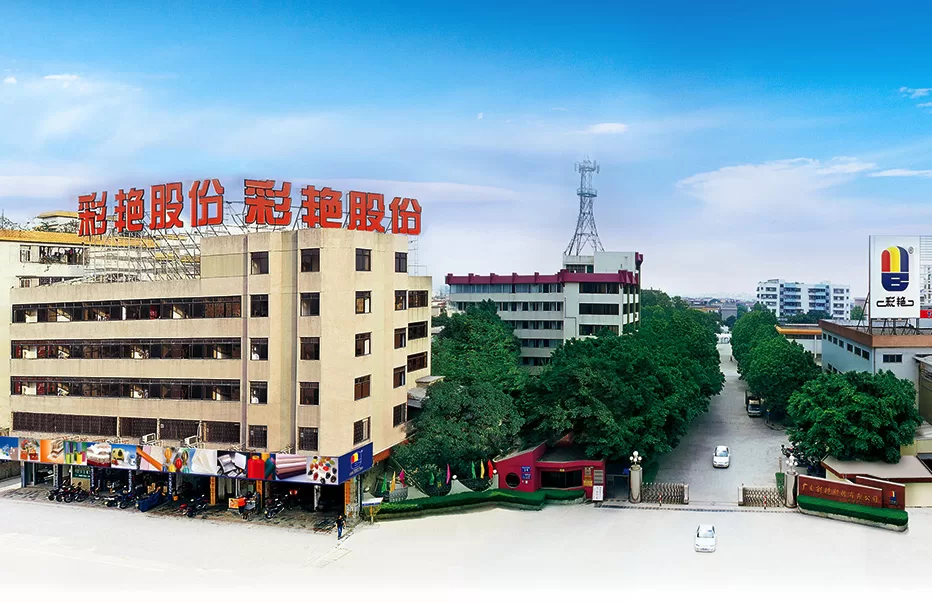
Charming Masterbatch: Color and Functional Masterbatch Solutions
Charming Masterbatch combines decades of experience in masterbatch processing and pigment dispersion technology with advanced twin-screw machinery from Germany. The company provides color masterbatch and functional masterbatch solutions for customers in China and international markets, including Europe, South America, Southeast Asia, the Middle East, and North Africa.
Beyond supplying products, Charming provides technical support and individual development cooperation to help customers address practical processing challenges and develop new projects.
Explore Charming Masterbatch product solutions for color and functional applications.
Where masterbatch can support manufacturing improvements
- Color consistency: Suitable pigment dispersion can help reduce shade variation and color-related rejects.
- Functional performance: UV stabilizers and other functional additives can be selected for defined service conditions.
- Formulation development: Technical cooperation can help evaluate compatibility between additives and base polymers.
- Process stability: Correct carrier selection and dosage can support more consistent compounding and downstream processing.
Manufacturers evaluating a color masterbatch supplier should compare more than the price per kilogram. Review pigment concentration, carrier compatibility, recommended dosage, dispersion quality, batch consistency, and technical support. A useful starting point is this guide to masterbatch dosage and percentage selection.
For buyers comparing suppliers, Charming’s overview of color masterbatch manufacturers and its guide to plastic masterbatch manufacturers provide additional sourcing context. The right partner should be able to discuss the actual polymer, processing conditions, and performance requirements—not just offer a standard product catalog.
Common Mistakes to Avoid When Making Plastic Production More Sustainable
1. Treating recycled content as the only sustainability metric
Recycled content matters, but it does not measure energy use, product durability, manufacturing waste, or end-of-life recovery. Use a broader set of indicators.
2. Increasing recycled resin without qualifying the source
Uncontrolled recycled feedstock can introduce contamination, odor, inconsistent melt behavior, and mechanical-property variation. Establish material specifications and batch controls first.
3. Reducing product weight without testing performance
Lightweighting is useful only when the product still meets its intended service requirements. Premature failure and replacement can undermine the expected benefit.
4. Assuming biodegradable or bio-based plastic is automatically sustainable
Bio-based content describes feedstock origin, while biodegradability describes behavior under specified conditions. Neither automatically guarantees lower lifecycle impact or compatibility with local waste systems. Evaluate the material’s complete requirements and disposal route.
5. Using additives without considering recycling
Pigments, fillers, coatings, and stabilizers can influence sorting and reprocessing. Review the complete formulation and the intended recycling stream before approving a new additive system.
6. Making environmental claims without evidence
Claims such as “100% sustainable,” “zero impact,” or “fully recyclable everywhere” are difficult to substantiate and can mislead customers. State exactly what has been measured, what the claim covers, and which limitations apply.
Expert Recommendation: Start with Efficiency, Then Build Circularity
For most plastic manufacturers, the best sequence is clear: first reduce unnecessary material use and production waste, then stabilize processing and improve energy efficiency. Once the operation is under control, introduce recycled materials and redesign products for recycling where the application and infrastructure support them.
Masterbatch and additive selection should be part of this engineering process. A suitable formulation can support color consistency, functional performance, and production stability, but it should be validated with the actual resin and manufacturing conditions. Avoid treating any single additive, recycled-content percentage, or material label as proof of sustainability.
For beginners, focus on a few measurable factory indicators and establish a baseline. For established manufacturers, build a cross-functional program involving product design, procurement, production, quality, and suppliers. The strongest sustainability strategy is one that improves resource efficiency without compromising the product customers rely on.
Frequently Asked Questions About Sustainable Plastic Production
1. What are the most effective strategies for more sustainable plastic production?
The most practical strategies include improving material efficiency, using suitable recycled resin, designing products for recycling, optimizing processing conditions, reducing scrap, improving energy and water efficiency, selecting compatible masterbatch and additives, strengthening supplier traceability, and measuring lifecycle performance.
2. How can plastic manufacturers reduce their environmental impact?
Manufacturers can reduce environmental impact by using less material per accepted product, lowering scrap rates, improving energy and water efficiency, selecting suitable recycled feedstock, and designing products that can be recovered through available recycling systems. Progress should be measured using consistent production and lifecycle data.
3. Is recycled plastic always more sustainable than virgin plastic?
Not automatically. Recycled plastic can reduce demand for virgin feedstock, but its environmental benefit depends on collection, sorting, cleaning, processing, transport, quality, and the product’s service life. A lifecycle assessment can help compare the complete impact of alternative materials.
4. How can masterbatch contribute to sustainable plastic production?
Suitable masterbatch can support consistent color and functional performance at an optimized dosage. Good pigment dispersion and polymer compatibility may help reduce color defects and production waste. However, the formulation must be tested with the actual base resin and recycling requirements.
5. What is design for recycling in plastic manufacturing?
Design for recycling means creating plastic products that can be collected, sorted, separated, and processed through suitable recycling systems. It often involves simplifying polymer combinations, reducing incompatible materials, and considering labels, adhesives, coatings, and additives.
6. How can a plastic factory reduce energy consumption?
A factory can monitor energy per kilogram of accepted output, maintain motors and compressors, optimize heating and cooling, reduce compressed-air leaks, use efficient drives where appropriate, and minimize unnecessary idle time. Equipment upgrades should be supported by measured savings and production requirements.
7. What is the difference between post-consumer and post-industrial recycled plastic?
Post-consumer recycled plastic comes from products collected after consumer use. Post-industrial recycled plastic comes from manufacturing waste generated before products reach consumers. Both can be useful, but they may differ in contamination, traceability, material consistency, and suitability for specific applications.
8. Can calcium carbonate filler masterbatch make plastic production more sustainable?
It can be useful in selected formulations where its effect on cost, stiffness, density, and other properties is appropriate. However, filler masterbatch is not automatically a sustainability improvement. The loading level, polymer compatibility, mechanical performance, and end-of-life impact should be evaluated.
9. What regulations should plastic manufacturers consider when improving sustainability?
Requirements depend on the destination market and application. Manufacturers selling packaging into the European Union should review Regulation (EU) 2025/40 on packaging and packaging waste, which covers packaging design, recyclability, recycled content, and waste prevention. Other markets may have separate rules for recycled content, chemicals, product safety, labeling, and extended producer responsibility.
10. How should a manufacturer measure progress toward sustainable plastic production?
Useful indicators include material intensity, verified recycled content, scrap rate, energy per kilogram of accepted output, water consumption, product durability, and compatibility with actual recycling systems. Use consistent boundaries and compare results against a documented baseline.
References
- OECD – Global Plastics Outlook: Economic Drivers, Environmental Impacts and Policy Options. An authoritative overview of plastic production, consumption, waste, recycling, leakage, and policy approaches across the plastics lifecycle.
- European Commission – Packaging and Packaging Waste. Official information on the EU packaging framework, including Regulation (EU) 2025/40, recyclability, recycled content, and packaging lifecycle requirements.
- U.S. Department of Energy – Strategy for Plastics Innovation. Technical and research context for recyclable-by-design plastics, material efficiency, recycling technologies, and more efficient plastics manufacturing.
Final takeaway: More sustainable plastic production is not achieved through one material substitution or one environmental claim. It comes from better engineering decisions across the entire manufacturing process: use less material, reduce defects, improve energy efficiency, qualify recycled feedstock, design for recovery, and choose compatible additives. Measure the results, validate product performance, and work with suppliers who can provide technical support and consistent material quality. That is how sustainability becomes a repeatable manufacturing advantage rather than a marketing slogan.