
A plastic product is not recyclable simply because its packaging carries a recycling symbol or its material is technically capable of being reprocessed. In practice, recyclability depends on the entire design: resin selection, additives, colors, labels, closures, product construction and the recycling infrastructure available where the product will be sold. A design that ignores any of these factors can create sorting problems, contaminate recycling streams or produce recycled material with inconsistent quality.
Recyclable Plastic Product Design should begin with the end of the product’s life, not as a final sustainability adjustment after the shape and material have already been fixed. Our position is straightforward: prioritize a compatible, widely recyclable base polymer; avoid unnecessary material combinations; use additives only when they serve a clear performance requirement; and validate the finished product through testing and local recycling guidance.
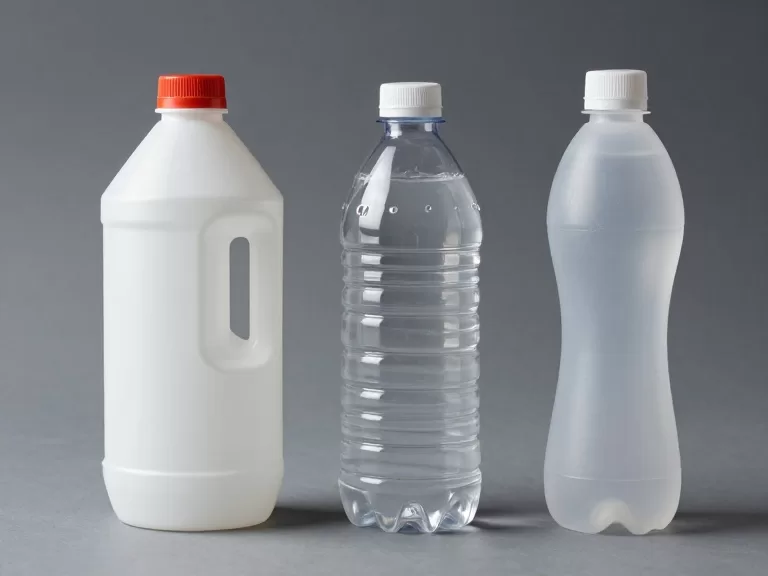
Quick Answer: What Matters Most in Recyclable Plastic Product Design?
The most important considerations are material compatibility, simple product construction, separable or compatible components, appropriate color and additive selection, minimal labeling and decoration, product durability, and verification against the recycling systems in your target markets.
A product made from one compatible polymer is generally easier to sort and reprocess than a complex assembly of inseparable materials. However, mono-material design is not automatically the right answer for every application. Food safety, barrier performance, impact resistance, UV stability, fire performance and product lifespan still matter. The goal is to meet the product’s functional requirements without introducing avoidable recycling barriers.In this guide
- What recyclable plastic product design really means
- Quick summary of the seven considerations
- Choose a recyclable base polymer
- Prioritize mono-material construction
- Evaluate masterbatch and additives
- Choose colors and pigments carefully
- Design labels, inks and closures for separation
- Balance durability with recyclability
- Validate the complete product design
- Common design mistakes
- Work with a capable masterbatch manufacturer
- Frequently asked questions
- References
1. What Is Recyclable Plastic Product Design?
Recyclable plastic product design is the process of developing a plastic product so that its materials and components can be collected, identified, sorted and processed through suitable recycling systems after use. It considers more than the main resin. A bottle, container, film or molded component may contain a base polymer, color masterbatch, functional additives, labels, adhesives, coatings, closures and multiple assembled parts. Each element can influence the product’s end-of-life outcome.
For manufacturers, this means recyclability needs to be considered during material selection and product development. Changing a pigment or additive late in production may affect color consistency, mechanical properties, processing behavior and cost. Redesigning the product early is usually more efficient than trying to correct incompatibility after tooling and production have been established.
How Does Recyclable Plastic Product Design Work?
A practical design process follows a sequence:
- Identify the product’s performance requirements, expected service life and target markets.
- Select a base polymer that meets the application requirements and has a viable collection and recycling pathway in those markets.
- Reduce unnecessary material combinations and make different components easy to separate where possible.
- Choose pigments, color masterbatch and functional additives that are compatible with the intended recycling process.
- Review labels, inks, coatings, adhesives and closures for their effect on sorting and reprocessing.
- Test the finished product and verify relevant claims against applicable standards and local recycling guidance.
For beginners, the most useful starting point is not searching for a material described as “eco-friendly.” It is identifying the actual polymer and checking whether the product format is accepted by the recycling systems serving the intended customers.
Who Should Prioritize Recyclable Plastic Product Design?
Packaging manufacturers, consumer-goods brands, injection molders, film producers, household-product manufacturers and companies supplying retail or industrial packaging should all consider recyclability during product development. It is particularly important for businesses selling into markets with packaging regulations, recycled-content targets or customer sustainability requirements.
Not every application can use the same material or construction. Medical, food-contact, electrical, safety-critical and demanding industrial products may require specific performance characteristics. In those cases, recyclability should be balanced with safety, regulatory compliance and product function rather than treated as the only design objective.
2. Quick Summary: Seven Important Considerations
| Consideration | What to evaluate | Why it matters | Our recommendation |
|---|---|---|---|
| 1. Base polymer | PET, HDPE, PP, LDPE and local recycling availability | Determines the main recycling pathway | Choose a polymer compatible with the target market’s collection and processing system |
| 2. Product construction | Mono-material design, mixed materials and component separation | Incompatible materials can complicate sorting and reprocessing | Reduce inseparable material combinations |
| 3. Additives | Colorants, fillers, stabilizers and functional masterbatch | Additives can change material properties and recyclate quality | Use only what the application needs and test the formulation |
| 4. Color and pigments | Carbon black, dark pigments, transparent and light colors | Some colors can affect optical sorting or recycled material applications | Check pigment compatibility with local sorting technology |
| 5. Labels and closures | Adhesives, inks, sleeves, caps and coatings | Non-compatible components may contaminate the recycling stream | Prefer removable or compatible components |
| 6. Durability | Strength, impact resistance, UV stability and product lifespan | Products must perform safely before they can be recycled | Avoid both premature failure and unnecessary overengineering |
| 7. Testing and verification | Material identification, processing trials and recycling guidance | Design assumptions need technical evidence | Validate the complete product, not just the resin name |
3. Consideration One: Choose a Base Polymer with a Real Recycling Pathway
The base polymer is the foundation of recyclable plastic product design. It determines the material’s processing characteristics, mechanical performance and likely recycling route. Common packaging and product polymers include PET, HDPE, PP and LDPE, but their actual recyclability depends on the product format, local collection systems, sorting capabilities and contamination levels.
Understand the Differences Between Common Recyclable Plastics
| Polymer | Typical applications | Design advantages | Important considerations |
|---|---|---|---|
| PET | Beverage bottles, trays and certain packaging | Good clarity and useful mechanical properties | Color, labels, barriers and non-PET components can affect recycling quality |
| HDPE | Bottles, containers, household products | Good chemical resistance and toughness | Closures, pigments and product residues need consideration |
| PP | Food containers, caps, household goods and molded parts | Low density and versatile processing | Local collection and sorting availability varies |
| LDPE | Flexible films, bags and liners | Flexible and suitable for many film applications | Film collection and recycling infrastructure may be limited by region |
Do not choose a polymer only because it has a familiar resin identification code. The code identifies a material category; it does not guarantee that a specific product will be collected or recycled in every location. A rigid PP container and a multilayer flexible package containing PP are not equivalent from a recycling perspective.
Match the Polymer to the Product’s Actual Requirements
Consider impact resistance, stiffness, flexibility, chemical exposure, temperature, transparency and processing conditions. If a product needs a barrier layer or special performance characteristics, investigate whether those requirements can be met with a compatible structure rather than adding an incompatible material by default.
For commercial users, we recommend mapping the polymer choice to the markets where the product will be sold. Recycling infrastructure is not uniform. A design that works in one country may not be accepted in another, so the target market should be part of the initial specification.
Practical decision: If two polymers both meet the product’s performance requirements, favor the one with the clearer collection and recycling pathway in your main sales markets. Do not assume that a technically recyclable resin makes the complete product recyclable.
4. Consideration Two: Prioritize Mono-Material and Easy-to-Separate Construction
One of the most effective ways to improve recyclability is to reduce unnecessary material complexity. Products made from a single compatible polymer are often easier to identify and process than products that permanently combine several different plastics, metals, foams or coatings.
Mono-material design does not mean every component must be physically identical in every application. It means designers should avoid combining materials without a functional reason and should consider whether components can be separated easily before recycling.
Reduce Incompatible Material Combinations
Imagine a rigid PP container with a permanently bonded PVC label, a metal insert and a multi-layer coating. Each added material creates another potential sorting or processing issue. If the label can be replaced with a compatible option, the metal insert eliminated or made removable, and the coating simplified, the product may become easier to process.
In most professional situations, the best redesign is the one that removes complexity without compromising product performance. Start by listing every material in the product, including minor components that may be overlooked in a basic bill of materials.
Make Components Easy to Separate
Where different materials are necessary, design for practical separation. Snap-fit connections, removable caps and clearly separable inserts may be preferable to permanent bonding. However, separation must be realistic for the consumer and compatible with local collection instructions. A theoretical separation step that customers will not perform does not deliver the same benefit as a simple, intuitive design.
When Is Multi-Material Construction Justified?
Multi-material construction can be justified when it provides a necessary function, such as a barrier, seal, grip, insulation or safety feature that cannot reasonably be achieved with a compatible alternative. The design team should document why the combination is needed and assess the effect on recycling. For flexible packaging, material compatibility and available recycling pathways deserve particular attention.
Our recommendation is to challenge every additional layer and component. If it does not improve safety, performance, product life or essential user experience, it should be considered for removal.
5. Consideration Three: Evaluate Masterbatch and Functional Additives Carefully
Masterbatch is a concentrated mixture of pigments or additives dispersed in a carrier resin. It is commonly used to introduce color or functional properties into plastic during manufacturing. In recyclable plastic product design, masterbatch selection matters because the carrier, pigment and additive package become part of the finished plastic formulation.
Color and functional additives can be essential. A product may need UV resistance, controlled color, processing stability, antistatic performance or other properties. The mistake is not using additives; it is adding them without understanding their impact on processing, product performance and the intended recycling stream.
Check Carrier Resin Compatibility
The carrier resin in a masterbatch should be compatible with the base polymer and the processing conditions. A mismatch may affect dispersion, mechanical properties, appearance or manufacturing stability. It can also complicate the composition of recycled material.
For example, a PP product should generally be developed with a masterbatch system designed for suitable compatibility with PP processing. The correct selection depends on the formulation, dosage, application and processing equipment. Ask the supplier for technical information rather than relying on a color sample alone.
Use Functional Masterbatch Only When It Solves a Defined Problem
Functional masterbatch can improve product performance, but every additive should have a clear purpose. If UV exposure is a real service-life risk, a suitable stabilizing system may be justified. If moisture-related processing issues affect a particular resin or application, a desiccant formulation may be worth evaluating. If neither problem exists, adding the functionality may increase cost without meaningful benefit.
Charming Masterbatch provides color masterbatch and functional masterbatch solutions. Its technical support and individual development cooperation can help manufacturers assess formulation requirements, processing conditions and product-specific performance objectives.
Understand the Recycling Implications of Common Additives
- Color masterbatch: Pigments can affect the color and potential end uses of recycled material. Check whether the color system is compatible with the intended recycling route.
- UV masterbatch: UV stabilizers may extend product life in outdoor applications, but formulation and dosage should be evaluated for the product and recycling requirements. See what UV masterbatch is and how it is used.
- Filler masterbatch: Mineral fillers can change density, stiffness, impact behavior and processing. Assess the effect on the final product and the recycled material. Read the guide to filler masterbatch.
- Desiccant masterbatch: It may help manage moisture-related processing problems in certain applications. It should not be confused with a general-purpose recycling additive. Learn what desiccant masterbatch does.
- Flame-retardant masterbatch: It may be essential for products with specific fire-performance requirements, but the formulation can affect recycling and the suitability of recycled resin for some applications. Review flame-retardant masterbatch applications.
Masterbatch Selection Comparison
| Masterbatch type | Primary purpose | Key design question | Recommended approach |
|---|---|---|---|
| Color masterbatch | Color consistency and appearance | Will the pigment affect sorting or the value of recycled material? | Use the lowest effective dosage and verify sorting compatibility |
| UV masterbatch | Resistance to UV-related degradation | Does the product genuinely require outdoor or UV exposure protection? | Set the service-life target and test the formulation |
| Filler masterbatch | Modify cost, stiffness or other material properties | Will filler loading affect strength, density or recyclate quality? | Validate mechanical properties and processing at the intended dosage |
| Desiccant masterbatch | Address moisture-related processing issues in suitable systems | Is moisture control needed for this resin and process? | Confirm compatibility and processing benefits with trials |
| Flame-retardant masterbatch | Meet defined fire-performance requirements | Which fire standard and product application apply? | Prioritize safety compliance and evaluate end-of-life implications |
For manufacturers, the best masterbatch is not necessarily the cheapest option per kilogram. A formulation that disperses consistently, maintains product properties and reduces production defects can provide better overall value. At the same time, the additive package should not be more complicated than the application requires.
6. Consideration Four: Choose Colors and Pigments with Recycling in Mind
Color is a commercial decision, but it is also a design-for-recycling decision. Pigments influence product appearance, brand recognition and consumer preference. They can also affect the ability of sorting equipment to identify plastic items and the range of applications available for recycled material.
Why Dark and Carbon-Black Plastics Need Special Attention
Some conventional near-infrared optical sorting systems have difficulty identifying certain carbon-black plastics because the pigment can absorb the infrared light used by the equipment. This does not mean every dark plastic is automatically unrecyclable. It means the pigment system and sorting technology need to be considered together.
Where optical sorting is important, ask whether the pigment is detectable by the relevant sorting system. Alternative detectable black formulations may be available, but their performance should be verified with the intended recycling infrastructure. Do not assume that a pigment described as recyclable or detectable will work in every facility.
Transparent and Light Colors Can Preserve More Options
Transparent or lightly colored plastics may retain more flexibility for some recycling applications, particularly where recycled resin is intended for products that require a lighter or more predictable color. Strongly colored material can limit the color range of the resulting recyclate.
For product designers, this creates a useful commercial trade-off. If the product does not require an opaque or highly saturated color, a simpler color system may be worth choosing. If brand identity depends on a distinctive color, assess whether the same effect can be achieved with a lower pigment loading or a more compatible formulation.
Use Color Specifications, Not Visual Guesswork
Color consistency matters in production. Define target color values, tolerances, base resin, processing conditions and masterbatch dosage. A visual sample alone may not capture the effect of different resin batches, machine temperatures or processing methods.
Charming Masterbatch provides color masterbatch solutions and pigment dispersion expertise. Its plastic color chart guide can help product teams understand color references when specifying a new product or matching an existing design.
We recommend testing color on the actual polymer and production equipment. A color that looks correct in a small laboratory sample may appear different in a large molded part or extruded film.
7. Consideration Five: Design Labels, Inks, Adhesives and Closures for Separation
Design teams often focus on the main plastic body and overlook labels, sleeves, inks, adhesives, caps, seals and coatings. These smaller elements can have a disproportionate effect on recycling if they are made from incompatible materials or cannot be separated during normal processing.
Choose Labels Compatible with the Main Material
Where possible, use labels that are compatible with the base polymer or can be separated effectively during the recycling process. Label size, density, adhesive behavior and coverage all matter. A large full-body sleeve can interfere with identification of the container beneath it if the sleeve material or design is not suitable for the sorting system.
Do not assume a label is recyclable simply because it is made of plastic. Its compatibility with the container and the recycling process needs to be assessed as part of the complete package.
Review Adhesives, Inks and Coatings
Adhesives can remain on flakes after washing, while inks and coatings can affect the appearance or quality of recycled material. The specific effect depends on the chemistry, amount, removal process and recycling technology. Use only the decoration and coating needed for product identification, protection and brand communication.
Make Closures and Components Easy to Manage
Caps, pumps, liners, seals and handles may use different materials from the main body. In some packaging systems, closures are designed to remain attached during collection or to be separated during processing. The correct approach depends on the packaging format and local recycling guidance.
For a product with multiple components, document each material and explain how consumers or recycling operators are expected to handle it. A simple, clear design is more practical than relying on complicated separation instructions.
8. Consideration Six: Balance Durability, Product Life and Recyclability
A recyclable product that breaks prematurely is not a good design. Product durability is part of responsible material use because early failure can lead to replacement products, additional packaging, transport emissions and more waste. The design objective should be to use enough material and performance functionality to deliver the required service life, without unnecessary overengineering.
Design for the Real Operating Environment
Consider the product’s expected exposure to heat, cold, moisture, sunlight, chemicals, repeated handling and mechanical stress. A household container used indoors has different requirements from an agricultural component or outdoor electrical enclosure.
For outdoor products, UV degradation may be a critical failure mode. A suitable UV stabilizer can help maintain performance over the intended service life. The correct formulation depends on the polymer, exposure conditions, color, product thickness and required lifetime. A useful starting point is the product’s actual use environment, not simply a general claim that UV protection is desirable.
Avoid Excessive Material Use
Increasing wall thickness may improve strength, but it can also increase material consumption, product weight and cost. Before adding more plastic, consider whether geometry, ribs, structural supports, resin selection or processing improvements can deliver the required performance more efficiently.
Likewise, reducing material too aggressively can create fragile products that fail in normal use. We recommend validating any lightweighting project through mechanical testing and field-use evaluation. The lowest material weight is not automatically the most sustainable result if the product needs frequent replacement.
Consider Recycled Content and Future Recyclability Together
Using recycled resin can support circular material use, but recycled content and recyclability are separate design questions. A product can contain recycled material and still be difficult to recycle after use. Conversely, a product designed for recycling may be manufactured from virgin resin because of performance, regulatory or supply constraints.
Assess recycled resin availability, consistency, contamination risks, mechanical properties, color variation and regulatory suitability. For applications with strict appearance or performance requirements, trials may be needed to determine the practical recycled-content level.
9. Consideration Seven: Test and Verify the Complete Product Design
Recyclability should not be based on assumptions about a polymer or a supplier’s marketing description. The finished product needs to be evaluated as a complete system. This includes the base resin, additives, pigments, labels, adhesives, closures and any secondary components.
Check Material Identification and Composition
Maintain accurate records of the materials used in the product. A bill of materials should identify the polymer grade, masterbatch carrier, additive package, pigment system, labels, adhesives and component materials. This information supports technical evaluation, supplier communication and future redesign.
Test Product Performance Before and After Formulation Changes
When changing resin, masterbatch or recycled content, check the product properties that matter to its application. Depending on the product, these may include tensile strength, impact resistance, stiffness, elongation, heat performance, color consistency, dimensional stability and processing behavior.
For manufacturers, production trials are essential. A formulation that performs well in a small sample may behave differently during full-scale extrusion, injection molding or blow molding. Confirm dispersion, feeding, melt behavior and finished-product quality under representative production conditions.
Evaluate Recycling Compatibility with Relevant Guidance
Recycling compatibility depends on the intended process and local infrastructure. Use relevant design-for-recycling guidance, technical protocols and assessment methods for the target packaging category. Where appropriate, consult recyclers, sorting facilities or qualified testing organizations rather than relying only on internal material specifications.
For packaging placed on the European market, review applicable packaging legislation and design requirements. Other markets may have different definitions, collection systems and labeling rules. Confirm the current legal position before making recyclability claims.
Control Supplier and Formulation Changes
A small change in pigment, carrier resin, filler or additive dosage can alter processing and final product performance. Establish an approval process for formulation changes and retain samples or batch records where necessary. Ask suppliers to communicate changes that may affect the agreed specification.
Our recommendation: Approve recyclability and performance at the finished-product level. A base polymer’s recycling potential is only one part of the evidence. The final design, including color, additives and attached components, determines whether the product is compatible with a particular recycling pathway.
10. Common Mistakes in Recyclable Plastic Product Design
Mistake 1: Assuming a Resin Identification Code Guarantees Recyclability
A resin code identifies the type of plastic, not whether a local facility accepts the finished product. Check collection and sorting arrangements in the intended market. Avoid broad claims based only on the polymer number.
Mistake 2: Treating Mono-Material Design as an Absolute Rule
Mono-material construction is often beneficial, but product safety and function come first. Some products need multiple materials for barriers, seals, electrical insulation or mechanical performance. The right approach is to reduce unnecessary complexity and make essential components compatible or separable where practical.
Mistake 3: Adding Too Much Masterbatch or Filler
Excessive additive loading can affect mechanical properties, appearance, density and processing. It may also make the recycled material less suitable for certain applications. Use a formulation based on testing and the actual performance requirement.
Mistake 4: Ignoring Pigment and Sorting Compatibility
A color that is visually attractive may create sorting challenges in some recycling systems. Review pigment detectability and the intended recycled material market before finalizing a dark or highly saturated product color.
Mistake 5: Making Sustainability Claims Without Evidence
Terms such as recyclable, recycled, biodegradable and compostable describe different characteristics. Do not use them interchangeably. Claims should be specific, substantiated and consistent with the laws and guidance in the target market.
Mistake 6: Testing the Resin but Not the Finished Product
A resin sample does not represent a complete package or molded product containing colorants, labels, coatings and closures. Evaluate the final construction and its actual processing route.
Mistake 7: Redesigning for Recyclability Without Consulting the Supply Chain
Material suppliers, converters, brand owners, recyclers and waste-management operators each understand a different part of the system. Bring them into the design process early. A technically elegant product is not commercially useful if the material is unavailable, production is unstable or local recycling facilities cannot process it.
11. How to Choose a Masterbatch Manufacturer for Recyclable Plastic Product Design
Masterbatch selection can determine whether a recyclable product achieves its required appearance and performance without unnecessary formulation complexity. A capable manufacturer should understand more than pigment matching. It should be able to discuss carrier compatibility, dispersion, dosage, processing conditions, functional requirements and the implications of formulation choices.
What Should Manufacturers Look For?
- Polymer compatibility: Confirm that the masterbatch carrier is suitable for the base resin and manufacturing process.
- Dispersion quality: Consistent pigment and additive dispersion helps reduce visual defects and production variation.
- Technical documentation: Request relevant technical data, recommended dosage, processing guidance and safety documentation.
- Application experience: A supplier should understand whether the product is an injection-molded component, film, sheet, blow-molded container or another format.
- Customization capability: The supplier should be able to develop a formulation around the actual product specification rather than forcing a standard grade into an unsuitable application.
- Quality consistency: Ask how batches are controlled and how formulation changes are communicated.
- Technical support: Check whether the supplier can assist with trials, troubleshooting and formulation optimization.
Why Technical Support Matters More Than a Low Quotation
A low-cost masterbatch can become expensive if it causes poor dispersion, inconsistent color, production downtime or rejected products. For commercial users, compare total formulation performance rather than purchase price alone. A stable formulation that runs consistently can reduce scrap and improve manufacturing efficiency.
Charming Masterbatch combines masterbatch processing experience with pigment dispersion technology. The company uses advanced twin-screw machines from Germany and provides color masterbatch and functional masterbatch solutions. It also offers technical support and individual development cooperation to help customers address practical manufacturing problems and develop new projects.

Charming Masterbatch: Color and Functional Masterbatch Solutions
Charming serves customers in China and exports to markets including Europe, South America, Southeast Asia, the Middle East and North Africa. Its technical approach combines processing experience, pigment dispersion knowledge and product development support.
For manufacturers developing recyclable plastic products, the useful starting point is a technical discussion covering base polymer, target color, functional requirements, processing method and recycling objectives.
Explore Charming Masterbatch products
Questions to Ask Before Ordering
- Is the masterbatch carrier compatible with my base polymer?
- What dosage is recommended for the target color or function?
- Will the formulation affect mechanical properties or processing stability?
- Can the pigment system be detected by the sorting technology used in my target market?
- What technical documentation and sample support are available?
- Can the supplier support a production trial using my actual resin and equipment?
- How are batch consistency and formulation changes controlled?
For a manufacturer comparing suppliers, a structured technical evaluation is more valuable than choosing based on a product list alone. Charming’s wider technical content may also help product teams understand specialized formulations, including black masterbatch and its uses and common flame-retardant masterbatch applications.
12. Cost-Benefit Analysis: Is Recyclable Plastic Product Design Worth the Investment?
For most manufacturers, the business case should be evaluated across the full product lifecycle. A recyclable design may require material trials, tooling changes, new labels, different pigments or supplier qualification. Those costs should be compared with potential benefits such as improved market access, reduced material complexity, better alignment with customer requirements and more predictable end-of-life handling.
Where the Investment Usually Pays Off
- Reduced material complexity: Fewer incompatible components can simplify purchasing, assembly and recycling assessment.
- Improved market readiness: Products designed around relevant regional requirements may be easier to adapt for regulated markets.
- More efficient formulation: Removing unnecessary additives or optimizing dosage can reduce formulation cost and production issues.
- Customer confidence: Clear material specifications and substantiated claims can support B2B procurement and brand communication.
- Long-term product development: A documented design process makes future changes easier to evaluate and approve.
Where Companies Should Avoid Overspending
Do not invest in a complex material redesign simply to make a broad sustainability statement. First confirm the product’s recycling pathway and the specific design barrier you are trying to solve. A change that increases production scrap, reduces product life or creates a new incompatible component may not deliver the expected benefit.
Likewise, do not pay for functional additives that the product does not need. If a product is used indoors and has no meaningful UV exposure, an expensive UV stabilization package may be unnecessary. If a color can be achieved with a simpler formulation, that may be the more practical option.
Upgrade Recommendations by Business Situation
| Business situation | Recommended upgrade | Expected value | Priority |
|---|---|---|---|
| New product development | Select the base polymer and recycling pathway before tooling | Avoids expensive late-stage redesign | High |
| Existing product with mixed materials | Review labels, closures, coatings and separability | Reduces unnecessary construction complexity | High |
| Color-sensitive product | Evaluate detectable pigments and optimized color dosage | Balances appearance with sorting considerations | Medium to high |
| Outdoor plastic product | Validate service-life requirements and UV stabilization | Reduces premature degradation when correctly specified | Application-dependent |
| Product using recycled resin | Run formulation and production trials with controlled specifications | Improves consistency and identifies performance limits | High |
| Product entering a new market | Review local recycling guidance and regulatory requirements | Reduces compliance and market-access uncertainty | High |
13. Expert Recommendation: A Better Way to Approach Recyclable Plastic Product Design
From our experience, the most effective projects do not begin with a request to make a product “greener.” They begin with a technical specification. The team identifies what the product must do, what materials are currently used, what happens after use and which design choices are preventing recovery or recycling.
We recommend following this order:
- Map the product: List every polymer, additive, pigment, label, adhesive, coating, closure and insert.
- Identify the target recycling pathway: Confirm which collection and processing systems are relevant to the product’s target markets.
- Simplify the construction: Remove unnecessary material combinations and improve component separation.
- Optimize the formulation: Select compatible masterbatch and additives at the lowest effective dosage that meets performance requirements.
- Validate the color system: Review pigment compatibility with sorting and recycled-material applications.
- Test product performance: Verify strength, impact resistance, durability, processing behavior and any application-specific requirements.
- Document and review: Maintain material records, supplier specifications and evidence supporting environmental claims.
Our Final Position
Recyclable plastic product design is not achieved by changing one resin or adding a recycling symbol. It requires coordinated decisions across material selection, product construction, masterbatch formulation, color, components and testing.
For most manufacturers, the best starting point is a compatible base polymer and a simpler product structure. Then introduce only the additives and design features needed to achieve the product’s real performance requirements. Work with suppliers who can provide technical guidance, validate formulations and support production trials. This approach is more commercially practical than chasing a sustainability claim without evidence.
14. Frequently Asked Questions About Recyclable Plastic Product Design
What is recyclable plastic product design?
It is the process of designing plastic products so their materials and components can be collected, identified, sorted and processed through suitable recycling systems. It considers polymer selection, product construction, additives, pigments, labels, adhesives and closures.
What is the most recyclable plastic material?
There is no single best polymer for every application or market. PET, HDPE, PP and LDPE all have established recycling pathways in some regions, but acceptance depends on product format, collection systems, sorting technology and local recycling capacity. Choose based on the target market and product requirements.
Why is mono-material design important?
Mono-material design can make products easier to identify and process by reducing incompatible material combinations. It is particularly useful when different components would otherwise remain permanently bonded. However, essential performance and safety requirements may justify multiple materials.
Can masterbatch affect plastic recyclability?
Yes. The carrier resin, pigments and functional additives become part of the finished plastic formulation. Their compatibility, dosage and effect on sorting or recycled material quality should be evaluated. The impact depends on the specific formulation and recycling process.
Are dark plastic products recyclable?
Some dark plastics can be recycled, but certain carbon-black pigments can interfere with conventional near-infrared optical sorting systems. Designers should check pigment detectability with the sorting technology used in their target market and consider suitable alternatives where needed.
Does adding recycled plastic make a product recyclable?
No. Recycled content describes the material used to manufacture a product, while recyclability describes whether the product can be recovered and reprocessed after use. A product can contain recycled resin and still be difficult to recycle if its design includes incompatible materials or components.
How can manufacturers reduce the environmental impact of plastic products?
Start by avoiding unnecessary material use, selecting suitable recyclable polymers, simplifying product construction, using compatible additives and designing for an appropriate service life. Evaluate the complete lifecycle and the actual recycling infrastructure rather than relying on a single material claim.
What should I ask a masterbatch supplier when developing recyclable plastic products?
Ask about carrier compatibility, pigment and additive composition, recommended dosage, dispersion, processing conditions, technical documentation, batch consistency and recycling-related considerations. Request samples and run trials using the actual base resin and production equipment.
Is biodegradable plastic the same as recyclable plastic?
No. Biodegradable plastics are designed to break down under specified environmental conditions, while recyclable plastics are intended to be collected and reprocessed into material or products. The two terms describe different end-of-life pathways and should not be used interchangeably.
How do I know whether my plastic product is recyclable in a specific country?
Check the country’s collection and sorting infrastructure, applicable packaging rules, accepted polymer formats and recognized design-for-recycling guidance. Consult local recyclers or qualified assessment organizations where necessary. Do not assume that acceptance in one country guarantees acceptance in another.
15. References and Technical Resources
The following standards organizations and public resources provide useful guidance for evaluating plastic packaging, recycling design and environmental claims. Always check the latest edition and the rules that apply in your target market.
- RecyClass — Design-for-recycling guidance and assessment resources for plastic packaging, including material compatibility and packaging design considerations.
- Association of Plastic Recyclers (APR) — Design guidance and technical resources for evaluating the recyclability of plastic packaging in North American recycling systems.
- European Commission: Packaging Waste — European Union policy and regulatory information on packaging and packaging waste.
Important: Recyclability is market- and system-dependent. The presence of a recyclable polymer does not guarantee that a finished product will be collected or recycled. Confirm current technical guidance, legal requirements and local infrastructure before making environmental claims.