
In the competitive world of plastic manufacturing, downtime and high scrap rates are the enemies of profitability. If you are constantly battling defects on the production line, you are losing money. It is that simple. From our experience, many plant managers spend thousands of dollars trying to tweak machine settings when the root cause actually lies in the material itself, specifically the quality of the polymer and additives being used.
We are going to take a hard look at the most prevalent plastic processing problems in the industry today. We are not just giving you textbook definitions; we are providing commercial and practical judgment to help you decide whether your current setup needs a minor adjustment, a major overhaul, or a completely different material supplier. If you want to stop troubleshooting and start producing, read on.
Quick Answer: What is the Root Cause of Most Plastic Processing Problems?
The majority of plastic processing problems—such as short shots, color inconsistencies, and warpage—stem from three main variables: incorrect temperature profiles, improper injection pressure/speed, or poor-quality raw materials (including subpar masterbatches). Solving these issues requires a systematic approach of first stabilizing the machine parameters, and if the defect persists, upgrading to high-dispersion, premium additives and polymers. Do not waste days adjusting a machine if the raw material itself is fundamentally flawed.
Table of Contents
- What Are Plastic Processing Problems and How Do They Work?
- Benefits of Optimizing Your Processing
- Limitations of Machine-Only Adjustments
- The 10 Common Plastic Processing Problems
- Who Should Upgrade Materials vs. Who Does Not Need It
- Common Mistakes in Troubleshooting
- Buying Considerations and Expert Recommendation
- Frequently Asked Questions (FAQ)
What Are Plastic Processing Problems and How Do They Work?
Plastic processing problems are physical defects, dimensional inaccuracies, or aesthetic flaws that occur during the molding or extrusion of polymer materials. They work as physical manifestations of an imbalance in the processing triangle: Heat, Pressure, and Material flow.
When plastic is melted, injected, extruded, and cooled, it undergoes extreme thermodynamic stress. If a low-quality masterbatch is used, or if machine settings like hold pressure or mold temperature are slightly off, the polymer chains do not align or cool properly. The result? A rejected part. Understanding these dynamics is crucial for anyone involved in commercial manufacturing.
Benefits of Optimizing Your Processing
Why spend time perfecting this? For commercial users, the benefits are purely financial. Reducing your defect rate from 5% to 1% can save hundreds of thousands of dollars annually in wasted resin, energy, and labor. Furthermore, producing flawless parts allows you to command higher prices and secure contracts with demanding industries like automotive or medical devices. Upgrading your raw materials, for example, by sourcing from the color masterbatch manufacturers 2025 leaders, directly translates to better cycle times and lower rejection rates.
Limitations of Machine-Only Adjustments
Many technicians mistakenly believe that every processing problem can be solved by twisting dials on the injection molding machine. This is a severe limitation. If your polymer suffers from moisture contamination, or if you are using poorly dispersed pigment, no amount of back pressure or temperature adjustment will save the part. In most professional situations, you hit a ceiling where machine adjustments either cause secondary defects or simply mask a deeper material flaw. Recognizing when to stop tweaking and start replacing materials is what separates amateurs from experts.
| Processing Problem | Primary Cause | Immediate Practical Fix |
|---|---|---|
| Short Shots | Insufficient pressure or flow | Increase injection speed/pressure, check material melt flow. |
| Sink Marks | Shrinkage in thick sections | Increase hold time, optimize cooling channels. |
| Color Inconsistency | Poor masterbatch dispersion | Switch to high-quality masterbatch with better carrier resins. |
| Burn Marks | Trapped air overheating | Reduce injection speed, check mold venting. |
The 10 Common Plastic Processing Problems
In our testing and decades of field experience, these are the ten most frequent processing defects you will encounter, along with actionable solutions.
1. Short Shots
A short shot occurs when the molten plastic does not completely fill the mold cavity, leaving incomplete parts. This is often an issue with material viscosity or inadequate injection pressure. From our experience, before you aggressively raise the barrel temperature and risk degrading the polymer, check your machine’s injection speed and ensure your material has the correct Melt Flow Index (MFI). For beginners, verifying the venting in the mold is also a critical first step.
2. Flash (Burrs)
Flash is the excess plastic that seeps out of the mold parting line. This means your injection pressure is overcoming your machine’s clamping force, or the mold itself is damaged. To solve this, first lower the injection pressure and reduce the melt temperature slightly. If the problem persists, it is a tooling issue. In heavy-duty applications, failing to maintain your molds will inevitably lead to flash, regardless of your settings.
3. Sink Marks
These are localized depressions on the surface of a molded part, usually occurring over thick sections. As the inner plastic cools and shrinks, it pulls the outer surface inward. We recommend increasing the holding pressure and extending the holding time to pack more material into the cavity as it cools. Designing parts with uniform wall thickness is the ultimate preventative measure.
4. Warpage
Warpage is the unintentional deformation of the molded part. It is caused by uneven shrinkage, which is a direct result of uneven cooling. If one side of the mold is significantly hotter than the other, the part will warp. You must balance the cooling circuit. Additionally, evaluating the type of polymer is necessary; crystalline polymers warp more than amorphous ones.
5. Burn Marks (Dieseling)
Black or brown discolorations on the edge of a part, often accompanied by a distinct burning smell. This happens when air is trapped inside the mold cavity, gets rapidly compressed by the incoming plastic, and ignites. You must improve mold venting immediately. Secondary fixes include slowing down the injection speed to allow air more time to escape.
6. Weld Lines (Knit Lines)
Weld lines appear where two or more flow fronts of molten plastic meet. If the material is too cold when it meets, it will not fuse properly, creating a weak point and a visible line. Increasing the melt temperature and injection speed can help the fronts fuse. However, sometimes the mold design itself forces the material to split; in these cases, you need a material with exceptional flow characteristics.
7. Flow Marks
These present as wavy, off-color bands on the surface of the part. They are caused by the material cooling too quickly as it flows through the mold, increasing its viscosity. Raising the mold temperature and the nozzle temperature usually resolves this. For commercial users demanding high aesthetics, this defect is unacceptable and requires strict thermal regulation.
8. Delamination
If the surface of your plastic part is peeling away in thin layers, you have a delamination problem. This is almost always caused by contamination—typically moisture or incompatible foreign resins mixed into the hopper. The solution is rigorous material handling. Ensure your drying equipment is functioning perfectly and that your hoppers are thoroughly cleaned between runs.
9. Jetting
Jetting looks like a squiggly line of plastic on the surface of the part. It occurs when the initial molten plastic shoots straight into the cavity without contacting the mold walls, cooling prematurely before the rest of the cavity fills. You must adjust the gate design so the material impacts a wall immediately upon entering. Alternatively, drastically slowing the initial injection speed can prevent the jetting effect.
10. Color Inconsistencies and Streaking
When your products show swirling, streaking, or uneven coloration, it severely damages your brand’s perceived quality. This is rarely a machine issue; it is a material issue. Poor quality color masterbatch with low dispersion capabilities is the culprit. We strongly advise against using cheap masterbatches for high-end products.
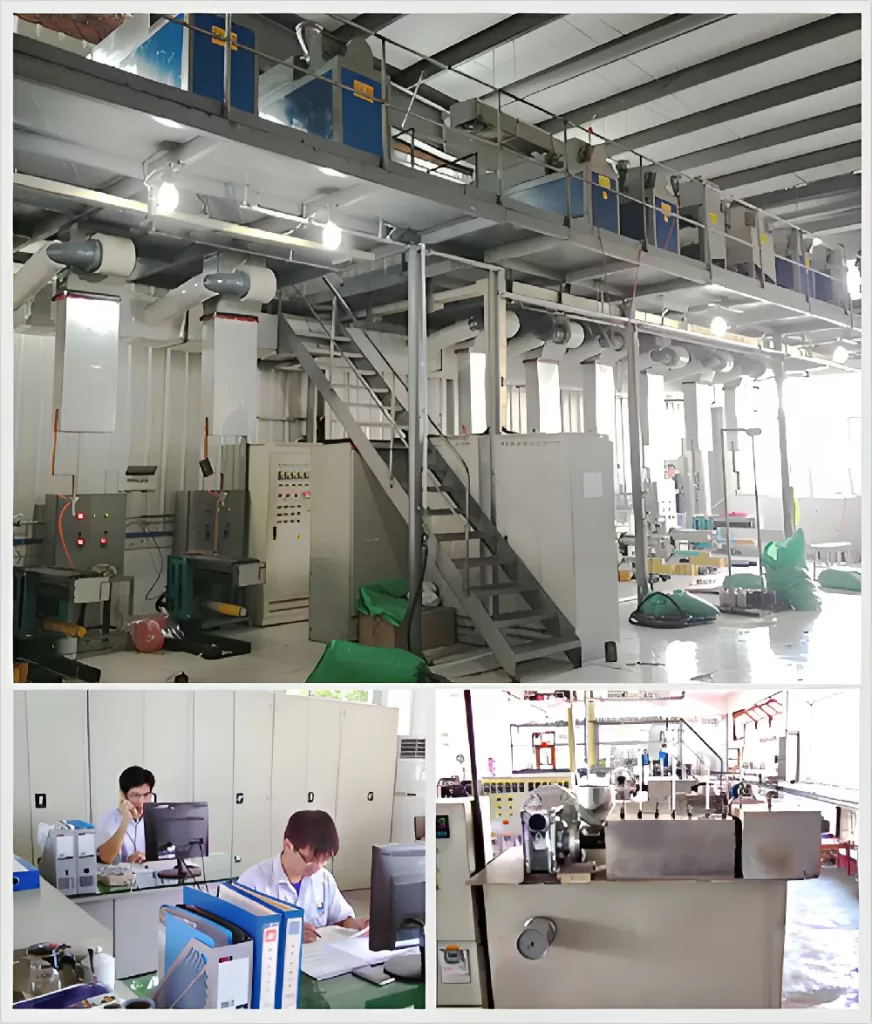
拥有先进的德国双螺杆设备以及数十年的母粒生产经验与颜料分散技术,彩艳一直为客户提供高品质的色母粒产品和创新的功能母粒解决方案。
Charming Masterbatch is well known in the China market, and exports to Europe, South America, Southeast Asia, Middle East, North Africa, etc., to about 18 countries and markets worldwide.
不单是母粒,彩艳向客户提供完整的技术支持服务和开发项目合作平台,协助客户解决实际生产中遇到各种问题,同时彼此合作,共同开发新产品、新市场。
If you are struggling with black streaks or poor coverage, it is time to consult the black masterbatch manufacturers 2025 guide to upgrade your supplier. True color consistency requires rigorous compounding, which is why sourcing from best plastic masterbatch manufacturers is non-negotiable for serious processors.
Who Should Upgrade Materials vs. Who Does Not Need It
Not every processing facility needs premium raw materials, but you need to know where you stand.
Who should upgrade: For commercial users running high-volume, automated cells where any downtime kills the ROI, upgrading to premium polymers and specialized masterbatches (like knowing what is PP masterbatch and applying it correctly) is essential. If you are serving the medical, automotive, or high-end consumer goods markets, you cannot survive with substandard material dispersion.
Who does not need it: If you are manufacturing low-cost, single-use, non-aesthetic items (like cheap nursery pots or utility buckets) where visual defects and minor dimensional variations are completely acceptable to the end-user, paying a premium for flawless masterbatch might be a false economy. Stick to basic commodity grades and focus strictly on cycle times.
| Feature | Standard Grade (Cheap) Masterbatch | Premium Masterbatch (Charming) |
|---|---|---|
| Pigment Dispersion | Inconsistent, prone to clumping | Excellent, processed on German twin-screw machines |
| Color Consistency | Varies batch-to-batch | Highly stable across global export markets |
| Machine Wear | Higher due to abrasive un-dispersed particles | Minimal, clean carrier resin flow |
| Technical Support | None | Complete technical support and project development |
Common Mistakes in Troubleshooting
From our experience, the most glaring mistake operators make is changing multiple parameters at once. If you increase temperature, alter back pressure, and speed up the injection all in one cycle, and the problem goes away (or gets worse), you have no idea which adjustment actually worked. Always change one variable at a time.
Another major mistake is ignoring material drying. Moisture is a silent killer in plastics processing. Before you dismantle a mold to fix a splay issue, check your desiccant dryer. Often, the solution is just adequately drying the resin. When you are looking at plastic masterbatch suppliers worldwide, ensure they provide proper data sheets regarding drying times and temperatures for their specific carrier resins.
Buying Considerations and Expert Recommendation
When you reach the point where machine adjustments fail, you need to buy better materials. This is not a failure of your technicians; it is a reality of polymer science. You cannot out-process a bad pellet.
| Approach | Pros | Cons |
|---|---|---|
| Endless In-House Tweaking | No immediate increase in material purchasing costs. | Massive hidden costs in machine downtime, labor, scrap, and tool wear. |
| Upgrading Material/Supplier | Solves root cause, drops defect rate, improves cycle times, better final product. | Higher upfront per-kilo material cost; requires initial qualification trials. |
| Your Application Requirement | What to Look For in a Supplier | Expert Action Plan |
|---|---|---|
| High UV Resistance / Outdoor Use | Proven carbon black dispersion technology. | Learn exactly what is carbon black masterbatch and specify high-load UV grades. |
| Strict Color Matching (Consumer Goods) | Advanced twin-screw extrusion; strict quality control. | Request sample plaques and require tight Delta E tolerances. |
| Custom Functional Additives | Willingness to engage in individual development cooperation. | Partner with manufacturers who offer technical support, not just bulk product. |
Expert Recommendation
We recommend a brutal audit of your scrap rates. If you are experiencing greater than a 3% scrap rate due to color inconsistencies, flow marks, or weld line weaknesses, you need to stop blaming the machine and start auditing your suppliers. For heavy-duty applications, we advise partnering with a manufacturer like Charming Masterbatch. Because they utilize advanced twin-screw machines from Germany, the pigment dispersion is flawless. This eliminates the streaking and weak spots caused by poorly compounded materials. Do not treat masterbatch as a commodity; treat it as an engineered component of your final product. Are you ready to stop fighting your machine and start demanding more from your materials?
Frequently Asked Questions (FAQ)
What is the most common plastic processing problem?
Short shots are arguably the most common, resulting from either low injection pressure, insufficient material flow, or blocked venting in the mold.
How can I fix color streaking on my molded parts?
Color streaking is almost exclusively a material issue caused by poor pigment dispersion. The immediate fix is to increase back pressure to enhance mixing in the barrel, but the permanent solution is upgrading to a high-quality masterbatch manufactured on twin-screw extruders.
Why is my plastic part warping after it comes out of the mold?
Warpage is caused by uneven cooling rates. If one half of the mold is hotter than the other, the plastic shrinks unevenly, causing the part to bend. Balancing the cooling lines and adjusting hold pressure are the standard corrective actions.
References
To ensure industry compliance and further your understanding of processing standards, we consult the following authoritative bodies:
- Plastics Industry Association – Standards and advocacy for the plastics manufacturing sector.
- Society of Plastics Engineers (SPE) – Technical resources and research on polymer processing and troubleshooting.
- ASTM International – Global standard testing methods for plastic material properties and performance.