
Let us confront a brutal reality in the modern plastics manufacturing sector: utilizing raw powder pigments in 2026 is an absolute operational liability. The sheer amount of airborne contamination, the staggering difficulty in achieving uniform dispersion, and the resulting high scrap rates make raw pigments functionally obsolete for high-volume, precision manufacturing. If your production lines are still struggling with color streaks, agglomeration, or mechanical property degradation, your primary issue is almost certainly your coloring mechanism. You must transition to highly engineered masterbatch formulations.
From our experience auditing countless extrusion and injection molding facilities, the Applications of color masterbatch dictate the entire visual and structural integrity of the final consumer product. A masterbatch is a highly concentrated solid additive; it encapsulates premium pigments within a carrier resin perfectly matched to your base polymer. When deployed correctly, it melts seamlessly into the polymer matrix, delivering flawless opacity, vibrant hues, and impenetrable UV resistance. However, the global market is flooded with low-tier suppliers cutting corners with cheap calcium carbonate fillers. You cannot afford to compromise on your additive supply chain.
The Charming Masterbatch Engineering Standard
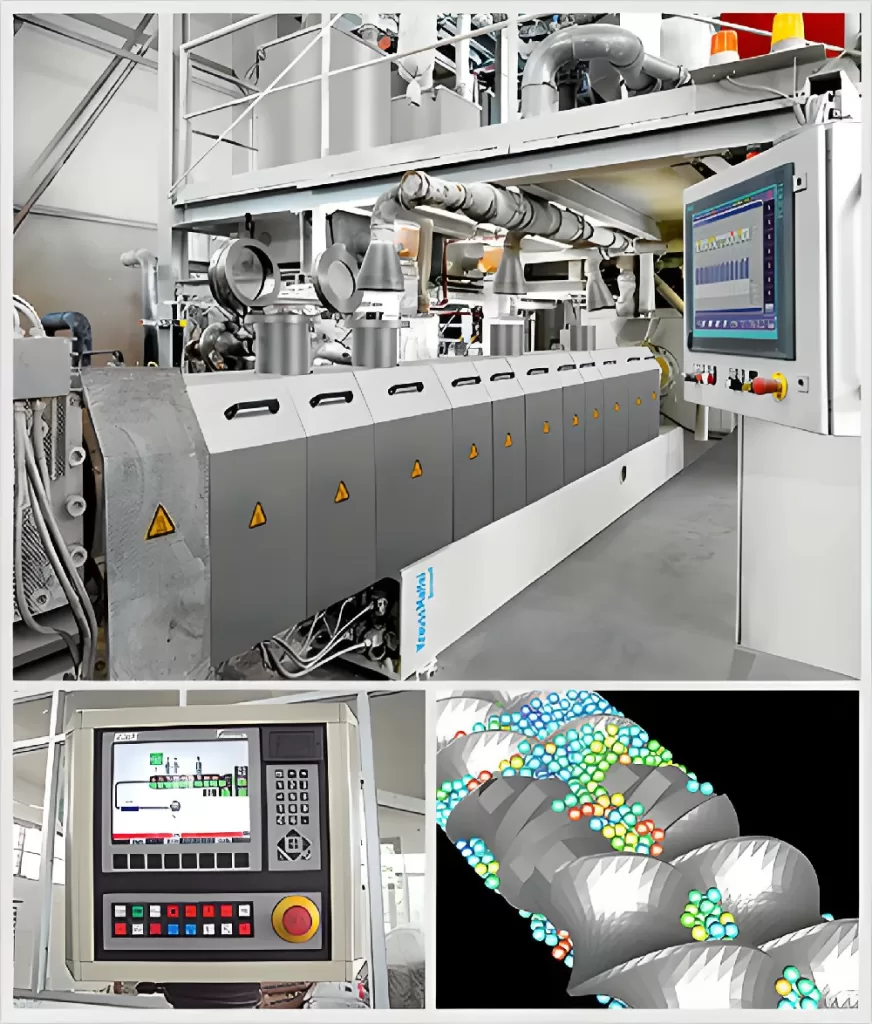
With advanced twin-screw machines from Germany and decades of experience in Masterbatch processing and pigment dispersion technology, Charming Masterbatch provides stable, high-quality color Masterbatch and creative functional Masterbatch solutions for our customers. We are deeply entrenched in the global market, proudly exporting to Europe, South America, Southeast Asia, the Middle East, and North Africa across 18 countries.
We do not merely supply pellets. Charming provides complete technical support services and individual development cooperation, helping our clients solve complex processing problems with creative, uncompromising solutions. We are exceptionally proud to share our technology and scale alongside our global partners.
In this aggressively practical, expert-led guide, we will dissect the top 10 core Applications of color masterbatch across the global manufacturing landscape. We will expose the critical polymer compatibility rules you must follow, analyze the economic realities of procurement in 2026, and provide the definitive blueprint for optimizing your plastic coloration strategy.
Table of Contents
- The Manufacturing Reality: Dispersion is Everything
- The Top 10 Applications of Color Masterbatch
- Polymer Compatibility: Matching the Carrier Resin
- Global Procurement and Cost Analysis in 2026
- Summary Table: Application Matrix
- Frequently Asked Questions (FAQs)
- Industrial References
The Manufacturing Reality: Dispersion is Everything
Before exploring the specific Applications of color masterbatch, you must understand the underlying chemistry. The fundamental purpose of a masterbatch is to aggressively distribute microscopic pigment particles evenly throughout a massive volume of raw plastic resin. If you evaluate a comprehensive masterbatch composition guide, you will realize that high-end masterbatches consist of up to 60% active pigment, bound within a highly specific carrier resin and optimized with advanced dispersion agents (like specific waxes or metallic stearates).
When a manufacturer utilizes a sub-standard masterbatch, the pigment particles cluster together, forming agglomerates. During the blown film or injection molding process, these agglomerates manifest as visible “fish eyes,” dark streaks, or sudden weak points in the mechanical structure of the plastic part. We absolutely reject the notion that “all masterbatches are the same.” Utilizing German-engineered twin-screw extruders, as we do at Charming Masterbatch, guarantees that the high shear forces violently break apart pigment clusters, resulting in a flawless, homogenous pellet.
The Top 10 Applications of Color Masterbatch
The versatility of these engineered pellets is staggering. The Applications of color masterbatch span across every major industrial sector. Here are the ten most critical deployments in modern manufacturing.
1. Flexible Packaging and Blown Films
The flexible packaging sector—encompassing grocery bags, shrink wrap, and agricultural mulch films—represents one of the most demanding Applications of color masterbatch. When extruding a film that is only 20 microns thick, there is absolutely zero margin for error. A single pigment agglomerate will literally tear the film bubble, bringing the entire extrusion line to a catastrophic halt. For these applications, we recommend utilizing highly loaded LLDPE or LDPE carrier masterbatches that guarantee absolute microscopic dispersion, ensuring brilliant opacity without compromising the film’s tensile strength.
2. Automotive Components and Interiors
The automotive industry requires plastics that can survive decades of brutal UV radiation and thermal cycling. When molding dashboards, bumper fascias, or interior door panels, manufacturers rely heavily on specific formulations. Understanding what is PP masterbatch is critical here, as Polypropylene is the dominant polymer in modern vehicle lightweighting. Automotive color masterbatches are heavily engineered with UV stabilizers and anti-oxidants to ensure that the interior trim does not fade, chalk, or become brittle after years of sun exposure.
3. Construction Materials and Pipe Extrusion
Building materials, specifically water pipes, window profiles, and exterior vinyl siding, demand uncompromising durability. Knowing what is PVC masterbatch allows extruders to color rigid and flexible Polyvinyl Chloride seamlessly. Because PVC is notoriously difficult to process due to its heat sensitivity, the color masterbatch must be formulated with specific thermal stabilizers to prevent the polymer from degrading and burning inside the extruder barrel.
4. Consumer Electronics and Appliances
From sleek black television bezels to stark white washing machine housings, consumer electronics rely on high-gloss, premium aesthetics. These parts are often molded from engineering plastics like ABS, Polycarbonate, or PBT. We highly advise consulting resources on what is PBT masterbatch if you are molding electrical connectors or laptop housings. The color masterbatch used in electronics must also be strictly compatible with flame retardant additives, ensuring the final product passes rigorous UL-94 flammability certifications without losing its aesthetic appeal.
5. Synthetic Textiles and Fibers
When you wear a brightly colored polyester athletic shirt or walk on a synthetic carpet, you are interacting with spin-dyed fibers. In the fiber extrusion process (melt spinning), the Applications of color masterbatch are pushed to their absolute limits. The pigment particles must be sub-micron in size. If the masterbatch contains coarse particles, it will instantly clog the microscopic holes of the spinneret plate, breaking the continuous filament. We produce ultra-high dispersion PET and PP masterbatches specifically engineered to survive the brutal pressures of the textile spinning process.
6. Household Goods and Furniture
Injection-molded household items like storage bins, patio furniture, and kitchenware require massive volumes of colorant. Manufacturers must perfectly match specific Pantone or RAL colors to satisfy consumer branding. Utilizing an advanced plastic color chart with codes ensures that the masterbatch manufacturer formulates the exact spectrophotometric match. Consistency is mandatory; a chair molded in January must look completely identical to a chair molded in November.
7. Medical Devices and Healthcare Plastics
The medical sector operates under draconian regulatory frameworks. Syringes, IV tubing, and medical equipment housings colored via masterbatch must be biologically inert, entirely non-toxic, and capable of surviving aggressive sterilization protocols (such as gamma irradiation or ethylene oxide gas). The masterbatches used here are strictly formulated without heavy metals and must comply with FDA and ISO 10993 biocompatibility standards.
8. Agricultural Films and Nets
In modern agriculture, the Applications of color masterbatch serve functional purposes beyond mere aesthetics. Black masterbatches are heavily utilized in mulch films to block sunlight and prevent weed growth beneath the soil. Conversely, specialized photo-selective masterbatches are used in greenhouse films to manipulate the exact wavelengths of light reaching the crops, actively accelerating plant growth and yield.
9. Toys and Consumer Plastics
When manufacturing toys for children, vibrant, eye-catching colors are essential, but absolute chemical safety is the primary directive. The color masterbatch must comply with global safety directives such as EN71 and REACH. We strictly formulate these masterbatches without lead, cadmium, or toxic azo dyes, ensuring that if a child bites or chews the plastic, there is zero risk of toxic chemical migration.
10. 3D Printing Filaments
As additive manufacturing continues to scale into industrial production in 2026, the demand for colored PLA, ABS, and PETG filaments has skyrocketed. The masterbatch used to color these filaments must have a perfectly calibrated melt flow index (MFI). If the masterbatch alters the viscosity of the base resin, the 3D printer nozzle will jam, ruining complex, multi-hour print jobs.
Polymer Compatibility: Matching the Carrier Resin
A fatal mistake routinely made by amateur procurement managers is assuming that a single “universal” color masterbatch can be used across all plastic types. From our experience, this is a recipe for delamination and mechanical failure. The carrier resin of the masterbatch must be highly compatible with, and ideally identical to, the base polymer you are processing.
If you attempt to use a Polyethylene (PE) based color masterbatch to color an engineering resin like Polycarbonate (PC), the two plastics will not mix at a molecular level. The final molded part will suffer from severe structural weakness, peeling, and visual “tiger striping.” Always demand a masterbatch where the carrier resin is chemically identical to your primary feedstock.
Global Procurement and Cost Analysis in 2026
Navigating the economics of plastic coloration requires acute market intelligence. When analyzing the plastic masterbatch price per ton 2026, you must look beyond the initial invoice. A cheap masterbatch loaded with 40% calcium carbonate filler might cost less per ton, but you will be forced to use double the dosage rate (let down ratio) to achieve acceptable opacity. This severely degrades the physical impact strength of your final product.
Furthermore, evaluating global supply chains is critical. While searching for the best color masterbatch manufacturers 2025 and beyond, many buyers look toward Southeast Asia and the Indian subcontinent. While evaluating colour masterbatch manufacturers India presents viable options, Charming Masterbatch’s strategic location in China, backed by German extrusion technology, offers unparalleled economies of scale, strict batch-to-batch color consistency, and rapid global logistics.
Summary Table: Application Matrix
To assist your engineering and procurement teams, we have condensed the primary Applications of color masterbatch into this rapid-reference matrix.
| Industry Application | Ideal Polymer Carrier | Critical Engineering Requirement | Manufacturing Process |
|---|---|---|---|
| Flexible Packaging Films | LLDPE / LDPE | Absolute microscopic dispersion (No fish-eyes) | Blown Film Extrusion |
| Automotive Interiors | PP / ABS | Extreme UV and Thermal stability | Injection Molding |
| Construction Pipes | PVC | Heat stabilizers to prevent burning | Profile Extrusion |
| Textile Fibers | PET / PP | Sub-micron pigment size (No spinneret clogging) | Melt Spinning |
| Medical Devices | PC / PP / PE | ISO 10993 Biocompatibility, Heavy-Metal Free | Clean-Room Injection Molding |
| Consumer Electronics | PBT / ABS | High gloss, Flame retardant compatibility | Precision Injection Molding |
Frequently Asked Questions (FAQs)
1. What is the standard let-down ratio (dosage) for color masterbatch?
From our experience, premium quality masterbatches generally require a let-down ratio of 1% to 3% for injection molding, and 2% to 5% for film extrusion. If a supplier tells you to dose at 8% or 10% just to achieve basic opacity, you are purchasing a heavily diluted, low-quality product packed with cheap fillers.
2. Can I use the same color masterbatch for both indoor and outdoor products?
We strongly recommend against this. Outdoor products require masterbatches formulated with specific light fastness ratings (typically 7 or 8 on the Blue Wool Scale) and dedicated UV absorbers. Using an indoor-rated masterbatch on an outdoor product will result in rapid color fading and polymer chalking within a few months of sun exposure.
3. Why is my molded plastic part showing color streaks?
Color streaking is a direct symptom of poor pigment dispersion. It means the masterbatch was not subjected to adequate shear forces during its initial manufacturing, leaving large agglomerates of pigment intact. Alternatively, it could mean your injection molding machine has insufficient back-pressure or a worn mixing screw. Partnering with a reliable supplier like Charming Masterbatch eliminates the raw material variable completely.
Industrial References
To ensure your manufacturing protocols align with global polymer engineering standards, we advise consulting these authoritative industry resources:
- The Plastics Industry Association (PLASTICS) – Comprehensive guidelines on polymer processing, additive integration, and global material safety compliance.
- ScienceDirect: Masterbatch Engineering and Polymer Science – Peer-reviewed academic literature detailing the thermodynamics of pigment dispersion and carrier resin compatibility in twin-screw extrusion systems.