
Manufacturers can reduce plastic production costs without sacrificing product quality, but the savings rarely come from one dramatic change. The most reliable improvements usually come from controlling material consumption, optimizing cycle times, reducing scrap, selecting the right masterbatch, improving energy efficiency, and purchasing raw materials strategically.
In our view, the biggest mistake is treating resin price as the only cost that matters. A cheaper raw material can increase rejected products, machine downtime, color variation, or processing time. The correct target is total cost per accepted part or kilogram of saleable product—not simply the lowest price per ton of resin.
Quick Answer: How Can Manufacturers Reduce Plastic Production Costs?
The eight most practical ways to reduce plastic production costs are:
- Optimize product design and reduce unnecessary material weight.
- Improve injection molding, extrusion, or blow molding cycle efficiency.
- Reduce scrap, rejects, and production changeover losses.
- Choose the right masterbatch and optimize its let-down ratio.
- Evaluate filler masterbatch and recycled materials carefully.
- Improve energy efficiency and machine utilization.
- Strengthen raw material purchasing and supplier management.
- Use preventive maintenance and production data to control hidden costs.
Our recommendation: Start by measuring material loss, reject rates, energy consumption, and cycle time. These figures reveal where money is actually being wasted. Then test process improvements and material alternatives one at a time. Do not change resin, masterbatch, machine settings, and product design simultaneously; otherwise, you will not know which change created the result.
Table of Contents
- What Plastic Production Costs Include
- How Cost Reduction Works
- 8 Ways to Reduce Plastic Production Costs
- Why Masterbatch Optimization Matters
- Comparison of Cost Reduction Methods
- Benefits and Limitations
- Who Should Prioritize These Improvements?
- Common Cost Reduction Mistakes
- Choosing a Masterbatch Manufacturer
- Pros and Cons Table
- Expert Recommendations
- Quick Summary Table
- Frequently Asked Questions
- References
What Are Plastic Production Costs?
Plastic production costs include every expense required to convert raw materials into finished, saleable products. Resin is usually a major cost component, but it is not the only one. Depending on the product and process, manufacturers must also account for masterbatch, additives, electricity, labor, packaging, maintenance, tooling, scrap, quality inspection, and factory overhead.
For example, a packaging manufacturer may focus on reducing the cost of polyethylene film. However, if a lower-cost material causes inconsistent film thickness or more roll defects, the apparent raw material saving can disappear. A manufacturer producing injection-molded household products may find that reducing cycle time delivers more value than negotiating a small discount on resin.
Direct and Indirect Costs
- Direct material costs: PP, PE, PET, PVC, engineering plastics, color masterbatch, filler masterbatch, and functional additives.
- Processing costs: Electricity, machine operation, drying, cooling, compressed air, and production labor.
- Quality costs: Scrap, rework, inspection, customer returns, and rejected batches.
- Equipment costs: Tooling, maintenance, spare parts, depreciation, and unplanned downtime.
- Operating overhead: Factory space, warehousing, internal logistics, administration, and packaging.
To make a meaningful improvement, calculate the cost per accepted kilogram or finished unit. This prevents a misleading situation in which the material cost decreases while total manufacturing cost increases.
How to Reduce Plastic Production Costs Without Lowering Quality
Effective cost reduction is a controlled engineering and purchasing process. First, establish a reliable baseline. Next, identify the largest avoidable expense. Then conduct a controlled trial and compare the cost and quality of accepted output.
For commercial users, we recommend tracking at least these indicators:
- Material consumption per finished unit or kilogram.
- Scrap and reject rate by machine, shift, and product.
- Average cycle time and machine utilization.
- Electricity consumption per kilogram of saleable output.
- Masterbatch dosage and color consistency.
- Changeover time and material purging losses.
- Unplanned downtime and maintenance costs.
These indicators help distinguish genuine savings from cost shifting. A production line that uses less resin but consumes more energy or generates more rejected parts is not necessarily more efficient.
8 Ways Manufacturers Can Reduce Plastic Production Costs
1. Optimize Product Design and Reduce Unnecessary Material Weight
Reducing product weight is one of the most direct ways to reduce plastic production costs because every gram removed can reduce resin consumption across the production volume. This is especially valuable for high-volume products such as containers, caps, packaging components, household goods, and thin-wall molded parts.
However, lightweighting must be based on engineering requirements. Reducing wall thickness without considering stiffness, impact resistance, drop performance, sealing, or dimensional stability can create expensive failures after production.
We recommend reviewing wall thickness, rib design, draft angles, gate location, and material distribution before changing the resin grade. Simulation and prototype testing can help identify areas where material can be removed without compromising performance.
Practical example: A manufacturer producing a high-volume container may be able to reduce weight through improved geometry and more uniform wall thickness. The benefit is repeated across every unit, so even a small reduction can become commercially meaningful at scale.
Best for: High-volume injection molding, blow molding, packaging, and products with excess material in their current design.
2. Improve Molding and Extrusion Cycle Efficiency
Machine cycle time directly affects production capacity. If a molding machine can produce the same acceptable part in less time, the factory may increase output without purchasing additional equipment or expanding its floor space.
For injection molding, review filling, packing, cooling, mold opening, ejection, and handling time. Cooling often deserves particular attention because it can represent a significant portion of the overall cycle. Mold temperature, cooling channel design, water flow, and material characteristics all influence the result.
For extrusion, examine screw speed, melt temperature, die condition, line speed, cooling, and material feed stability. The objective is not simply to run the machine faster. It is to increase stable output while maintaining dimensions, surface finish, mechanical properties, and process consistency.
Our recommendation: Record cycle time and reject rate together. A faster machine that produces more defective parts is not an improvement. Make incremental setting changes and validate the result over a representative production run.
3. Reduce Scrap, Rejects, and Changeover Losses
Scrap is one of the most overlooked contributors to plastic production costs. Start-up waste, color contamination, dimensional defects, short shots, flash, unstable extrusion, and incorrect material dosing all consume resin, electricity, labor, and machine capacity.
Manufacturers should classify scrap by cause rather than recording only the total waste percentage. This makes corrective action much more effective.
- Standardize machine start-up and shutdown procedures.
- Use approved recipes for resin, masterbatch, and additives.
- Check dosing and blending equipment regularly.
- Plan production runs to reduce unnecessary color changes.
- Use suitable purging procedures when changing materials or colors.
- Investigate recurring defects instead of relying on repeated manual adjustments.
Color changeovers deserve special attention. A poorly planned transition from dark to light colors can create significant purge waste. Better production scheduling, correct cleaning procedures, and consistent masterbatch quality can reduce this loss.
Best for: Factories with frequent color changes, short production runs, high start-up waste, or inconsistent product quality.
4. Select the Right Masterbatch and Optimize the Let-Down Ratio
Masterbatch is a concentrated mixture of pigments or functional additives dispersed in a carrier resin. It allows manufacturers to introduce color or specific performance characteristics into plastic products during processing.
Choosing the right masterbatch can reduce plastic production costs by improving dispersion, reducing dosing problems, supporting consistent color, and helping manufacturers avoid unnecessary additive consumption. But the cheapest masterbatch per kilogram is not always the cheapest option in production.
The key variable is the let-down ratio: the proportion of masterbatch added to the base polymer. A product that costs more per kilogram may still be more economical if it achieves the required color strength or functionality at a lower dosage.
For example, compare two color masterbatches using the same polymer, machine conditions, and target color. If one requires a higher dosage to achieve the same color strength, its effective cost per kilogram of finished compound may be higher even if its purchase price is lower.
We recommend evaluating:
- Color strength and pigment concentration.
- Dispersion quality and batch-to-batch consistency.
- Compatibility with the base resin and processing temperature.
- Recommended let-down ratio and dosing accuracy.
- Heat stability, lightfastness, and required product performance.
- Technical support and consistency of future supply batches.
Manufacturers comparing suppliers should also understand the plastic masterbatch price per ton and how dosage affects the actual cost of the finished product.
5. Evaluate Filler Masterbatch and Recycled Materials Carefully
Filler masterbatch, often based on mineral fillers such as calcium carbonate, can reduce the amount of virgin polymer used in suitable formulations. Recycled resin can also lower material costs and support resource-efficiency goals. Both options can be valuable, but neither should be introduced without testing.
Filler masterbatch may affect impact strength, elongation, stiffness, surface appearance, sealing performance, and processing behavior. The result depends on filler loading, particle size, surface treatment, carrier resin, dispersion, and the polymer matrix.
Recycled material can introduce variation in melt flow, color, contamination, odor, and mechanical properties. For products with demanding safety, food-contact, or performance requirements, regulatory compliance and traceability must be checked before use.
Our recommendation: Begin with a controlled formulation trial. Compare the cost per accepted product, not merely the percentage of cheaper material added. A formulation that saves on resin but increases breakage or customer complaints is a false economy.
Learn more about what filler masterbatch is and where it can be used. For recycled-content projects, confirm the material’s quality and applicable requirements with your supplier and customer.
6. Improve Energy Efficiency and Machine Utilization
Electricity is a significant operating expense for many plastic processing plants. Extruders, injection molding machines, dryers, chillers, compressors, pumps, and auxiliary equipment can all contribute to energy consumption.
Start by measuring electricity per kilogram of accepted product. This is more useful than comparing monthly electricity bills because production volume may vary significantly.
Practical improvement areas include:
- Use appropriately sized motors and efficient drive systems.
- Maintain heating elements, insulation, and temperature controls.
- Optimize cooling water systems and chiller operation.
- Repair compressed-air leaks and avoid unnecessary air pressure.
- Reduce idle running during long production interruptions.
- Improve production scheduling to reduce frequent start-ups.
Do not invest in new equipment simply because it is marketed as energy-saving. Compare the expected energy reduction, maintenance requirements, production capacity, and payback period against your current operating data.
7. Strengthen Raw Material Purchasing and Supplier Management
Raw material procurement affects both price and production stability. A low-priced resin or masterbatch supplier may create additional costs through inconsistent quality, late deliveries, poor documentation, or limited technical support.
For commercial manufacturers, supplier evaluation should include more than the quotation. Compare material specifications, batch consistency, quality control, delivery reliability, minimum order quantities, payment terms, and technical response.
We recommend maintaining approved alternatives for critical materials where technically feasible. This reduces dependence on a single source and gives purchasing teams more flexibility when market prices or lead times change.
However, changing suppliers should involve a qualification process. Confirm resin compatibility, color matching, processing conditions, mechanical properties, and finished-product performance before switching a production line.
Use a structured supplier review rather than choosing solely by location or quoted price. Our guides to plastic masterbatch suppliers worldwide and plastic masterbatch manufacturers can support an initial supplier shortlist.
8. Apply Preventive Maintenance and Production Data Analysis
Unplanned downtime creates costs beyond the repair itself. It interrupts production schedules, increases labor pressure, delays customer orders, and may generate additional start-up scrap when equipment returns to operation.
Preventive maintenance helps reduce these risks. Establish inspection intervals for screws, barrels, heaters, thermocouples, hydraulic systems, molds, cooling channels, filters, feeders, and dosing equipment according to the machine manufacturer’s instructions and actual operating conditions.
Production data can reveal recurring problems that are difficult to identify through visual inspection alone. Track downtime reasons, reject rates, cycle times, energy use, and material consumption by machine and product. Review the figures regularly with production, maintenance, and quality teams.
Our recommendation: Prioritize machines that create the greatest production bottleneck or have the highest downtime cost. A targeted maintenance program is often more cost-effective than replacing equipment prematurely.
Why Masterbatch Optimization Matters When Reducing Plastic Production Costs
Masterbatch is a relatively small part of many plastic formulations by weight, but its influence on color quality, processing stability, and finished-product performance can be substantial. Poor dispersion or an unsuitable carrier resin can create visible defects, inconsistent color, blocked filters, or unstable processing.
For this reason, manufacturers should compare masterbatch based on its performance in the production process rather than purchase price alone.
Color Masterbatch vs. Functional Masterbatch
Color masterbatch is used to achieve a specific shade, opacity, or visual effect. Functional masterbatch is designed to introduce a property such as UV resistance, antistatic behavior, flame retardancy, slip, antiblock, or other application-specific performance. Each category has a different cost and testing requirement.
For outdoor plastic products, for example, UV protection may help reduce premature degradation when the formulation is correctly designed for the exposure conditions. Read more about UV masterbatch uses and benefits before deciding whether a UV additive is necessary for your product.
Color consistency also matters. A stable reference standard and clear color tolerance can reduce rejected batches and avoid unnecessary reformulation. Manufacturers can use a plastic color chart with codes as an initial communication tool, but final approval should use an agreed physical or instrument-measured color standard under consistent conditions.
How to Calculate the Real Cost of Masterbatch
Use the following basic calculation to compare alternative masterbatch options:
Masterbatch cost per kilogram of finished compound
Masterbatch purchase price per kg × dosage rate
Illustrative example: If masterbatch costs $5.00/kg and is used at 2%, its direct contribution is $0.10 per kg of finished compound, before considering other formulation and processing effects.
When comparing two products, include the dosage needed to achieve the same color or functional result. Also consider dispersion, processing stability, waste, and quality performance. A technically consistent product can reduce hidden costs even when its unit price is higher.
For a permanent color solution, review the available methods to permanently color plastic and select the approach that fits the resin and manufacturing process.
Comparison Table: Which Cost Reduction Method Should You Prioritize?
The best starting point depends on the factory’s current bottleneck. This comparison helps production managers identify which method is most likely to deliver practical value.
| Cost Reduction Method | Main Cost Affected | Best Use Case | Implementation Difficulty | Key Risk to Control |
|---|---|---|---|---|
| Product lightweighting | Resin consumption | High-volume products with design flexibility | Medium to high | Reduced strength or product durability |
| Cycle time optimization | Machine and labor cost per unit | Injection molding and extrusion lines with capacity constraints | Medium | Defects caused by excessive speed or poor cooling |
| Scrap reduction | Material, energy, and labor waste | Factories with frequent rejects or color changeovers | Low to medium | Addressing symptoms instead of root causes |
| Masterbatch optimization | Color and additive cost | Colored products or products requiring functional additives | Medium | Inconsistent color, dosage, or dispersion |
| Filler or recycled material evaluation | Virgin resin consumption | Products with suitable mechanical and regulatory requirements | Medium to high | Performance loss and material variability |
| Energy optimization | Electricity and utilities | Energy-intensive production lines | Medium | Investment without measurable payback |
| Supplier management | Material purchasing and inventory | Factories with high raw material spend | Medium | Switching to an unqualified supplier |
| Preventive maintenance | Downtime and repair cost | Factories with recurring equipment interruptions | Low to medium | Maintenance schedules that ignore actual machine conditions |
Benefits and Limitations of Plastic Production Cost Reduction
Benefits
- Improved profitability: Lower cost per accepted unit can improve margins without increasing selling prices.
- Higher production capacity: Better cycle times and reduced downtime can increase output from existing equipment.
- Less material waste: Lower scrap rates reduce resin consumption and disposal requirements.
- More consistent quality: Standardized recipes and process controls reduce variation between batches.
- Better purchasing flexibility: Qualified suppliers and alternative materials can improve procurement resilience.
- More efficient resource use: Reduced energy and material consumption can support environmental and operational objectives.
Limitations and Trade-Offs
- Product redesign and material qualification require engineering time and testing.
- Cheaper resins or higher filler loading may affect mechanical properties and processing stability.
- New equipment or automation may require substantial upfront investment.
- Supplier changes can introduce color, quality, and delivery risks.
- Reducing cycle time too aggressively may increase defects or shorten mold life.
- Some savings are limited by customer specifications, regulatory requirements, or existing product approvals.
The practical objective is not to minimize every cost independently. It is to optimize the complete manufacturing system while keeping the product within its required specification.
Who Should Use These Plastic Production Cost Reduction Strategies?
Who Should Prioritize Them?
- High-volume manufacturers: Small reductions in material use, cycle time, or scrap can accumulate across large production runs.
- Injection molding factories: Cycle time, mold efficiency, material dosing, and reject reduction are often key opportunities.
- Film and extrusion producers: Material consistency, line speed, energy consumption, and thickness control deserve attention.
- Packaging manufacturers: Lightweighting, recycled-content evaluation, and stable color performance can affect unit economics.
- Manufacturers using colored or functional plastics: Masterbatch selection and dosing optimization can reduce waste and improve repeatability.
- Factories facing margin pressure: A structured cost audit can identify savings before major capital expenditure is considered.
Who Does Not Need Every Cost Reduction Method?
Not every factory should pursue all eight methods at once. A low-volume custom manufacturer may gain little from expensive automation if changeovers and engineering variation dominate its production. A producer of safety-critical or tightly regulated components should not introduce recycled material or filler loading simply to lower raw material costs without the necessary qualification and customer approval.
For beginners, the best first steps are usually scrap tracking, preventive maintenance, material dosing checks, and energy monitoring. These measures can expose avoidable waste without immediately changing the product formulation.
Common Mistakes Manufacturers Make When Trying to Reduce Plastic Production Costs
Mistake 1: Buying the Cheapest Resin or Masterbatch
Purchase price does not reflect the total cost of processing. Inconsistent material can cause rejects, machine instability, and higher dosage requirements. Compare the cost per accepted product instead.
Mistake 2: Increasing Filler Loading Without Testing
Filler can reduce polymer consumption, but excessive loading may reduce impact resistance, elongation, or surface quality. Test the final formulation against the product specification.
Mistake 3: Running Machines Faster Without Process Validation
Higher speed can increase output, but it may also cause incomplete filling, poor cooling, dimensional variation, or unstable extrusion. Validate cycle time and quality together.
Mistake 4: Ignoring Changeover Waste
Frequent color and material changes can generate significant purge material. Better production planning and clear changeover procedures can reduce losses.
Mistake 5: Making Too Many Changes at Once
Changing resin grade, masterbatch dosage, machine temperature, and screw speed in one trial makes it difficult to identify the cause of any improvement or defect. Use controlled trials and document each change.
Mistake 6: Measuring Savings Only by Purchase Price
A lower invoice price is not proof of a lower production cost. Include waste, energy, downtime, labor, quality failures, and maintenance in the comparison.
How to Choose a Masterbatch Manufacturer to Reduce Plastic Production Costs
When masterbatch is part of the formulation, the supplier can influence color consistency, processing stability, and the amount of concentrate required. A capable manufacturer should do more than provide a price list. It should understand the polymer, processing method, product requirements, and operating conditions.
Evaluate Technical Capability
Ask about pigment dispersion, carrier resin selection, formulation development, quality control, and compatibility with your processing method. For demanding applications, request technical data and samples for controlled production trials.
Check Production Consistency
Batch-to-batch consistency is essential for manufacturers that need repeatable colors and performance. Ask how the supplier controls raw material selection, production parameters, dispersion, and finished-product inspection.
Confirm Customization and Technical Support
Standard products may be suitable for routine applications, but some projects require custom color matching, improved heat stability, specific carrier resins, or functional additive combinations. Technical support becomes especially important when a formulation must be adjusted to fit an existing production line.
Compare the Total Supply Cost
Include price per kilogram, recommended dosage, minimum order quantity, freight, lead time, shelf-life guidance, and the cost of qualifying a new supplier. A slightly higher-priced supplier may be more economical if it provides stable quality and reduces production interruptions.
For a broader supplier evaluation, compare the plastic masterbatch manufacturers in the USA and plastic masterbatch manufacturers in India based on application fit and technical capability rather than location alone.
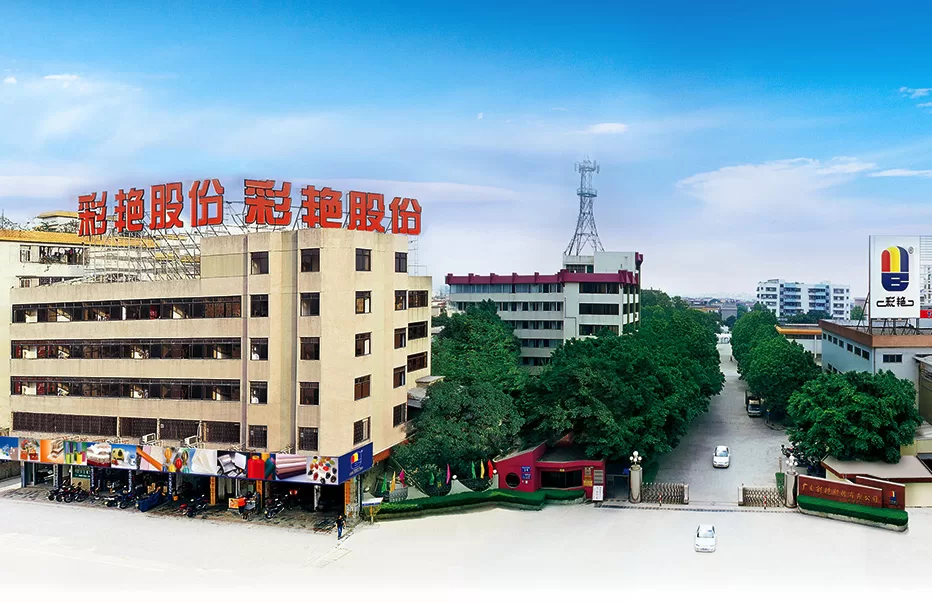
Charming Masterbatch: Color and Functional Masterbatch Solutions
Charming Masterbatch combines advanced twin-screw machines from Germany with experience in masterbatch processing and pigment dispersion technology. The company provides color masterbatch and functional masterbatch solutions for customers across China and export markets in Europe, South America, Southeast Asia, the Middle East, and North Africa.
Beyond supplying products, Charming provides technical support and individual development cooperation to help customers address practical processing challenges and develop new projects.
For manufacturers seeking to improve formulation consistency, explore the Charming Masterbatch product range and discuss your polymer type, processing method, target color, dosage, and product performance requirements with the technical team.
We recommend treating a masterbatch supplier as a technical partner, particularly when color stability, dispersion, or functional performance affects product acceptance. The right formulation can help reduce waste and processing problems, but it must be proven under the customer’s actual production conditions.
Pros and Cons of Reducing Plastic Production Costs
| Pros | Cons and Risks |
|---|---|
| Improves cost per accepted product and can strengthen gross margins. | Requires reliable baseline data and ongoing performance monitoring. |
| Reduces raw material waste and unnecessary energy consumption. | Material changes can affect product strength, appearance, and processing. |
| Can increase production capacity through cycle time and downtime improvements. | Overly aggressive machine settings may increase defects and equipment wear. |
| Supports better production planning and supplier management. | Supplier qualification and process validation require time and resources. |
| Can improve consistency through standardized formulations and procedures. | Some improvements require tooling, automation, or equipment investment. |
| May reduce environmental impact through lower material and energy use. | Recycled materials and fillers require application-specific quality and compliance checks. |
Expert Recommendation: Where Should Manufacturers Start?
From our experience, manufacturers should not begin with the most complicated or expensive cost reduction project. Start with the losses that are already visible in production records.
- First, measure scrap and material consumption. Identify the machines and products with the highest avoidable waste.
- Second, stabilize production settings. Standardize recipes, dosing, temperature, pressure, and start-up procedures.
- Third, review cycle time and downtime. Improve the bottleneck before investing in additional capacity.
- Fourth, optimize masterbatch dosage. Compare color strength, dispersion, and effective cost at the required performance level.
- Fifth, test alternative formulations. Evaluate filler or recycled materials only where product requirements permit.
- Finally, calculate the payback. Include implementation cost, qualification time, maintenance, and quality risks.
For heavy-duty applications, industrial components, or products with demanding customer specifications, protecting performance should take priority over short-term material savings. For high-volume commodity products, lightweighting, scrap reduction, and procurement improvements may deliver a stronger financial return.
Our position is straightforward: The best way to reduce plastic production costs is to lower the cost of producing one accepted, specification-compliant product. Do not chase the cheapest resin, the highest machine speed, or the lowest masterbatch price in isolation. Optimize the complete production process.
Quick Summary Table: 8 Ways to Reduce Plastic Production Costs
| Method | Primary Saving | Recommended First Action |
|---|---|---|
| 1. Product lightweighting | Lower resin consumption | Review wall thickness and material distribution. |
| 2. Cycle time optimization | Lower processing cost per unit | Measure cycle stages and validate safe reductions. |
| 3. Scrap reduction | Less material and production waste | Classify defects and identify root causes. |
| 4. Masterbatch optimization | Lower color and additive cost | Compare effective dosage and dispersion performance. |
| 5. Filler and recycled materials | Reduced virgin polymer consumption | Run controlled formulation and quality tests. |
| 6. Energy efficiency | Lower electricity and utility costs | Track energy per kilogram of accepted output. |
| 7. Supplier management | Better purchasing and supply reliability | Compare qualified suppliers on total supply cost. |
| 8. Preventive maintenance | Lower downtime and repair costs | Prioritize bottleneck machines and recurring failures. |
Frequently Asked Questions About Reducing Plastic Production Costs
1. What is the most effective way to reduce plastic production costs?
There is no single method for every factory. For high-volume manufacturers, reducing material consumption, scrap, and cycle time can deliver substantial savings. The best starting point is to measure cost per accepted unit and identify the largest avoidable expense.
2. Can masterbatch help reduce plastic production costs?
Yes. A suitable masterbatch can improve pigment dispersion, color consistency, and processing stability. If it achieves the required color or function at a lower dosage, it may reduce the effective formulation cost. Compare dosage and finished-product quality rather than purchase price alone.
3. Does filler masterbatch always lower production costs?
No. Filler masterbatch can reduce virgin polymer consumption in suitable formulations, but excessive loading may affect strength, impact resistance, elongation, surface quality, and processing behavior. Conduct controlled tests before changing the production formula.
4. How can injection molding manufacturers reduce production costs?
Focus on reducing cycle time, improving cooling efficiency, optimizing mold design, minimizing start-up scrap, stabilizing machine settings, and maintaining molds and auxiliary equipment. Track reject rate alongside cycle time to ensure faster production does not reduce quality.
5. How can plastic extrusion manufacturers reduce costs?
Review screw and die performance, melt temperature, line speed, cooling, material feeding, thickness control, and energy consumption. Consistent raw materials and stable process settings help reduce off-specification output and production interruptions.
6. Is recycled plastic cheaper than virgin resin?
Recycled resin can be less expensive in some markets and applications, but its quality, availability, processing behavior, and compliance requirements must be considered. The correct comparison includes sorting, cleaning, quality control, and any additional processing needed to meet product specifications.
7. How do I calculate the real cost of plastic production?
Include raw materials, masterbatch, additives, electricity, labor, machine depreciation, maintenance, packaging, scrap, rework, and overhead. Divide the total relevant production cost by the quantity of accepted finished products to obtain a more useful cost-per-unit measure.
8. How should I choose a plastic masterbatch manufacturer?
Evaluate pigment dispersion, formulation capability, carrier resin compatibility, batch consistency, quality control, customization, delivery reliability, and technical support. Request samples and test them under your actual processing conditions before approving a supplier.
9. How can manufacturers reduce material waste during color changes?
Improve production scheduling, standardize purging procedures, verify dosing equipment, and use masterbatch with consistent dispersion. Planning production runs from lighter colors to darker colors where practical may also help reduce transition waste, depending on the product and process.
10. Should manufacturers invest in new machines to reduce plastic production costs?
Only when the existing equipment is a measurable bottleneck or cannot meet required quality and efficiency targets. Compare expected savings in energy, labor, cycle time, scrap, and maintenance with capital cost, financing, installation, and training before making the investment.
References
- National Institute of Standards and Technology (NIST) — Measurement science and manufacturing-related resources supporting process measurement, quality control, and production consistency.
- U.S. Environmental Protection Agency — Sustainable Materials Management Basics — Guidance on reducing material use, improving resource efficiency, and managing materials across their life cycle.
- U.S. Department of Energy — Advanced Manufacturing Office — Resources on industrial energy efficiency, manufacturing productivity, and process improvement.
Technical note: Cost savings depend on resin type, product design, processing technology, plant utilization, energy prices, and customer specifications. Any material substitution, filler addition, or process change should be validated against the applicable product requirements and relevant regulatory standards. For food-contact or other regulated products, confirm material compliance and customer approval before implementation.