
In the highly competitive world of polymer manufacturing, achieving exact visual consistency is an absolute operational necessity. Whether you are producing consumer electronics, automotive interiors, or advanced packaging, the visual identity of a product is its first communication with the consumer. To guarantee this consistency across disparate manufacturing facilities and varied polymer substrates, engineers and designers rely strictly on a standardized Plastics color chart. As we move deep into 2026, the demand for precision, sustainability, and dynamic visual effects has transformed how we approach color formulation and masterbatch engineering.
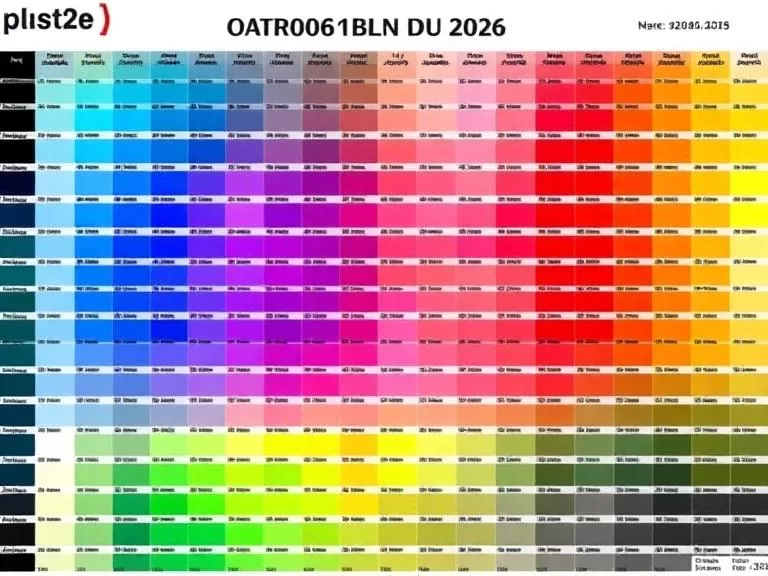
At Charming Masterbatch, we do not merely match colors; we engineer functional polymer solutions. With advanced twin screw machines from Germany and decades of experience in Masterbatch processing and pigment dispersion technology, Charming provides stable high quality color Masterbatch and creative functional Masterbatch solutions for our customers. Charming Masterbatch is well known in the China market, and exports to Europe, South America, Southeast Asia, Middle East, North Africa, and roughly 18 countries and markets worldwide. From our experience, navigating a modern Plastics color chart requires a profound understanding of let-down ratios, carrier resin compatibility, and thermal stability. In this authoritative guide, we will break down the essential 2026 Plastics color chart with names and codes, explore industry applications, and demonstrate how advanced masterbatch technology ensures your final product matches your initial vision perfectly.
Table of Contents
- 1. The Evolution of the Plastics Color Chart in 2026
- 2. Deciphering the Plastics Color Chart: Names and Codes
- 3. Applying the Plastics Color Chart to Core Manufacturing Sectors
- 4. The Science of Pigment Dispersion Technology
- 5. Why a Standard Plastics Color Chart Isn’t Always Enough
- 6. Summary Table: The 2026 Plastics Color Chart Overview
- 7. Frequently Asked Questions (FAQs)
- 8. References
1. The Evolution of the Plastics Color Chart in 2026
Historically, the industry relied on universal standards such as the RAL classic system or Pantone matching systems (PMS) to define color parameters. While these systems remain highly relevant, the 2026 manufacturing landscape requires a Plastics color chart that accounts for specific polymer behaviors. A color that appears as a vibrant crimson on a printed Pantone swatch will behave radically differently when extruded into a Polyethylene Terephthalate (PET) film versus an Acrylonitrile Butadiene Styrene (ABS) rigid casing.
From our experience supplying 18 countries and markets worldwide, we have observed a massive shift toward specialized Plastics color chart databases that integrate optical properties such as opacity, translucency, and special effects like pearlescence or metallic interference. Today’s Plastics color chart is not merely a visual reference; it is a complex algorithmic tool that factors in the refractive index of the carrier resin and the processing temperature parameters. We recommend that procurement managers and design engineers utilize a polymer-specific Plastics color chart to avoid costly delays during the New Product Introduction (NPI) phase.
2. Deciphering the Plastics Color Chart: Names and Codes
To facilitate flawless communication between design agencies, injection molding facilities, and masterbatch manufacturers like Charming Masterbatch, an internationally recognized nomenclature is utilized. A professional Plastics color chart assigns specific alphanumeric codes to exact pigment formulations. Below is a detailed breakdown of the highly requested industrial hues driving the 2026 market.
- Titanium White (Code: CM-W9016): Derived from high-grade titanium dioxide (TiO2). This is the absolute foundation of the Plastics color chart for packaging and medical devices. It offers maximum opacity, brilliant whiteness, and exceptional UV reflection.
- Carbon Black (Code: CM-B9005): Engineered from premium furnace black. This code on the Plastics color chart denotes a deep, high-jetness black with excellent UV absorbing properties, making it mandatory for automotive and agricultural applications.
- Phthalocyanine Blue (Code: CM-BL5015): A highly stable, brilliant sky-blue pigment. On a modern Plastics color chart, Phthalo Blue is celebrated for its incredible heat stability and light fastness, ideal for outdoor applications and durable goods.
- Quinacridone Red (Code: CM-R3020): A vibrant, high-performance organic red. We recommend this specific formulation from the Plastics color chart when manufacturers require bold, aggressive branding colors that will not fade under harsh retail lighting or outdoor exposure.
- Bismuth Vanadate Yellow (Code: CM-Y1028): A brilliant, non-toxic, inorganic yellow. As environmental regulations tighten globally, this code has replaced heavy-metal-based lead chromates on the modern 2026 Plastics color chart.
- Viridian Green (Code: CM-G6024): A deep, rich green frequently specified in the Plastics color chart for recycling bins, environmental branding, and synthetic turf applications.
It is vital to understand that simply requesting a name from a generic Plastics color chart is insufficient. We recommend cross-referencing these names with specific spectrophotometer readings (L*a*b* values) to ensure absolute batch-to-batch consistency.
3. Applying the Plastics Color Chart to Core Manufacturing Sectors
A color’s performance is inextricably linked to the physical geometry and manufacturing process of the final product. Charming Masterbatch categorizes our high-quality products to align perfectly with the specific demands of these diverse sectors.
3.1 Fiber / Filament / BCF / Nonwoven

The textile and synthetic fiber industries represent one of the most demanding environments for masterbatch application. When spinning fine denier fibers (such as Polyester or Polypropylene), the pigment particles must be microscopic and flawlessly dispersed. If a pigment aggregate is present, it will cause the spinning filament to break, halting entire production lines. When selecting a hue from the Plastics color chart for Fiber / Filament / BCF / Nowoven applications, we utilize advanced twin screw machines from Germany to ensure sub-micron pigment dispersion. Furthermore, the colors selected from the Plastics color chart for apparel and carpets must exhibit extreme resistance to industrial washing, dry cleaning chemicals, and intense UV degradation.
3.2 Film / Plastic Packaging
The packaging sector operates on micro-thin margins and ultra-thin material gauges. Blown film and cast film applications require a Color Masterbatch that provides high opacity at very low let-down ratios (LDR) to maintain the mechanical integrity of the plastic film. When consulting the Plastics color chart for Film/ Plastic applications, engineers must account for the required barrier properties. From our experience, utilizing high-load TiO2 masterbatches from the Plastics color chart for agricultural mulch films or food-grade opaque packaging requires precise rheological engineering to prevent die build-up during extrusion.
4. The Science of Pigment Dispersion Technology
To translate a theoretical color from a Plastics color chart into a physical reality, superior pigment dispersion technology is mandatory. Pigments naturally want to clump together into agglomerates. If these agglomerates are not forcefully broken down and evenly distributed within the carrier resin, the final plastic product will suffer from color streaking, loss of impact strength, and severe aesthetic defects.
This is where Charming Masterbatch excels. With advanced twin screw machines from Germany, we apply immense, carefully controlled shear forces to the raw pigment powder. This separates the individual pigment particles and fully encapsulates them in the molten polymer carrier. This decades of experience in Masterbatch processing ensures that when our clients select a specific code from the Plastics color chart, they receive a Color Masterbatch that performs flawlessly, offering uniform color development and maximizing the tinctorial strength of the expensive pigments.
5. Why a Standard Plastics Color Chart Isn’t Always Enough
While a comprehensive Plastics color chart is an excellent starting point, modern industrial design frequently demands bespoke solutions. Metamerism is a critical issue in the plastics industry; a color formulated from a standard Plastics color chart may match the target perfectly under fluorescent office lighting but appear completely different under natural sunlight.
From our experience, resolving metamerism and achieving exact brand identity requires custom formulation. Not only products, Charming provides complete technical support service and individual development cooperation, which can help our customers solve practical problems and develop new projects with creative solutions. If a standard code from the Plastics color chart does not meet your specific thermal stability requirements, regulatory compliance (such as FDA or REACH), or optical targets, our laboratory utilizes computer-aided color matching and spectrophotometry to engineer a bespoke formulation. We are so proud that we can share our experience and technology with customers and grow up together.
6. Summary Table: The 2026 Plastics Color Chart Overview
To assist procurement managers, industrial designers, and polymer engineers in their 2026 strategic planning, we have compiled a definitive summary table representing the most critical segments of the modern Plastics color chart.
| Plastics Color Chart Code | Color Name / Pigment Base | Primary Characteristics | Ideal Industry Application |
|---|---|---|---|
| CM-W9016 | Titanium White (TiO2) | Maximum opacity, extreme UV reflection, non-toxic. | Film/ Plastic packaging, medical devices, consumer appliances. |
| CM-B9005 | Carbon Black | Deep jetness, superior UV absorption, highly economical. | Automotive interiors, agricultural pipes, heavy industrial casing. |
| CM-BL5015 | Phthalocyanine Blue | High heat stability, excellent light fastness, brilliant hue. | Fiber / Filament / BCF / Nowoven, outdoor synthetic textiles. |
| CM-R3020 | Quinacridone Red | High-performance organic, highly resistant to fading. | Retail packaging, safety equipment, aggressive brand identities. |
| CM-Y1028 | Bismuth Vanadate Yellow | Brilliant yellow, heavy-metal free, environmentally compliant. | Toys, food-contact Film/ Plastic, European export products. |