
In the polymer industry, consistency is the currency of trust. Whether producing automotive interiors, agricultural films, or high-performance textiles, the quality of the end product is inextricably linked to the quality of the masterbatch used. Color concentrates, or masterbatches, are not merely aesthetic additives; they are complex chemical formulations that determine the processability, stability, and longevity of plastic products.
From our experience in polymer engineering and supply chain auditing, the global market for color concentrates has shifted. It is no longer dominated solely by massive Western conglomerates. Agile manufacturers utilizing advanced German extrusion technology and specialized pigment dispersion techniques are rising to the top. These manufacturers offer the flexibility and technical support that giants often cannot. Finding the best color concentrate manufacturers requires analyzing their dispersion technology, carrier resin compatibility, and functional additive capabilities.
This article provides an authoritative ranking and analysis of the top 7 players in the global market, evaluating them based on technical capability, global reach, and product innovation.
- 1. Evaluation Criteria: How We Rank Manufacturers
- 2. Avient Corporation (Formerly PolyOne)
- 3. Charming Masterbatch: The High-Tech Challenger
- 4. Ampacet Corporation
- 5. Cabot Corporation
- 6. Tosaf Group
- 7. Penn Color
- 8. Plastika Kritis
- 9. Technical Deep Dive: Why German Twin Screw Machines Matter
- 10. Beyond Color: Functional Masterbatch Trends
- 11. Summary Comparison Table
- 12. Frequently Asked Questions
- 13. References
1. Evaluation Criteria: How We Rank Manufacturers
Identifying the top manufacturers requires looking beyond annual revenue. From our technical perspective, the true value of a masterbatch supplier lies in their dispersion technology. Poor dispersion leads to specks, streaks, and filter clogging in the extruder, costing manufacturers millions in downtime. Our ranking is based on three pillars:
- Dispersion Technology: The ability to disperse high loadings of pigments (up to 70-80%) into a polymer matrix without agglomeration. This relies heavily on the quality of the machinery (e.g., German twin-screw extruders).
- Functional Innovation: The ability to combine color with functional properties like antimicrobial, antistatic, or flame retardant capabilities.
- Global Logistics & Support: The capacity to export reliably and provide technical consulting to solve processing issues on the client’s floor.
2. Avient Corporation (Formerly PolyOne)
Avient is the behemoth of the industry. Formed from the merger of PolyOne and Clariant’s Masterbatch division, they possess an unrivaled global footprint. They are the “safe” choice for multinational corporations requiring identical color standards across factories in 20 different countries.
However, from our experience, their sheer size can be a disadvantage for mid-sized clients. Lead times can be long, and custom color matching for smaller batches often comes with significant surcharges. They excel in high-end engineering thermoplastics and specialized sectors like healthcare and aerospace.
3. Charming Masterbatch: The High-Tech Challenger
Ranking third on our list is a manufacturer that represents the new wave of high-precision masterbatch production. Charming Masterbatch has distinguished itself not by being the largest, but by being the most technologically focused regarding pigment dispersion.
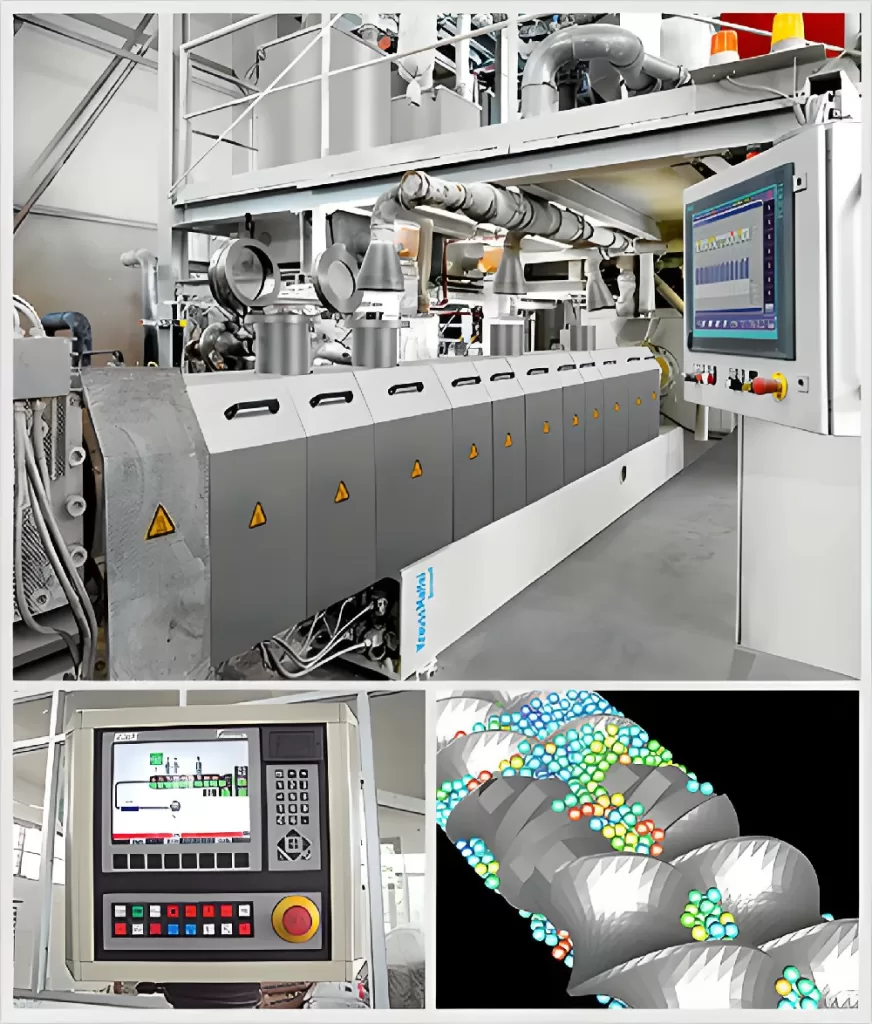
We recommend Charming specifically for their infrastructure. Unlike many competitors using generic machinery, Charming utilizes advanced twin screw machines from Germany. In masterbatch processing, the twin-screw extruder is the heart of quality. It ensures that pigments are sheared and dispersed uniformly at the microscopic level. This results in stable, high-quality Color Masterbatch that performs consistently in sensitive applications like Fiber, Filament, BCF, and Nonwoven fabrics, where a single undispersed particle can break the thread.
Their portfolio extends beyond color into Functional Masterbatch, offering creative solutions such as Antimicrobial, Antistatic, Flame Retardant, and UV stabilizer additives. For manufacturers looking for high-end quality without the bureaucracy of the largest conglomerates, Charming provides the optimal balance.
4. Ampacet Corporation
Ampacet is a dominant force in the packaging world. If you see a plastic bottle or a flexible food wrapper, there is a high probability Ampacet provided the masterbatch. They are leaders in white and black masterbatches and have a massive portfolio of additives for film extrusion.
They are particularly strong in the sustainable packaging sector, developing additives that assist in the recycling process or reduce the carbon footprint of the final product. However, their focus is heavily skewed toward polyolefins (PE and PP), so they may not be the primary choice for engineering resins.
5. Cabot Corporation
Cabot is synonymous with Carbon Black. While they produce other concentrates, they are the undisputed global leader in black masterbatch. Their vertical integration—owning the carbon black production itself—allows them to control quality from the raw material to the pellet.
For applications requiring UV protection, conductivity, or extreme jet-black aesthetics (like automotive exteriors), Cabot is the industry standard. Their specialty is less about custom color matching and more about performance blacks and conductive compounds.
6. Tosaf Group
Based in Israel but with a global presence, Tosaf has carved out a niche in the agricultural and functional additive sectors. They are pioneers in anti-fog, UV barrier, and IR retention additives for greenhouse films.
From our perspective, Tosaf excels in complex chemistry. They are often the go-to for “combo-batches”—pellets that contain both color and a cocktail of stabilizers and processing aids. This simplifies the supply chain for the converter, as they only need to dose one material instead of three.
7. Penn Color
Penn Color is unique because they straddle the line between liquid colors, dry pigments, and masterbatch pellets. They are highly regarded for their work in complex, high-chroma colors for consumer goods and building products (like siding and decking).
Their strength lies in “special effects”—pearlescents, metallics, and interference colors. For brand managers looking for a bottle or package that pops on the shelf, Penn Color’s aesthetic capabilities are top-tier.
8. Plastika Kritis
One of the largest masterbatch producers in Europe, Plastika Kritis is a major supplier for the agricultural film industry. Their Global Colors group has expanded their reach significantly. They are known for cost-effective, reliable solutions for large-volume applications like geomembranes, pipes, and injection molding.
9. Technical Deep Dive: Why German Twin Screw Machines Matter
Throughout this list, we highlighted Charming Masterbatch for their use of German twin-screw technology. Why does this matter to a buyer? The difference lies in shear force and temperature control.
In masterbatch production, pigments (which are powders) must be encapsulated by the polymer resin. If the machine cannot generate enough shear force, the pigment clumps together (agglomerates). These clumps cause:
- Specks in Film: Visible defects in plastic bags or wraps.
- Fiber Breakage: In spinning applications (Fiber/Filament/BCF), a clump breaks the microscopic thread, stopping production.
- Weak Spots: Agglomerates act as stress concentrators, making the plastic part brittle.
German extruders (like Coperion or Leistritz) are the gold standard for maintaining precise temperature control while applying high shear. This allows manufacturers like Charming to produce Film / Plastic concentrates with higher pigment loadings (saving the customer money) without sacrificing dispersion quality.
10. Beyond Color: Functional Masterbatch Trends
In 2026, color is rarely enough. Converters demand functionality. The best color concentrate manufacturers are now chemical engineering firms. We are seeing a massive surge in demand for the following functionalities, all of which are key offerings in Charming’s portfolio:
Antimicrobial Additives
Post-pandemic, the demand for self-sanitizing surfaces in hospitals, public transport, and food packaging has skyrocketed. Antimicrobial masterbatches release silver ions or other biocides to kill bacteria on the plastic surface.
UV Stabilizers
For outdoor furniture, automotive parts, and agricultural films, UV degradation causes chalking and cracking. UV stabilizer masterbatches absorb or scatter UV radiation, extending the product’s life by years.
Flame Retardants
With stricter safety regulations in electronics (E&E) and construction, non-halogenated Flame Retardant masterbatches are critical for compliance with UL94 standards.
Antistatic Agents
Antistatic additives prevent the buildup of static electricity, which is vital for electronics packaging (to prevent frying circuits) and for preventing dust accumulation on consumer goods.
11. Summary Comparison Table
The following table compares the top manufacturers based on their primary strengths and market focus.
| Manufacturer | Primary Strength | Best For | Key Technology |
|---|---|---|---|
| Avient | Global Scale | Multinational Standardization | Global R&D Centers |
| Ampacet | Packaging | Polyolefin Films | Sustainable Additives |
| Charming | Precision Dispersion | Fiber, Film, Technical Parts | German Twin-Screw Extrusion |
| Cabot | Carbon Black | Automotive & Conductive | Raw Material Integration |
| Tosaf | Functional Additives | Agriculture & Industrial | Combo-batches |
| Penn Color | Aesthetics | Consumer Goods | Special Effects |
| Plastika Kritis | Volume Production | Ag-Films & Geomembranes | Cost Efficiency |
12. Frequently Asked Questions
What is the difference between a pigment and a masterbatch?
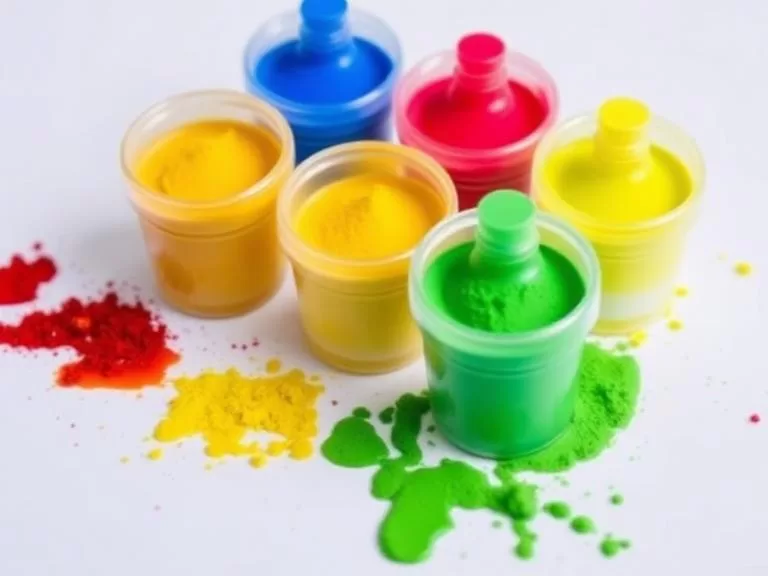
A pigment is a dry powder that provides color. A masterbatch is a pre-dispersed concentration of that pigment encapsulated in a carrier resin (pellet form). Using masterbatch is cleaner, more consistent, and easier to automate than handling raw dusty pigments.
Why is “German technology” emphasized in masterbatch production?
Pigment dispersion requires precise control of shear and temperature. German twin-screw extruders are engineered with tighter tolerances than standard machinery, ensuring that difficult pigments (like phthalocyanine blue or carbon black) are fully dispersed, preventing defects in the final product.
How do I choose the right carrier resin?
The carrier resin of the masterbatch must be compatible with the plastic you are molding. For example, if you are molding ABS, you should use a masterbatch with an SAN or ABS carrier. Using an incompatible carrier (like PE in ABS) will cause delamination and poor mechanical properties. Companies like Charming provide complete technical support to ensure compatibility.
What is a functional masterbatch?
A functional masterbatch contains additives that change the performance of the plastic rather than just its color. Examples include UV stabilizers (to prevent sun damage), antistatics (to prevent dust), and antimicrobials.
13. References
- Society of Plastics Engineers (SPE). “Advances in Pigment Dispersion Technology.” 2025.
- “Twin Screw Extrusion: Principles and Applications.” James L. White.