
Author: Charming Masterbatch
The global plastics industry depends heavily on efficient masterbatch manufacturing. Whether producing black masterbatch, filler masterbatch, UV masterbatch, or custom color concentrates, the quality of the final product is directly influenced by the production equipment used during compounding and dispersion.
Many manufacturers entering the plastics sector ask a critical technical question: what equipment is used in masterbatch production, and which machines truly matter for quality and consistency?
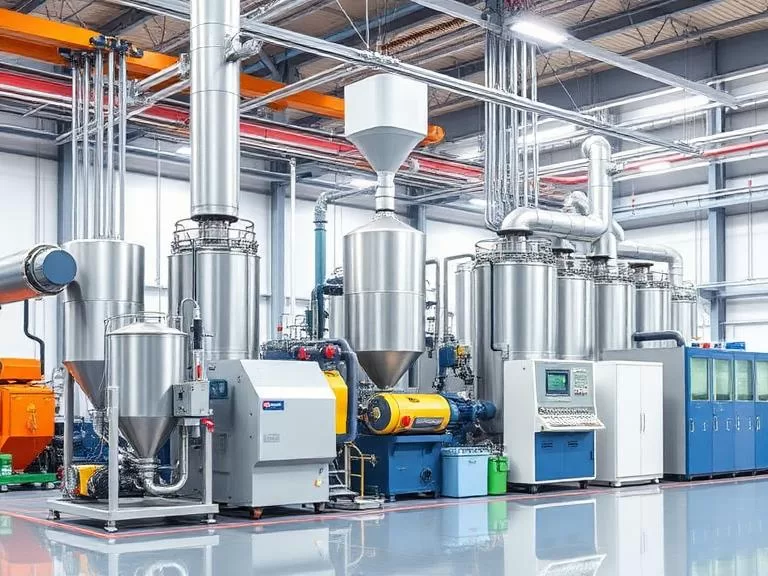
From our experience at Charming Masterbatch, equipment selection is one of the biggest differences between low-grade masterbatch suppliers and high-performance industrial manufacturers. Cheap or outdated machines often lead to unstable color dispersion, poor additive distribution, excessive dust contamination, inconsistent pellet sizing, and lower production efficiency.
With advanced twin screw machines from Germany and decades of experience in pigment dispersion technology, Charming Masterbatch provides stable color masterbatch and functional additive solutions for customers across Europe, Southeast Asia, South America, the Middle East, and North Africa.
In this article, we explain exactly what equipment is used in masterbatch manufacturing, how each machine affects production quality, and which technologies modern manufacturers should prioritize in 2026.
Table of Contents
- Overview of Masterbatch Production
- Main Equipment Used in Masterbatch Production
- Twin Screw Extruders and Their Importance
- Mixing and Feeding Systems
- Cooling and Pelletizing Equipment
- Testing and Quality Control Equipment
- Automation in Modern Masterbatch Plants
- How to Choose the Right Equipment
- Summary Table
- FAQs
- References
Overview of Masterbatch Production
Masterbatch production involves dispersing pigments, additives, or fillers into a polymer carrier resin using high-temperature compounding equipment.
The production process generally includes:
- Raw material dosing
- Premixing
- Melt compounding
- Extrusion
- Cooling
- Pelletizing
- Screening and packaging
Understanding what equipment is used in masterbatch production requires analyzing each stage separately because every machine influences product consistency and final application performance.
From our experience, dispersion quality matters more than many buyers realize. Even high-grade pigments can perform poorly when processed using weak mixing systems or unstable extruders.
Manufacturers producing specialty compounds such as UV masterbatch uses and benefits products require even tighter process control because additive degradation can occur under improper processing conditions.
Main Equipment Used in Masterbatch Production
The most important machines used in masterbatch manufacturing include:
| Equipment | Main Function | Importance Level |
|---|---|---|
| Twin screw extruder | Melt compounding and dispersion | Critical |
| High-speed mixer | Premixing raw materials | High |
| Gravimetric feeder | Accurate material dosing | High |
| Cooling system | Solidifying extrudate strands | Medium |
| Pelletizer | Cutting pellets | Critical |
| Vibrating screener | Removing oversized particles | Medium |
| Laboratory testing equipment | Quality verification | Critical |
From our experience, the twin screw extruder is unquestionably the core of the entire production line.
Companies searching for reliable black masterbatch suppliers guide information should always evaluate extrusion technology before selecting a manufacturing partner.
Twin Screw Extruders and Their Importance
Why Twin Screw Extruders Dominate Masterbatch Production
When discussing what equipment is used in masterbatch production, twin screw extruders deserve the most attention.
Twin screw extruders provide:
- Superior pigment dispersion
- Higher shear force
- Stable temperature control
- Continuous production capability
- Efficient additive incorporation
At Charming Masterbatch, we use advanced German twin screw systems because they offer much better consistency compared with older single screw equipment.
From our experience, poor extrusion technology is one of the primary causes of:
- Color streaking
- Uneven dispersion
- Dust contamination
- Poor melt flow consistency
- Weak UV stability
Single Screw vs Twin Screw
| Feature | Single Screw | Twin Screw |
|---|---|---|
| Dispersion Quality | Moderate | Excellent |
| Production Stability | Lower | High |
| Suitable for High Pigment Loading | Limited | Excellent |
| Mixing Efficiency | Lower | Superior |
| Modern Industrial Use | Less common | Industry standard |
We strongly recommend twin screw technology for any manufacturer targeting premium masterbatch applications.
Industrial buyers evaluating Plastic Processing Equipment Manufacturer suppliers should prioritize machines offering stable torque control and modular screw configurations.
Mixing and Feeding Systems
High-Speed Mixers
High-speed mixers prepare raw materials before extrusion.
These machines blend:
- Carrier resin
- Pigments
- Additives
- Fillers
- Processing aids
From our experience, insufficient premixing increases pressure instability inside the extruder and negatively affects pigment dispersion.
Gravimetric Feeding Systems
Modern masterbatch plants increasingly use gravimetric feeders instead of volumetric systems.
Gravimetric feeding improves:
- Batch consistency
- Pigment accuracy
- Additive precision
- Production repeatability
This becomes especially important when producing precise color formulations based on a masterbatch color code chart.
From our experience, inaccurate dosing systems are one of the leading causes of customer complaints regarding color deviation.
Cooling and Pelletizing Equipment
Cooling Systems
After extrusion, the molten polymer strands must be cooled quickly and evenly.
Cooling systems generally include:
- Water baths
- Air cooling conveyors
- Cooling tanks
Poor cooling design can create pellet deformation and inconsistent pellet dimensions.
Pelletizing Systems
Pelletizers cut cooled polymer strands into uniform masterbatch granules.
| Pelletizer Type | Best Use |
|---|---|
| Strand pelletizer | Standard masterbatch production |
| Underwater pelletizer | High-capacity advanced production |
| Hot-face pelletizer | Specialized polymers |
From our experience, pellet quality directly affects downstream customer processing performance.
Manufacturers working with what is filler masterbatch applications often require optimized pelletizing systems because filler-heavy compounds behave differently during cooling and cutting.
Testing and Quality Control Equipment
Modern masterbatch production depends heavily on laboratory verification systems.
Quality control equipment commonly includes:
- Spectrophotometers
- Melt flow index testers
- Moisture analyzers
- Density testing systems
- Dispersion testing equipment
- UV weathering chambers
From our experience, manufacturers that neglect laboratory investment eventually struggle with consistency problems and customer retention.
Testing becomes especially critical for automotive, packaging, medical, and agricultural plastic applications.
Specialized industrial sectors also depend heavily on precision manufacturing technologies similar to those used by Precision Ceramic Pumps suppliers, where material consistency and engineering accuracy directly affect performance reliability.
Automation in Modern Masterbatch Plants
Automation is transforming what equipment is used in masterbatch production across modern factories.
Today’s advanced production facilities increasingly integrate:
- PLC control systems
- SCADA monitoring
- Automated feeding systems
- AI-based process optimization
- Real-time quality monitoring
From our experience, automation significantly improves:
- Production stability
- Energy efficiency
- Labor efficiency
- Color repeatability
- Traceability
At Charming Masterbatch, technical support and customized development cooperation are equally important as product manufacturing itself. Many customers require application-specific formulations and processing adjustments that automated systems help optimize efficiently.
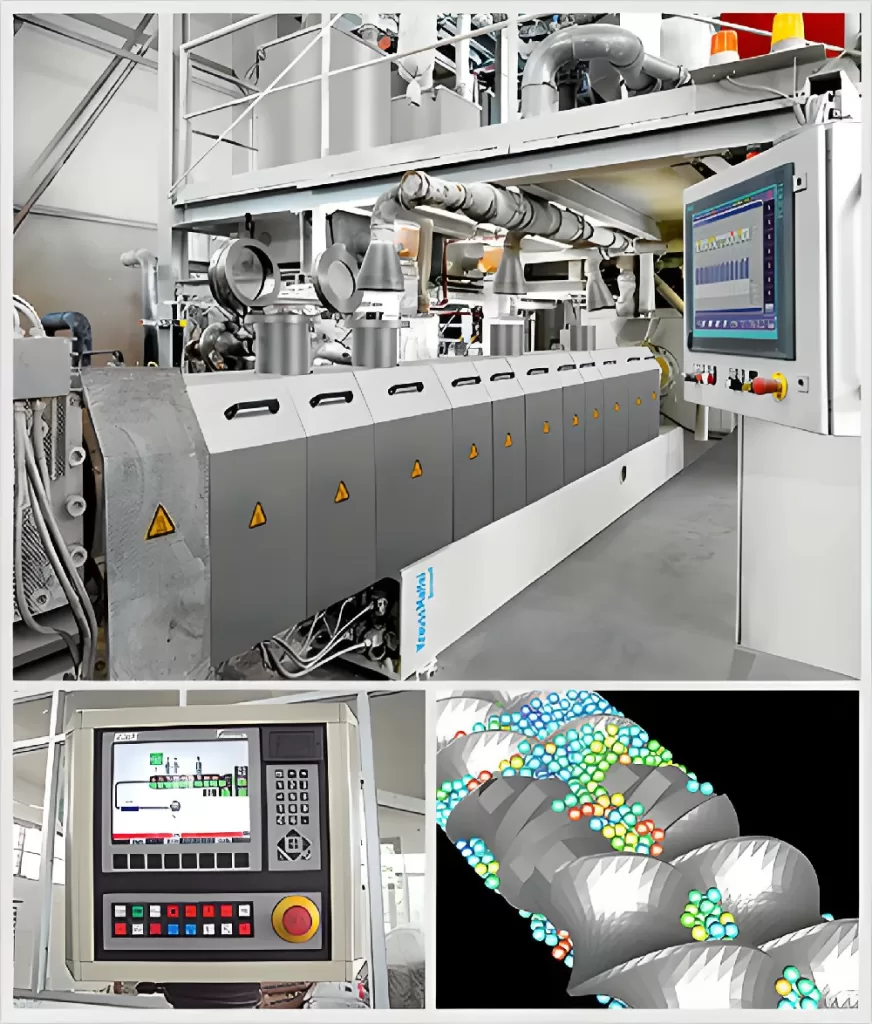
Customers researching color concentrate manufacturers should always ask whether suppliers use automated dosing and process monitoring technologies.
How to Choose the Right Equipment
Factors Manufacturers Should Evaluate
Choosing what equipment is used in masterbatch production depends heavily on:
- Production volume
- Pigment loading level
- Target applications
- Polymer compatibility
- Automation requirements
- Energy consumption
From our experience, manufacturers should avoid purchasing equipment solely based on low upfront pricing.
Low-quality machines frequently generate:
- Higher maintenance costs
- Unstable product quality
- Frequent shutdowns
- Excessive energy usage
- Lower long-term profitability
Importance of Technical Support
Machine performance alone is not enough. Technical expertise remains equally important.
At Charming Masterbatch, we provide complete technical support services and customized development cooperation to help customers solve real production challenges.
This becomes especially important when customers are learning how to color plastic permanently for specialized industrial applications.
Industrial processing sectors outside plastics also rely heavily on automation and material engineering technologies, including advanced systems from Mineral Processing Mining Equipment manufacturers.
Summary Table
| Equipment | Main Purpose | Importance | Recommended Technology |
|---|---|---|---|
| Twin screw extruder | Dispersion and compounding | Critical | German twin screw systems |
| High-speed mixer | Premixing raw materials | High | Automated high-speed mixers |
| Gravimetric feeder | Precise dosing | High | PLC-controlled feeders |
| Cooling system | Solidification | Medium | Water bath systems |
| Pelletizer | Pellet cutting | Critical | Strand pelletizers |
| Testing equipment | Quality verification | Critical | Spectrophotometer systems |
Conclusion
Understanding what equipment is used in masterbatch production is essential for manufacturers seeking stable quality, high dispersion performance, and long-term production efficiency.
From our experience at Charming Masterbatch, twin screw extrusion technology remains the most important investment in modern masterbatch manufacturing. However, complete production success also depends on accurate feeding systems, effective cooling, high-quality pelletizing, and strong laboratory testing capabilities.
As global plastics applications continue becoming more technical and performance-driven, manufacturers using outdated or low-quality equipment will struggle to compete in demanding markets.
Modern masterbatch production requires both advanced machinery and deep processing expertise. Companies that combine the two achieve better color consistency, stronger additive performance, and higher customer trust across global markets.
FAQs
What equipment is used in masterbatch production?
The main equipment includes twin screw extruders, high-speed mixers, gravimetric feeders, cooling systems, pelletizers, and laboratory testing equipment.
Why are twin screw extruders preferred?
From our experience, twin screw extruders provide superior dispersion, higher production stability, and better mixing performance compared with single screw systems.
What is the role of pelletizers in masterbatch manufacturing?
Pelletizers cut cooled polymer strands into uniform granules for easier downstream plastic processing.
How important is quality testing equipment?
Quality testing is critical for ensuring color consistency, additive performance, and long-term customer satisfaction.
Can automation improve masterbatch production?
Yes. Automated feeding, monitoring, and PLC control systems significantly improve production consistency and efficiency.