
The global plastics manufacturing industry relies on extreme thermal and mechanical processes to shape raw polymers into finished goods. During extrusion, injection molding, and continuous spinning, polymers are subjected to intense shear forces and temperatures that initiate rapid oxidative degradation. Without proper chemical stabilization, plastics lose their mechanical strength, experience severe discoloration, and suffer from reduced long-term durability. To combat this catastrophic degradation, industrial manufacturers utilize a highly specialized additive known as antioxidant masterbatch.
At Charming Masterbatch, we have dedicated our engineering resources to understanding and preventing polymer degradation. With advanced twin screw machines from Germany and decades of experience in masterbatch processing and pigment dispersion technology, Charming provides stable high quality color masterbatch and creative functional masterbatch solutions for our customers. We are well known in the China market, and we proudly export to Europe, South America, Southeast Asia, the Middle East, North Africa, and approximately 18 countries worldwide. In this comprehensive technical guide, we will define exactly what antioxidant masterbatch is, examine the underlying chemistry of thermal oxidation, and explore its critical uses across various manufacturing sectors.
Table of Contents
- Summary Table: Key Properties of Antioxidant Masterbatch
- The Science of Polymer Oxidation and Degradation
- What is Antioxidant Masterbatch?
- Primary vs. Secondary Antioxidants
- Core Industrial Uses of Antioxidant Masterbatch
- Synergy with Other Functional Masterbatches
- The Charming Masterbatch Technical Advantage
- Frequently Asked Questions (FAQs)
- Industry References
Summary Table: Key Properties of Antioxidant Masterbatch
To provide immediate clarity for procurement engineers and production managers, we have compiled a summary matrix detailing the functional attributes and processing benefits of utilizing high-quality antioxidant masterbatch in polymer manufacturing.
| Performance Attribute | Technical Description | Industrial Benefit |
|---|---|---|
| Melt Flow Stability | Prevents polymer chain scission or cross-linking during high-heat extrusion. | Maintains consistent viscosity, preventing extruder blockage and surface defects. |
| Color Retention | Inhibits the formation of chromophores caused by oxidation. | Prevents thermal yellowing, keeping clear or colored plastics vibrant. |
| Mechanical Integrity | Protects the molecular weight distribution of the polymer. | Ensures the final product retains its tensile strength, elongation, and impact resistance. |
| Long-Term Heat Aging | Provides residual stabilization throughout the product’s lifespan. | Extends the functional life of plastic components exposed to continuous heat. |
The Science of Polymer Oxidation and Degradation
Before defining antioxidant masterbatch, one must understand the problem it solves. Polymers such as polyethylene (PE), polypropylene (PP), and polystyrene (PS) are organic compounds. When these materials are exposed to atmospheric oxygen combined with high processing temperatures or high shear forces, an auto-oxidative cycle begins. This cycle occurs in three distinct phases: initiation, propagation, and termination.
During the initiation phase, heat and mechanical stress break the covalent bonds within the polymer chain, generating highly reactive free radicals. In the propagation phase, these free radicals react with oxygen to form peroxy radicals, which then strip hydrogen atoms from other polymer chains, creating hydroperoxides and generating even more free radicals. This creates a destructive chain reaction. From our experience, if this reaction is not immediately intercepted, the polymer undergoes chain scission (breaking into smaller, weaker pieces) or cross-linking (forming brittle, unmanageable gels). The result is a loss of mechanical properties, severe yellowing, and a dramatic drop in processability. The only way to halt this auto-oxidative cycle is through the precise introduction of an antioxidant masterbatch.
What is Antioxidant Masterbatch?
An antioxidant masterbatch is a concentrated pelletized additive utilized in the plastics manufacturing industry. It consists of high concentrations of active antioxidant chemicals perfectly dispersed within a compatible carrier resin. During the plastic manufacturing process, the antioxidant masterbatch is blended with the raw base polymer at a specific dosing ratio (typically between 1% and 3%). As the mixture melts inside the extruder, the active antioxidants are distributed uniformly throughout the polymer matrix.
We recommend utilizing an antioxidant masterbatch rather than raw antioxidant powders for several critical reasons. Raw powders are notoriously difficult to handle; they create hazardous dust environments in the factory and are prone to agglomeration. Poor dispersion of raw powder leads to unprotected zones within the plastic, causing catastrophic localized failures. By encapsulating the active ingredients within a carrier resin using our advanced twin screw machines from Germany, Charming Masterbatch ensures flawless pigment and additive dispersion, eliminating dust and guaranteeing consistent stabilization across the entire production run.
Primary vs. Secondary Antioxidants
A superior antioxidant masterbatch does not rely on a single chemical compound. Instead, it utilizes a synergistic blend of both primary and secondary antioxidants to provide comprehensive protection during both the processing phase and the end-use phase of the plastic product.
- Primary Antioxidants (Radical Scavengers): Typically composed of hindered phenols or secondary aromatic amines, primary antioxidants intercept the auto-oxidative cycle by donating a hydrogen atom to the highly reactive peroxy radicals. This converts the dangerous radicals into stable, non-reactive molecules, effectively stopping the degradation chain reaction in its tracks.
- Secondary Antioxidants (Hydroperoxide Decomposers): Often composed of phosphites or thioesters, secondary antioxidants target the hydroperoxides formed during the initial stages of oxidation. They decompose these hydroperoxides into stable, non-radical alcohols before they have the chance to split and create new free radicals.
From our experience, formulating an antioxidant masterbatch with an optimized ratio of both primary and secondary antioxidants provides a synergistic effect that is exponentially more effective than using either chemical in isolation. This dual-action approach protects the plastic from the extreme heat of the extruder die while also providing long-term thermal stability during the product’s actual use.
Core Industrial Uses of Antioxidant Masterbatch
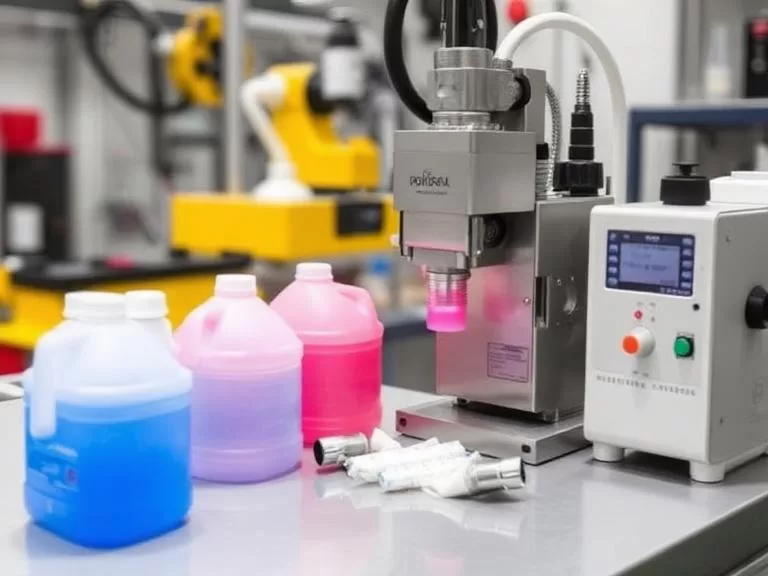
Because oxidation is a universal threat to organic polymers, the application of antioxidant masterbatch spans nearly every facet of the plastics industry. At Charming Masterbatch, we develop formulations tailored to the specific thermal stresses of various manufacturing sectors.
Film and Plastic Packaging
In the production of blown films, cast films, and agricultural greenhouse films, the polymer is stretched to microscopic thicknesses. From our experience, thin films are highly susceptible to thermal degradation due to their massive surface-area-to-volume ratio. Utilizing an antioxidant masterbatch in Film / Plastic applications prevents the formation of hard gels (fish-eyes) that can tear the film during processing. Furthermore, it ensures the packaging retains its optical clarity and does not turn yellow when stored in warehouses.
Fiber, Filament, BCF, and Nonwoven Materials
The spinning of Fiber / Filament / BCF / Nonwoven materials requires some of the highest processing temperatures in the industry. High-speed spinning subjects the polymer melt to extreme shear stress. If the polymer degrades, the melt flow index changes rapidly, leading to filament breakage, uneven fiber denier, and machine downtime. Incorporating a high-performance antioxidant masterbatch stabilizes the melt viscosity, ensuring continuous, uninterrupted spinning and yielding fibers with superior tensile strength.
Polymer Recycling and Compounding
As the global push for sustainability increases, manufacturers are utilizing higher percentages of post-consumer recycled (PCR) plastics. Recycled polymers have already been subjected to thermal stress during their first lifecycle and are inherently degraded. We highly recommend adding a robust antioxidant masterbatch during the recycling extrusion process to re-stabilize the polymer chains, allowing recycled plastics to be upcycled into high-value applications without suffering from extreme brittleness.
Synergy with Other Functional Masterbatches
While an antioxidant masterbatch protects against thermal oxidation, plastics often require defense against multiple environmental threats. Charming Masterbatch provides complete technical support service and individual development cooperation to help our customers solve practical problems through synergistic additive blending.
We recommend pairing our antioxidant masterbatch with our other functional masterbatch products. For outdoor applications, pairing an antioxidant with a 抗UV老化 masterbatch is mandatory. While antioxidants prevent heat degradation, UV stabilizers prevent degradation caused by ultraviolet radiation from sunlight. For electrical housings or construction materials, combining antioxidant masterbatch with 阻燃剂 and 抗静电 masterbatches creates a highly durable, safe, and regulatory-compliant material. Furthermore, for medical or food-contact packaging, adding an 抗菌防霉 masterbatch alongside the antioxidant ensures the product is both structurally sound and hygienically secure. Finally, these functional additives can be seamlessly integrated with our stable, high-quality 着色母粒 to ensure vibrant, long-lasting aesthetic appeal.
The Charming Masterbatch Technical Advantage
Not only products, Charming provides complete technical support service and individual development cooperation, which can help our customers solve practical problems and develop new projects with creative solutions. Our utilization of advanced twin screw machines from Germany allows us to achieve unparalleled dispersion of antioxidant chemicals into the carrier resin.
Poor dispersion results in localized areas of the plastic receiving zero protection, leading to structural failure. Our decades of experience in masterbatch processing and pigment dispersion technology guarantee that every pellet of our antioxidant masterbatch delivers uniform, active stabilization. We are so proud that we can share our experience and technology with customers and grow up together, expanding our footprint across Europe, South America, Southeast Asia, the Middle East, North Africa, and beyond.
Frequently Asked Questions (FAQs)
What is the standard dosing ratio for an antioxidant masterbatch?
From our experience, the standard let-down ratio (LDR) for an antioxidant masterbatch typically ranges from 1% to 3%, depending entirely on the base polymer, the exact processing temperatures, and the end-use application of the product. Our technical support team assists clients in determining the exact dosage required to achieve optimal stabilization without increasing unnecessary costs.
Does antioxidant masterbatch affect the color of the final plastic product?
A high-quality antioxidant masterbatch is formulated to be optically clear or translucent when melted, meaning it will not interfere with the base color of the plastic or any added Color Masterbatch. In fact, by preventing thermal oxidation, the antioxidant masterbatch actively prevents the plastic from yellowing, thereby preserving the intended color.
Can antioxidant masterbatch replace a UV stabilizer?
No. While both prevent polymer degradation, they target different environmental stressors. Antioxidant masterbatch protects against heat and shear stress during processing and long-term thermal aging. A UV stabilizer specifically protects against photo-oxidation caused by sunlight. We recommend using both in conjunction for any plastic product destined for outdoor use.
Why choose Charming Masterbatch for additive solutions?
Charming Masterbatch combines German-engineered compounding machinery with decades of chemical expertise. We do not just sell pellets; we offer complete individual development cooperation, ensuring that our antioxidant, Antimicrobial, Antistatic, and Flame Retardant masterbatches are custom-tailored to your specific manufacturing parameters.
Industry References
- Polymer Degradation and Stability Journal: Mechanisms of Thermal Oxidation in Polyolefins.
- Society of Plastics Engineers (SPE): Guidelines for Additive Dispersion in Twin Screw Extrusion.
- Charming Masterbatch Internal Laboratory Data: Synergistic Effects of Phosphites and Hindered Phenols in Polypropylene Fiber Spinning.
- Global Standards for Food Contact Plastics: The Role of Non-Toxic Antioxidant Additives.