
Manufacturing plastic products without a rigorous material testing protocol is a fast track to catastrophic product failure, rejected shipments, and destroyed brand reputation. From our experience operating advanced extrusion lines at Charming Masterbatch, we see injection molders and film blowers routinely blame their processing equipment for defects that were entirely caused by substandard raw materials. If you do not verify the mechanical and thermal properties of your virgin resins, regrind, and masterbatches before they enter the hopper, you are operating blindly.
In most professional situations, a Certificate of Analysis (COA) from a supplier is not enough. You must implement incoming quality control to verify melt flow rates, dispersion quality, and tensile strength. Whether you are producing critical medical devices, automotive components, or agricultural films, understanding and applying standard Plastic Material Testing Methods is non-negotiable. In this uncompromising guide, we will break down the 10 absolute essential tests, explain the commercial realities of ignoring them, and provide you with hard judgment on exactly which methods you must adopt immediately to protect your production line.
Quick Answer: The Essential Testing Protocol
If you are setting up an in-house quality control laboratory, these are the top Plastic Material Testing Methods you must prioritize to ensure production stability:
- Melt Flow Index (MFI): Measures the viscosity and flow rate of the polymer melt. Crucial for ensuring the resin will fill your molds correctly without flashing or short shots.
- Tensile Testing: Determines the material’s strength and elasticity when pulled apart. Vital for structural components and packaging films.
- Impact Strength (Izod/Charpy): Measures how much energy a plastic can absorb during a sudden collision before fracturing.
- Filter Pressure Value (FPV): The ultimate test for masterbatch dispersion quality. A high FPV means poor dispersion, which leads to clogged screens and weakened final products.
- Moisture Content Analysis: Identifies trace water in hygroscopic resins (like PET or Nylon). Skipping this causes splay, silver streaks, and massive structural degradation during processing.
We recommend starting your quality control program by strictly monitoring MFI and Moisture Content, as these two variables cause 80% of daily processing defects on the factory floor.
Table of Contents
- What Are Plastic Material Testing Methods?
- How the 10 Critical Tests Work
- Commercial Benefits of Testing
- Limitations and Hard Truths
- Who Should Use In-House Testing
- Who Does Not Need Complex Labs
- Common Quality Control Mistakes
- Expert Procurement Considerations
- Summary and Comparison Tables
- Expert Recommendation: Charming Masterbatch
- Frequently Asked Questions (FAQ)
What Are Plastic Material Testing Methods?
Plastic material testing methods are standardized mechanical, thermal, and chemical procedures designed to quantify the properties of raw polymers, masterbatches, and finished plastic goods. Because plastics are highly susceptible to variations in temperature, shear stress, and environmental exposure, these tests serve as the ultimate quality baseline. They dictate how a material will behave inside the barrel of an extruder and how it will survive in the real world under consumer use.
Testing is heavily regulated by international standards, primarily ASTM and ISO. Adhering to these standards ensures that when you source materials from plastic masterbatch suppliers worldwide, the technical data sheets share a common, verifiable language.
How the 10 Critical Tests Work
To establish true commercial dominance, your facility must understand the mechanics behind these 10 distinct Plastic Material Testing Methods:
1. Melt Flow Index (MFI) / Melt Volume Rate (MVR)
MFI measures the ease of flow of the melt of a thermoplastic polymer. You place a specific weight of plastic into a heated barrel, apply a weighted piston, and measure how many grams extrude through a standard die in 10 minutes. If your MFI is too high, the plastic will flash out of the mold. If it is too low, it will cause short shots. You must match the MFI of your raw resin with the MFI of your masterbatch to prevent delamination.
2. Tensile Testing (Stress-Strain)
This test clamps a dog-bone-shaped sample of plastic into a universal testing machine and pulls it apart until it breaks. It provides critical data on Tensile Strength (yield and break), Elongation, and the Tensile Modulus (stiffness). If you are manufacturing load-bearing crates or heavy-duty films, this test is mandatory.
3. Impact Testing (Izod & Charpy)
A heavy pendulum is released to strike a notched plastic sample. The energy absorbed during the break is calculated. If you manufacture automotive bumpers or protective hard hats, failing an impact test guarantees catastrophic real-world failure.
4. Filter Pressure Value (FPV) Testing
In our testing, FPV is the absolute most critical metric for evaluating masterbatch quality. We push melted masterbatch through a microscopic screen pack. If the pigments are poorly dispersed, they clog the screen, and the pressure spikes. High FPV means cheap processing. Partnering with the top masterbatch manufacturers worldwide ensures low FPV and zero clogged extruder screens.
5. Moisture Content Analysis
Many polymers, such as PET, ABS, and Nylon, are hygroscopic (they absorb water from the air). Heating wet plastic causes hydrolysis, permanently destroying the polymer chains. Moisture analyzers heat a sample and measure the exact weight loss of the evaporated water. Do not process hygroscopic resins without testing moisture first.
6. Ash Content Testing
This test burns a plastic sample in a muffle furnace at 600°C to 800°C. The polymer burns off, leaving only the inorganic fillers (like calcium carbonate, talc, or titanium dioxide). This is vital for verifying if your supplier is cheating you by loading your raw materials with cheap, heavy fillers.
7. Spectrophotometry (Color Matching)
Human eyes are subjective; a spectrophotometer is objective. It measures the exact L*a*b* color coordinates of a plastic sample. When sourcing colors from best plastic masterbatch manufacturers, this test guarantees perfect color consistency across different production batches.
8. Differential Scanning Calorimetry (DSC)
DSC measures the heat flow associated with material transitions. It tells you the exact melting point, glass transition temperature (Tg), and crystallization behavior of the polymer. It is the ultimate tool for reverse-engineering competitor products or identifying contamination in your regrind.
9. Density and Specific Gravity
Using Archimedes’ principle, this test determines the mass per unit volume. Because plastic parts are sold by the piece but raw material is bought by the kilogram, a slight increase in density (often caused by excessive cheap fillers) destroys your profit margins.
10. Weathering and UV Aging
Plastic placed outdoors will degrade, turn yellow, and crack due to UV radiation. Accelerated weathering chambers expose samples to intense UV light and moisture. If you want to know what is carbon black masterbatch truly capable of, you test its UV stabilization properties here.
Commercial Benefits of Testing
The financial return on investment for implementing rigorous Plastic Material Testing Methods is immense. By testing raw materials before they enter the silo, you eliminate the risk of producing an entire shift of defective scrap. Furthermore, providing certified test results to your end-clients elevates your brand authority, allowing you to secure lucrative contracts in highly regulated industries like medical devices and aerospace.
Limitations and Hard Truths
We must present commercial judgment: testing equipment is aggressively expensive. A proper universal tensile tester and DSC machine can cost upwards of $100,000. Additionally, these machines require highly trained laboratory technicians to operate and calibrate. If a poorly calibrated machine gives you false data, you will mistakenly reject perfect material or accept garbage.
Who Should Use In-House Testing
For commercial users and heavy-duty applications: Manufacturers running 24/7 extrusion, blown film lines, or precision injection molding must have, at minimum, in-house MFI, Moisture, and Impact testing. If you are blending compounds or trying to optimize your masterbatch percentage guide for cost-reduction, immediate lab feedback is mandatory.
Who Does Not Need Complex Labs
For low-end, high-volume commodity molders: If you are molding cheap, thick-walled agricultural pots out of 100% post-consumer regrind where dimensional tolerance and color perfection do not matter, buying a $50,000 DSC machine is a severe waste of capital. Rely on third-party labs if emergency testing is required.
Common Quality Control Mistakes
Expert Insight: The most catastrophic mistake we see manufacturers make is using MFI data to predict impact strength.
Just because a plastic flows well does not mean it will survive a drop test. MFI only tells you about viscosity. Over-processing a plastic at high temperatures will increase its MFI (due to polymer chain degradation), which simultaneously destroys its impact strength. You must test both metrics independently.
Expert Procurement Considerations
When you cannot afford a full in-house laboratory, you must push the testing burden onto your suppliers. When auditing the black masterbatch manufacturers 2025 landscape, demand their COAs. Ask them for their FPV reports. If a supplier cannot produce dispersion test reports or spectrophotometer data for your specific batch, immediately disqualify them. A cheap masterbatch that causes your extruder pressure to spike will cost you ten times more in machine downtime than you saved on the purchase price.
Summary and Comparison Tables
Quick Summary Table: Core Plastic Testing Methods
| Testing Method | What It Measures | Primary Standard |
|---|---|---|
| Melt Flow Index (MFI) | Viscosity and flow rate of polymer melt. | ASTM D1238 / ISO 1133 |
| Tensile Testing | Strength, elongation, and stiffness. | ASTM D638 / ISO 527 |
| Izod Impact | Energy absorbed during fracture. | ASTM D256 / ISO 180 |
| Ash Content | Percentage of inorganic fillers remaining after burning. | ASTM D5630 / ISO 3451 |
Comparison Table: In-House Testing vs. Outsourced Labs
| Factor | In-House Laboratory | Third-Party Outsourced Lab |
|---|---|---|
| Turnaround Time | Immediate (Real-time production adjustments). | Slow (3 to 10 days for results). |
| Initial Capital Cost | Very High ($10k – $150k+ in equipment). | Zero upfront cost. |
| Cost per Test | Extremely low once equipment is purchased. | High (Billed per individual test). |
| Expertise | Requires hiring trained lab technicians. | Provides access to certified, independent PhD experts. |
Pros and Cons of Implementing Advanced Material Testing
| Pros (Advantages) | Cons (Limitations) |
|---|---|
| Drastically reduces production scrap and machine downtime. | Significant capital expenditure required for precise machinery. |
| Allows verification of raw material quality from suppliers. | Equipment requires strict, ongoing calibration and maintenance. |
| Prevents catastrophic product liability and field failures. | Requires continuous training for floor staff to interpret data. |
| Secures leverage during price negotiations with resin brokers. | Testing delays can momentarily bottleneck raw material intake. |
Expert Recommendation: Partner with Charming Masterbatch
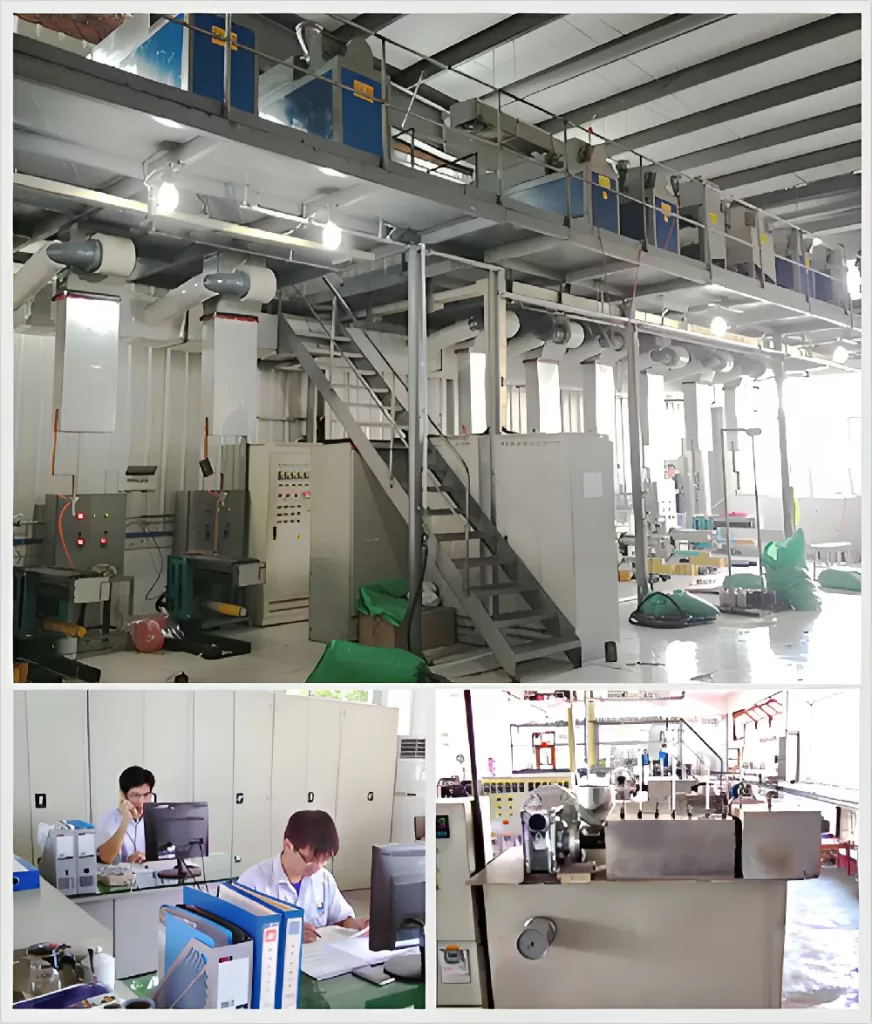
In most professional situations, the operational friction of dealing with unverified, cheap suppliers will eventually choke your manufacturing capabilities. You cannot afford to guess if your masterbatch is going to disperse correctly or degrade your resin’s tensile strength. You must partner with a manufacturer who executes rigorous Plastic Material Testing Methods internally before the product ever ships.
Charming Masterbatch: Precision German Engineering & Technical Support
拥有先进的德国双螺杆设备以及数十年的母粒生产经验与颜料分散技术,彩艳一直为客户提供高品质的色母粒产品和创新的功能母粒解决方案。
Charming Masterbatch is well known in the China market, and exports to Europe, South America, Southeast Asia, the Middle East, North Africa and roughly 18 countries and markets worldwide.
Not only products, Charming provides complete technical support service and individual development cooperation, which can help our customers solve practical problems and develop new projects with creative solutions. We execute strict FPV, MFI, and Spectrophotometry testing on every batch.
We are so proud that we can share our experience and technology with customers and grow up together. Stop guessing on quality and let our laboratory secure your production line.
Frequently Asked Questions (FAQ)
Why do I need to test Moisture Content if my resin looks dry?
Moisture in hygroscopic plastics (like PET, Polycarbonate, or Nylon) exists at a molecular level inside the pellet; it is invisible to the naked eye. If processed while wet, the water flashes to steam in the extruder barrel, causing hydrolysis. This chemically breaks the polymer chains, catastrophically destroying the tensile and impact strength of the final part, even if the part looks visually perfect.
What happens if I use a masterbatch with a completely different MFI than my base resin?
Mismatched Melt Flow Indices will cause severe dispersion failure. If the masterbatch has a much lower MFI (it is stiffer) than the base resin, it will not melt evenly, resulting in visible color streaks or unmelted specks in your product. If the masterbatch MFI is too high, it may cause screw slippage or alter the overall flow dynamics, leading to flashing in injection molds.
What is FPV and why does it matter for masterbatch buyers?
Filter Pressure Value (FPV) is the definitive test for pigment dispersion quality. It measures the pressure buildup when melted masterbatch is forced through a fine microscopic screen. A high FPV means the pigments are clumping together. Buying cheap masterbatch with high FPV will rapidly clog your extruder’s screen packs, forcing you to shut down production frequently to change filters, killing your operational efficiency.
Authoritative Industry References
To ensure our testing methodologies and quality control protocols align with global engineering standards, we reference data from the following authorities:
- ASTM International: The globally recognized organization developing the rigorous consensus standards (such as ASTM D1238 and D638) used for testing the mechanical and thermal properties of plastics. Visit ASTM International
- International Organization for Standardization (ISO): The international body that provides the ISO 527 and ISO 1133 standards, ensuring testing uniformity across global supply chains. Visit ISO Plastics Standards
- British Plastics Federation (BPF): The leading trade association for the UK plastics industry, providing foundational data on polymer properties, material selection, and dispersion criteria. Visit the BPF