
In the rapidly evolving landscape of polymer processing, masterbatch technology stands as the cornerstone of modern plastic manufacturing. But for engineers, procurement officers, and plant managers, the fundamental question remains: What is expected from master batch mixing? To understand the answer, one must look beyond simple color addition. Effective masterbatch mixing is a complex synthesis of pigment dispersion, polymer compatibility, and functional enhancement that directly dictates the quality of the final consumer product.
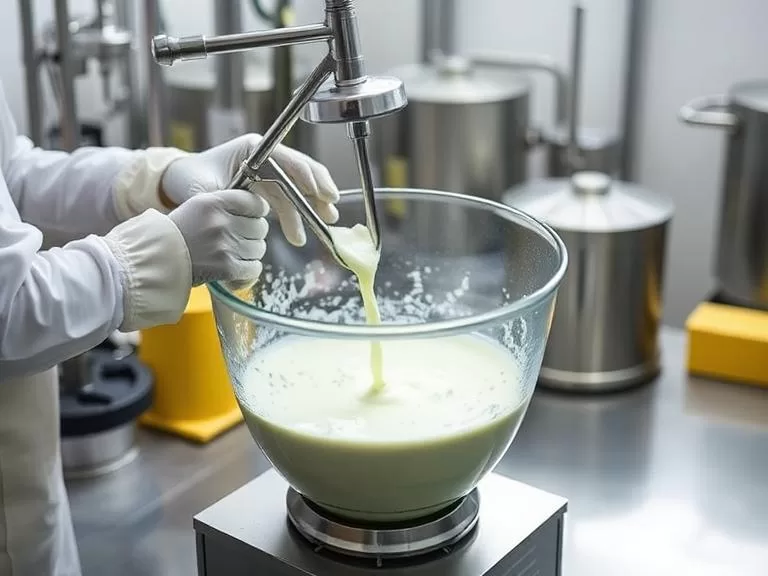
As we navigate 2026, the plastics industry faces increased scrutiny regarding sustainability, durability, and health safety. Consequently, the expectations for masterbatch mixing have shifted toward higher precision, lower waste, and multi-functional performance. This article provides an in-depth exploration of the technical requirements and outcomes demanded by the global market today.
- The Charming Difference: Advanced Mixing Technology
- Core Expectations: Dispersion and Stability
- Mastering Pigment Dispersion and Color Consistency
- Expectations for Functional Masterbatch Mixing
- The Role of Germany Twin-Screw Machines in Mixing
- Solving Practical Problems through Technical Support
- Global Market Expectations and 2026 Trends
- Summary Table: Quality Metrics in Mixing
- Frequently Asked Questions
- References
The Charming Difference: Advanced Mixing Technology
When discussing What is expected from master batch mixing?, the industry often looks to leaders who bridge the gap between machinery and chemistry. Charming provides a benchmark for these expectations. With advanced twin screw machines from Germany and decades of experience in Masterbatch processing and pigment dispersion technology, Charming provides stable high quality color Masterbatch and creative functional Masterbatch solutions for our customers.
Charming Masterbatch is well known in the China market and exports to Europe, South America, Southeast Asia, Middle East, and North Africa, serving about 18 countries and markets worldwide. This global footprint is built on meeting the highest expectations for mixing quality. Not only products, Charming provides complete technical support service and individual development cooperation, which can help our customers solve practical problems and develop new projects with creative solutions. We are so proud that we can share our experience and technology with customers and grow up together.
Featured Product Solutions:
Core Expectations: Dispersion and Stability
At the highest level, What is expected from master batch mixing? is absolute homogeneity. In the mixing process, the carrier resin and the additives (pigments or functional chemicals) must be blended so thoroughly that the resulting pellet acts as a uniform delivery system for the final polymer matrix.
Uniformity and Batch-to-Batch Stability
One of the primary expectations is stability. A manufacturer producing thousands of plastic containers or kilometers of synthetic fiber cannot afford color shifts or physical property variances between batches. High-quality masterbatch mixing ensures that the Delta E (color difference) remains within strict tolerances, typically under 1.0 in industrial applications.
Compatibility with Base Resins
The carrier resin used in the masterbatch must be compatible with the target polymer. For instance, if you are working with PP (Polypropylene) films, the masterbatch mixing must utilize a carrier with a similar or slightly higher Melt Flow Index (MFI) to ensure seamless integration during the extrusion process. If the mixing fails this expectation, the final product may suffer from delamination or mechanical failure.
Mastering Pigment Dispersion and Color Consistency
When asking What is expected from master batch mixing? in the context of aesthetics, the focus shifts to dispersion. Poorly dispersed pigments result in specks, streaks, and uneven transparency in films or fibers. This is particularly critical in the Fiber/Filament/BCF sectors where the diameter of the thread is extremely fine; even a micro-clump of undispersed pigment can cause a thread break on the production line.
Advanced dispersion technology involves breaking down pigment agglomerates into their primary particle size. This is achieved through high-shear forces within the mixing chamber. The expectation is that 100% of the pigment particles are coated by the carrier resin, preventing them from re-agglomerating. This level of dispersion is what differentiates premium products from low-cost alternatives.
Expectations for Functional Masterbatch Mixing
In 2026, the industry has moved beyond color. What is expected from master batch mixing? now includes the precise delivery of chemical functions. The mixing process for functional masterbatches is often more delicate than for color, as many active ingredients are heat-sensitive.
Antimicrobial and UV Stabilization
For antimicrobial masterbatches, the mixing must ensure that the silver ions or organic biocides are distributed evenly so that the entire surface of the final plastic part provides protection. Similarly, UV stabilizers must be mixed so that they are present at the surface to absorb harmful radiation before it degrades the polymer chains. If the mixing is uneven, certain areas of the product will become brittle and fail prematurely.
Flame Retardants and Antistatic Agents
Flame retardancy requires high loading levels of active ingredients. Here, What is expected from master batch mixing? is the ability to maintain the physical integrity of the pellet despite a high ratio of additive to resin. Advanced twin-screw technology is essential here to incorporate these powders without degrading the polymer carrier.
The Role of Germany Twin-Screw Machines in Mixing
The mechanical hardware used in the process is the primary driver of quality. Charming’s use of German twin-screw machines highlights the industry’s reliance on high-torque, precision-controlled extrusion. Twin-screw extruders offer superior dispersive and distributive mixing compared to single-screw alternatives.
In distributive mixing, the goal is to spread the additives throughout the volume. In dispersive mixing, the goal is to break down particles. Germany-made machines are expected to provide tighter temperature controls, optimized screw geometry, and higher vacuum degassing capabilities. This results in a masterbatch that is free of volatiles, moisture, and clumps—meeting the “zero-defect” expectation of modern manufacturing.
Solving Practical Problems through Technical Support
A critical but often overlooked expectation of masterbatch mixing is the service that follows the product. What is expected from master batch mixing? also involves the technical expertise to troubleshoot issues like “fish eyes” in film extrusion or “spinning breaks” in fiber production.
Charming’s commitment to individual development cooperation signifies a shift in the industry. Customers expect a partner who understands the chemistry of pigment dispersion and can adjust the mixing formulation to suit specific production environments. This includes optimizing the lubrication system or adjusting the heat stabilizers within the masterbatch to survive high-heat recycling processes.
Global Market Expectations and 2026 Trends
In the current global market, particularly across Europe and the Middle East, there is a rising expectation for “Sustainable Mixing.” This involves using bio-based carriers or mixing masterbatches that facilitate easier recycling of the final plastic part.
Furthermore, the demand for “Smart Masterbatch” is growing. These are mixed to include tracers for brand protection or additives that change color based on temperature or humidity. Meeting these expectations requires a mixing facility that is not just a factory, but a laboratory of innovation.
Summary Table: Quality Metrics in Mixing
| Requirement | Standard Expectation | Impact of Failure |
|---|---|---|
| Dispersion | Purity < 5 micron particles | Specks, streaks, fiber breaks |
| Color Accuracy | Delta E < 1.0 | Batch-to-batch inconsistency |
| Filter Pressure | Low DF (Filter Pressure Value) | Clogged machinery, downtime |
| Functionality | Uniform active ingredient loading | Local failures (e.g., UV degradation) |
| Volatiles | < 0.1% moisture/volatiles | Bubbles in film, odor |
Frequently Asked Questions
References
1. Plastic Colorants: Design and Application, 2nd Edition. “Dispersion Mechanics in Twin-Screw Extrusion.”
2. Journal of Polymer Engineering (2025). “Advances in Functional Additive Dispersion Technology.”
3. Charming Technical Whitepaper (2026). “Pigment Dispersion Standards for Global Markets.”