
Plastic manufacturers rarely lose profitability because of one dramatic production failure. More often, the problem is a collection of small inefficiencies: inconsistent raw materials, inaccurate dosing, excessive heating, unstable cooling, unnecessary machine downtime, color variation, and avoidable scrap. Each issue may appear manageable on its own, but together they reduce output, increase cost per kilogram, and make delivery schedules harder to maintain.

To improve efficiency in plastic processing operations, manufacturers should optimize the complete production system rather than simply increase machine speed. The most practical improvements start with material preparation, accurate feeding, stable process conditions, effective masterbatch dispersion, preventive maintenance, and measurable quality control. These changes can improve throughput and consistency without automatically requiring a major equipment investment.
Quick Answer: How Can You Improve Efficiency in Plastic Processing Operations?
The nine most effective improvement areas are:
- Standardize raw material selection and preparation.
- Optimize masterbatch selection, dosage, and dispersion.
- Improve feeding and material dosing accuracy.
- Stabilize processing temperatures and cooling.
- Optimize machine settings and screw configuration.
- Reduce changeover time and production downtime.
- Strengthen quality control and process monitoring.
- Reduce energy consumption and auxiliary equipment losses.
- Work with reliable material and masterbatch suppliers.
Our recommendation: Start by measuring scrap rate, cycle time, energy consumption per kilogram, changeover time, and unplanned downtime. Identify the largest source of production loss, correct it, and verify the result with a controlled production trial. Do not change several process variables at once; otherwise, you may not know which adjustment actually improved performance.
| Quick Summary | Improvement Area | Primary Efficiency Benefit | First Action |
|---|---|---|---|
| 1 | Raw material preparation | Fewer material-related defects | Check resin grade, moisture, and storage |
| 2 | Masterbatch optimization | Consistent color and additive performance | Verify compatibility, dosage, and dispersion |
| 3 | Feeding and dosing | More stable material ratios | Calibrate feeders and dosing equipment |
| 4 | Temperature and cooling | Stable cycles and fewer defects | Check actual melt and cooling conditions |
| 5 | Machine optimization | Higher usable output | Review process settings and equipment limits |
| 6 | Changeover management | Less nonproductive time | Standardize cleaning and setup procedures |
| 7 | Quality monitoring | Lower scrap and rework | Track defects and process variation |
| 8 | Energy management | Lower operating cost | Measure energy use by process and machine |
| 9 | Supplier collaboration | Fewer material interruptions and trials | Evaluate technical support and consistency |
Table of Contents
- What Processing Efficiency Really Means
- 1. Standardize Raw Materials
- 2. Optimize Masterbatch
- 3. Improve Feeding and Dosing
- 4. Control Temperature and Cooling
- 5. Optimize Machine Settings
- 6. Reduce Changeover and Downtime
- 7. Strengthen Quality Control
- 8. Reduce Energy Consumption
- 9. Improve Supplier Collaboration
- Process Improvement Comparison
- Implementation and ROI
- Charming Masterbatch
- Frequently Asked Questions
What Does Efficiency Mean in Plastic Processing Operations?
Efficiency is not simply the number of parts or kilograms a machine produces per hour. A production line can achieve a high output rate while generating excessive scrap, consuming too much electricity, or requiring frequent rework. That is not efficient manufacturing. The more useful measure is how much saleable product the factory produces with the materials, energy, labor, and machine time it consumes.
Plastic processing operations include injection molding, extrusion, blow molding, film production, pipe manufacturing, profile extrusion, and other polymer conversion processes. Each has different operating variables, but the same business principles apply: stable input materials, repeatable processing conditions, reliable equipment, and consistent product quality.
Key performance indicators worth tracking
- Good output per hour: Measures saleable production rather than gross machine output.
- Scrap rate: Shows the percentage of material lost through rejected products, start-up waste, and process defects.
- Cycle time: Measures the time required to complete a production cycle, particularly important in injection molding.
- Energy consumption per kilogram: Helps compare energy performance across machines, products, and production runs.
- Overall Equipment Effectiveness (OEE): Combines availability, performance, and quality into one operational measure.
- Changeover time: Tracks how long equipment remains unavailable when switching products, colors, or materials.
We recommend establishing a baseline before changing equipment or formulations. Without a baseline, a factory may invest in a new machine or additive package without knowing whether the real bottleneck is material preparation, cooling, feeding, or production scheduling.
1. Standardize Raw Materials and Improve Material Preparation
Raw material inconsistency is one of the easiest production problems to underestimate. Different resin grades, melt flow characteristics, moisture levels, bulk densities, and recycled-material ratios can change how a polymer behaves during processing. When these differences are not controlled, operators may spend valuable time adjusting machine settings to compensate for inconsistent inputs.
For example, an injection molding factory may receive two batches of nominally similar polypropylene resin. If their melt flow properties differ, the same machine settings may not produce identical filling behavior, surface appearance, or dimensional results. The problem becomes more complicated when color masterbatch, recycled resin, fillers, or functional additives are introduced.
Practical actions
- Specify the required resin grade and acceptable material-property range for each product.
- Record supplier, batch number, delivery date, and material lot for traceability.
- Store resin in clean, dry conditions and protect it from contamination.
- Follow the resin manufacturer’s drying requirements for moisture-sensitive polymers.
- Separate incompatible materials and clearly label regrind and recycled feedstock.
- Use documented material preparation procedures instead of relying only on operator experience.
Not every polymer needs the same drying treatment. Polyamide, PET, and other moisture-sensitive materials require particular attention, while drying a material that does not need it wastes energy and production time. Follow the material supplier’s technical data sheet and validate moisture levels when necessary.
For manufacturers using colorants or additives, material compatibility is equally important. A useful starting point is to understand the correct masterbatch percentage for the resin and application rather than applying one dosage across every product.
2. Optimize Masterbatch Selection, Dosage, and Dispersion
Masterbatch has a direct influence on color consistency, additive performance, and processing stability. A suitable masterbatch can simplify production by delivering concentrated pigments or functional additives in a carrier resin that is compatible with the base polymer. An unsuitable formulation, however, can create color variation, poor dispersion, surface defects, inconsistent dosing, or unnecessary material cost.
For manufacturers looking to improve efficiency in plastic processing operations, masterbatch optimization deserves more attention than simply negotiating a lower price per kilogram. The correct formulation should deliver the required color or function at a practical let-down ratio without creating downstream processing problems.
Choose the correct masterbatch for the application
Color masterbatch is used to achieve a defined color appearance. Black masterbatch may provide coloration and, depending on its formulation, other properties required by the application. Functional masterbatch can be designed for purposes such as UV stabilization, anti-static performance, slip, anti-blocking, flame retardancy, or other application-specific requirements.
These products are not interchangeable. A manufacturer should define the required function, resin carrier, pigment or additive system, processing method, and final product specification before selecting a formulation.
Control the let-down ratio
The let-down ratio determines how much masterbatch is added to the base resin. Too little may result in insufficient color strength or functional performance. Too much can increase material cost and may affect mechanical properties, surface quality, or processing behavior depending on the formulation.
For example, if a production trial uses 2% masterbatch, the operator should confirm that the feeder delivers that ratio consistently throughout the run. A nominal machine setting is not proof of actual dosing accuracy. Verify the material consumption and finished-product performance.
Pay attention to dispersion
Poor pigment dispersion can produce visible streaks, spots, uneven color, and other appearance defects. Dispersion depends on pigment characteristics, formulation, carrier compatibility, screw design, mixing energy, temperature, and residence time. Increasing screw speed indiscriminately is not a reliable solution; excessive shear or heat can create other processing problems.
Charming Masterbatch focuses on color masterbatch and functional masterbatch solutions, supported by pigment dispersion technology and twin-screw processing equipment. For manufacturers with recurring color variation or additive-performance issues, technical discussions with a specialist supplier can help identify whether the problem originates in the formulation, dosing system, or processing conditions.
When should you change masterbatch?
Consider a formulation review when color corrections are frequent, the required dosage is unusually high, dispersion defects persist, or the material causes inconsistent processing. Before changing suppliers, test the proposed alternative on the actual resin and machine. Compare color difference, dispersion, processing stability, dosage, scrap, and total cost per finished kilogram.
For further supplier evaluation, see our guide to top masterbatch manufacturers worldwide and the overview of plastic masterbatch suppliers.
3. Improve Feeding and Dosing Accuracy
Even a well-designed formulation can produce inconsistent results if the ingredients are not fed accurately. Volumetric feeders meter material according to volume, while gravimetric systems measure weight and adjust feeding to maintain a target mass flow. The right solution depends on the required accuracy, material characteristics, production rate, and investment budget.
Feeding problems are especially important when a production line uses several components, such as base resin, color masterbatch, filler, recycled resin, and functional additives. Small errors in a concentrated additive can cause visible or measurable differences in the finished product.
How to improve dosing performance
- Calibrate feeders according to the equipment manufacturer’s procedure.
- Check that hoppers and feed paths are free from bridging, blockages, and contamination.
- Confirm that pellets or powders have suitable flow characteristics for the feeder.
- Verify actual material consumption against the target formulation.
- Use gravimetric dosing where the application requires tighter control and the business case supports the investment.
- Record formulation changes and prevent unauthorized adjustments.
Do not assume a gravimetric feeder will solve every dosing problem. Material segregation, poor hopper design, incorrect calibration, unstable refill behavior, and unsuitable feeder selection can still create errors. The complete feeding system must be evaluated.
For commercial users, the investment decision should compare feeder cost with the value of reduced scrap, fewer color corrections, lower over-dosing, and more repeatable production. A feeder upgrade is worthwhile when those savings can be demonstrated over normal production volumes.
4. Stabilize Processing Temperature and Cooling Conditions
Temperature control affects polymer viscosity, melt quality, filling behavior, dimensional stability, surface appearance, and cycle time. In extrusion, an unstable temperature profile can contribute to inconsistent melt conditions and product dimensions. In injection molding, poor control of barrel, mold, and cooling conditions can increase cycle variation, warpage, shrinkage, and rejected parts.
Focus on the complete thermal system
Do not look only at the temperature displayed on the machine controller. Check the condition and calibration of sensors, heating elements, cooling channels, pumps, chillers, and temperature-control units. A machine may display a stable setpoint while actual material or mold conditions vary.
For injection molding, cooling often represents a significant part of the cycle. Improving cooling-channel performance, removing scale, balancing water flow, and using suitable mold-temperature control may create more reliable cycle-time improvements than simply increasing injection speed.
For extrusion, the temperature profile should support stable melting and conveying without unnecessary thermal exposure. Excessive temperature can increase degradation risk for heat-sensitive materials, while insufficient heat may contribute to poor melting, high pressure, or surface defects.
Practical temperature-control checklist
- Compare actual temperatures with the process specification.
- Check sensor accuracy and replace damaged or unreliable thermocouples.
- Inspect heaters, insulation, cooling circuits, and water flow.
- Monitor melt temperature where the process and equipment allow it.
- Record temperature profiles for approved production recipes.
- Validate changes using product quality and cycle-time data.
We recommend making controlled adjustments in small steps. A faster cycle is not an improvement if it creates warpage, incomplete filling, poor surface quality, or unstable dimensions that require additional inspection and rework.
5. Optimize Machine Settings, Screw Configuration, and Process Parameters
Machines are often operated using settings that were established during an initial trial and then retained for years. These settings may no longer be optimal after changes in resin grade, product design, tooling, masterbatch formulation, or production targets.
For injection molding, important parameters include injection speed, pressure, holding pressure, back pressure, screw recovery, plasticizing time, mold temperature, and cooling time. For extrusion, screw speed, feed rate, barrel temperature, die temperature, melt pressure, and haul-off speed must be considered together.
Do not optimize one parameter in isolation
Increasing screw speed may raise output in some extrusion operations, but it can also increase shear heating, melt temperature, motor load, or pressure instability. Increasing injection speed may reduce filling time but create defects such as flash, jetting, or excessive pressure. Every adjustment has consequences for the rest of the process.
A disciplined optimization trial should define one target, record the baseline, change a limited number of variables, and inspect both output and quality. If several settings are changed simultaneously, it becomes difficult to identify the cause of improvement or deterioration.
When is a machine upgrade justified?
Consider an equipment upgrade when the current machine consistently limits output, cannot maintain required process stability, consumes excessive energy, or lacks the control capability needed for the product. However, replacing a machine before investigating tooling, cooling, feeding, and material issues can be an expensive mistake.
For manufacturers producing color-intensive or additive-rich compounds, screw configuration and mixing capability deserve special attention. The right design depends on polymer rheology, pigment or additive loading, throughput, and required dispersion quality. More mixing is not automatically better; the goal is sufficient and repeatable dispersion without excessive heat or material degradation.
6. Reduce Changeover Time, Cleaning Time, and Unplanned Downtime
Frequent product and color changes can consume a surprising amount of production capacity. A machine may be technically available for most of the shift but spend substantial time waiting for material, cleaning, purging, tooling changes, temperature stabilization, or quality approval.
Color changes are particularly important in facilities producing multiple shades or customer-specific formulations. Incomplete purging can contaminate the next production run, while excessive purging wastes resin and masterbatch.
Standardize changeover procedures
- Prepare the next material, tooling, and production documents before stopping the machine.
- Use documented cleaning and purging procedures appropriate to the polymer and color transition.
- Organize tools and consumables at the point of use.
- Define acceptable first-off sample criteria and approval responsibility.
- Record changeover duration and the quantity of start-up waste.
- Review recurring delays and remove avoidable waiting steps.
For plants with frequent color changes, coordinate production scheduling to reduce unnecessary transitions between difficult color combinations. This does not mean that every factory should run colors in the same order; the best sequence depends on the product portfolio, resin system, contamination risk, and customer delivery requirements.
Preventive maintenance also matters. Worn screws, damaged barrels, leaking hydraulic systems, blocked filters, and unreliable sensors can cause production interruptions or quality variation. Maintenance should be scheduled around operating conditions and manufacturer recommendations, not postponed until a failure stops production.
7. Strengthen Quality Control and Process Monitoring
Quality inspection should prevent defects from spreading through a production run, not simply identify rejected products at the end. When operators detect a problem late, the factory may lose an entire batch of material and machine time. Early process monitoring helps identify variation before it becomes expensive.
Build a practical monitoring system
Start with the defects that create the greatest financial or customer impact. Depending on the product, these may include color difference, black specks, surface streaks, bubbles, dimensional variation, weak weld lines, poor mechanical properties, or inconsistent wall thickness.
For color-sensitive products, establish an agreed color standard and a consistent measurement method. Instrumental color measurement, such as CIELAB values and Delta E calculations, can support repeatable evaluation when the instrument, lighting conditions, sample preparation, and measurement procedure are controlled.
For dimensional products, define sampling frequency and measurement methods for critical dimensions. For film and sheet production, monitor thickness variation and relevant mechanical or optical properties. For molded parts, use a control plan that reflects product risk and customer requirements.
Use production data to identify recurring causes
Record machine settings, material batches, masterbatch lots, operator shifts, defect types, and corrective actions. Over time, this information can reveal whether a recurring issue is associated with a particular material batch, machine, formulation, or operating condition.
Do not collect data without a decision process. Assign responsibility for reviewing key indicators and define what action is required when a value moves outside its approved range. The purpose of monitoring is to improve process control, not create paperwork that operators ignore.
8. Reduce Energy Consumption and Auxiliary Equipment Losses
Energy is a major operating cost in many plastic processing facilities. Extruders, injection molding machines, dryers, chillers, cooling pumps, compressors, conveyors, and material handling systems all contribute to factory energy use. Improving efficiency requires measuring the whole production system rather than focusing only on the main machine.
Practical energy-saving opportunities
- Measure electricity consumption by machine or production cell where practical.
- Track kilowatt-hours per kilogram of saleable output.
- Inspect heater insulation and eliminate unnecessary heat loss.
- Check compressed-air leaks and review pressure settings.
- Maintain cooling towers, chillers, pumps, and filters.
- Use suitable dryer settings and avoid drying materials unnecessarily.
- Review motor and drive efficiency when replacing equipment.
- Shut down idle auxiliary equipment according to safe operating procedures.
Compressed air deserves particular attention. Leaks may appear minor, but a continuous leak increases compressor operating time and electricity consumption. Cooling systems also deserve regular inspection because fouled heat exchangers, poor flow, and inappropriate setpoints can reduce performance.
Energy optimization must not compromise product quality or equipment safety. For example, lowering a dryer temperature below the material’s required drying conditions may save electricity but create moisture-related defects. The correct target is lower energy per kilogram of acceptable product, not simply lower energy consumption in isolation.
The British Plastics Federation provides practical energy-management resources covering drying, motors, compressed air, cooling water, injection molding, extrusion, and other plastics processes. These are useful areas to review when building a factory energy-improvement plan.
9. Work with Reliable Material and Masterbatch Suppliers
Production efficiency depends partly on decisions made outside the factory. An inconsistent resin or masterbatch supply can create extra testing, formulation adjustments, production interruptions, and customer complaints. A supplier should therefore be evaluated on more than unit price.
For masterbatch buyers, the important questions include color consistency between batches, carrier compatibility, pigment dispersion, functional performance, technical documentation, delivery reliability, and the supplier’s ability to support application trials.
What to evaluate when choosing a masterbatch manufacturer
- Production technology: Review the compounding equipment and its suitability for the formulation requirements.
- Pigment dispersion: Ask how dispersion quality is evaluated and controlled.
- Batch consistency: Request quality records and samples from relevant production batches.
- Technical support: Confirm whether the supplier can help with dosage, carrier compatibility, and processing problems.
- Customization: Check whether the manufacturer can develop colors or functional formulations for the actual application.
- Supply capability: Evaluate production capacity, lead times, packaging, and export experience.
Charming Masterbatch has experience in masterbatch processing and pigment dispersion technology. The company uses advanced twin-screw machines from Germany and supplies color masterbatch and functional masterbatch solutions to customers in China and international markets, including Europe, South America, Southeast Asia, the Middle East, and North Africa.
For buyers comparing potential partners, our guides to plastic masterbatch manufacturers and color masterbatch manufacturers provide additional supplier-selection context. These lists should be treated as research starting points; your own resin, equipment, color standard, and application trial should determine the final decision.
We recommend a structured supplier trial. Send the supplier your base resin information, processing method, target color or function, dosage expectations, and finished-product requirements. Evaluate the sample on the production line and record both technical results and commercial performance. A supplier that helps reduce defects and stabilize production may offer better value than one that simply quotes a lower price per kilogram.
Comparison Table: Which Improvement Should Your Factory Prioritize?
Not every factory should implement all nine improvements at once. The best starting point depends on the type of production loss currently affecting the business.
| Improvement | Best Use Case | Typical Investment Level | Implementation Priority |
|---|---|---|---|
| Raw material standardization | Variation between resin batches or suppliers | Low to medium | High when material inconsistency is evident |
| Masterbatch optimization | Color variation, poor dispersion, additive problems | Low to medium for trials; higher for system changes | High for color- or additive-sensitive products |
| Feeding and dosing accuracy | Unstable ratios or expensive additive overuse | Medium to high | High when formulation accuracy is a bottleneck |
| Temperature and cooling control | Cycle variation, warpage, unstable melt conditions | Low to high depending on equipment condition | High when thermal instability causes defects |
| Machine parameter optimization | Low output or recurring process defects | Low to medium for trials | High before considering major replacement |
| Changeover improvement | Frequent color, product, or tooling changes | Low to medium | High for short production runs |
| Quality monitoring | Late defect detection and high rework | Low to medium; higher for advanced systems | High when scrap is difficult to trace |
| Energy management | High energy cost per kilogram | Low for measurement; variable for upgrades | High when utility costs are significant |
| Supplier collaboration | Material instability or repeated formulation issues | Low to medium | High when supply quality affects production |
Pros and Cons of Process Optimization
| Pros | Cons and Risks |
|---|---|
| Can reduce scrap, rework, and unnecessary material consumption. | Requires reliable baseline data and disciplined measurement. |
| Can improve production stability without replacing every machine. | Some improvements require operator training and procedure changes. |
| Can reduce energy use per kilogram of saleable output. | Energy-saving changes can damage quality if process limits are ignored. |
| Can improve color consistency and reduce masterbatch over-dosing. | New formulations require compatibility and production-line trials. |
| Can increase usable machine capacity by reducing downtime. | Equipment modifications may require investment and planned shutdowns. |
| Can strengthen supplier relationships and technical problem-solving. | Supplier changes may introduce qualification and validation costs. |
How to Implement Process Improvements Without Disrupting Production
The safest approach is to prioritize improvements according to their likely financial impact and implementation risk. A factory should not overhaul its entire production system simply because a new technology is available.
Step 1: Establish a production baseline
Collect data for representative products and production runs. At minimum, record saleable output, scrap, downtime, cycle time, material consumption, energy use, and changeover duration. Use comparable operating conditions when evaluating results.
Step 2: Identify the main bottleneck
Determine whether the largest loss comes from machine availability, slow production, quality defects, material handling, or energy use. For example, if the line is frequently stopped because of color correction, a masterbatch and dosing review may be more valuable than a machine-speed upgrade.
Step 3: Run a controlled trial
Define the expected result, change one main variable at a time where practical, and keep other conditions stable. Record material batches, settings, operator, and inspection results. For a new masterbatch, compare the candidate and current formulation using the same base resin and equivalent processing conditions.
Step 4: Calculate the actual cost-benefit
Compare the cost of the change with measurable savings. Include material waste, energy, labor, downtime, rework, and quality claims. A formulation with a higher purchase price may still reduce total cost if it achieves the required color or function at a lower dosage or reduces rejected production.
Step 5: Standardize successful changes
Once the result is verified, update the production recipe, work instructions, inspection plan, and operator training. Continue monitoring performance to confirm that the improvement remains stable across shifts, material batches, and normal production conditions.
Practical recommendation: Begin with the two or three production losses that have the highest measurable cost. Implement improvements in stages, and do not approve a change based only on a short trial that does not represent normal operating conditions.
Expert Recommendation: Focus on Cost per Kilogram of Good Product
Manufacturers often focus on machine output because it is easy to see. But high gross output does not guarantee high profitability. A production line that runs faster while creating more scrap, consuming excess masterbatch, or requiring frequent adjustments may have a higher cost per kilogram of saleable product.
Our recommendation is to manage efficiency through five connected priorities: stable raw materials, accurate dosing, controlled processing conditions, preventive maintenance, and measurable quality. For color-sensitive production, masterbatch selection and dispersion should be treated as process-control decisions rather than simple purchasing decisions.
For smaller factories, the first improvements are often procedural: better material identification, documented recipes, feeder calibration, cleaning standards, and basic energy measurement. Larger operations may benefit from gravimetric dosing, process monitoring, equipment upgrades, and more advanced production data systems.
For commercial users, the best upgrade is the one that produces a measurable reduction in total manufacturing cost while maintaining product specifications. Do not replace equipment or change suppliers simply because a new option appears more advanced. Define the production problem, validate the solution, and scale only after the results are repeatable.
Charming Masterbatch: Technical Support for More Consistent Plastic Processing
Masterbatch quality influences how efficiently a plastic manufacturer can achieve consistent color and functional performance. A reliable solution should be compatible with the base polymer, suitable for the processing method, and supported by technical guidance when formulation or production conditions need adjustment.
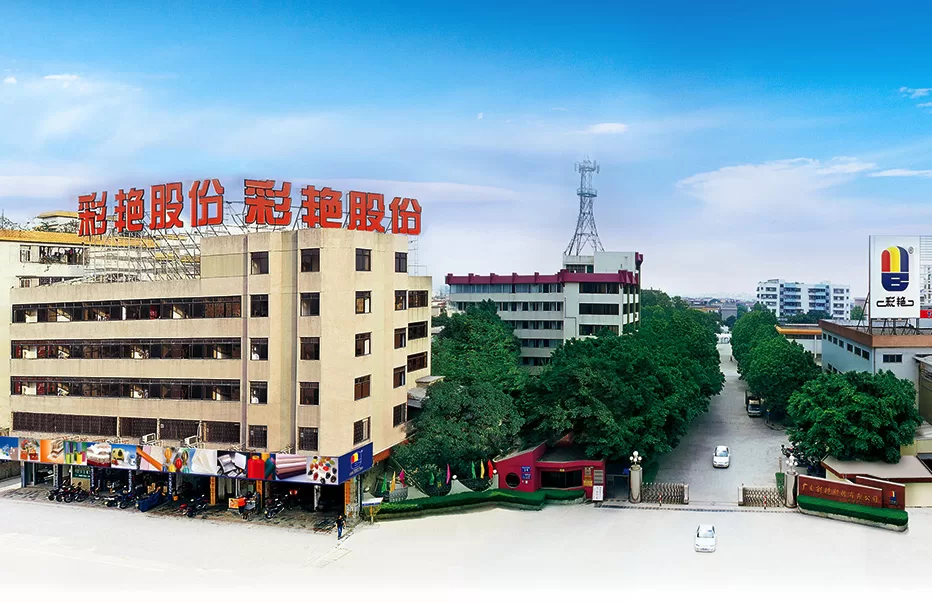
Charming Masterbatch Manufacturer
Charming provides color masterbatch and functional masterbatch solutions supported by experience in masterbatch processing and pigment dispersion technology. Its production capabilities include advanced twin-screw machines from Germany.
The company serves customers in China and exports to approximately 18 countries and markets across Europe, South America, Southeast Asia, the Middle East, and North Africa.
Beyond supplying products, Charming provides technical support and individual development cooperation to help customers address practical processing problems and develop new projects.
Explore Charming Masterbatch products
When evaluating a masterbatch solution, manufacturers should provide the supplier with the base resin grade, processing method, target color or functional requirement, current dosage, and relevant product specifications. This information helps establish a more useful technical discussion than requesting a quotation based only on a color name.
For a factory experiencing unstable color, poor pigment dispersion, or inconsistent additive performance, a properly managed formulation trial can be a practical first step toward improving production efficiency. Charming’s technical support and product development cooperation are intended to help customers evaluate these application-specific requirements.
Frequently Asked Questions About Improving Efficiency in Plastic Processing Operations
1. What is the most effective way to improve efficiency in plastic processing operations?
Start by identifying the largest source of production loss. In many factories, material inconsistency, inaccurate dosing, unstable temperatures, excessive scrap, and unplanned downtime are practical areas to investigate. Measure the baseline before making changes, then validate improvements under normal production conditions.
2. How can masterbatch improve plastic processing efficiency?
A suitable masterbatch can provide consistent color or functional additive performance while simplifying material handling. Correct carrier compatibility, dosage, feeding accuracy, and pigment dispersion help reduce color corrections, processing problems, and rejected products.
3. Does increasing machine speed always improve production efficiency?
No. Increasing screw speed, injection speed, or line speed may raise gross output, but it can also increase defects, melt temperature, pressure variation, or equipment wear. Efficiency should be measured by saleable output and total cost, not speed alone.
4. How can plastic manufacturers reduce scrap rates?
Standardize raw materials, control moisture where required, calibrate dosing equipment, stabilize processing temperatures, maintain tooling, and monitor recurring defects. Early detection and traceable production records help prevent a small process problem from affecting an entire batch.
5. What is the difference between volumetric and gravimetric dosing?
Volumetric dosing measures material by volume, while gravimetric dosing measures material by weight. Gravimetric systems can provide more direct control of mass-based formulation ratios, but correct feeder selection, calibration, and material flow are still essential.
6. How can a factory reduce energy consumption in plastic processing?
Measure energy per kilogram of saleable output, inspect heaters and insulation, maintain cooling systems, repair compressed-air leaks, optimize drying, and review motor and drive performance. Energy changes must remain within the material and process requirements needed to maintain product quality.
7. How often should plastic processing machines receive maintenance?
Maintenance frequency should follow the equipment manufacturer’s instructions, operating hours, material conditions, and production environment. Regular inspection of screws, barrels, filters, heaters, sensors, hydraulic systems, cooling circuits, and safety devices helps prevent avoidable downtime.
8. Is a more expensive masterbatch always better?
No. The best choice is the formulation that meets the required color or functional specification at a competitive total cost. Compare dosage, dispersion, processing stability, consistency, scrap, and technical support rather than purchase price alone.
9. How should manufacturers evaluate a new masterbatch supplier?
Review production technology, pigment dispersion capability, batch consistency, resin compatibility, technical documentation, customization, lead times, and after-sales support. Conduct a controlled trial on the actual production line before approving the supplier for regular orders.
10. What is the best KPI for plastic processing efficiency?
There is no single KPI for every factory. Useful measures include good output per hour, scrap rate, energy per kilogram, cycle time, downtime, and Overall Equipment Effectiveness. Cost per kilogram of saleable product is a particularly useful commercial measure because it combines several operating costs.
References
- British Plastics Federation – Energy Management Information Sheets for Plastic Processors. Practical energy-management resources covering injection molding, extrusion, drying, motors, compressed air, cooling water, and other plastics-processing operations.
- Natural Resources Canada – Guide to Energy Efficiency Opportunities in the Canadian Plastics Processing Industry. Government technical guide addressing energy-saving opportunities across major plastics manufacturing processes.
- National Institute of Standards and Technology (NIST) – Energy Performance Evaluation and Improvement of Unit-Manufacturing Processes: Injection Molding Case Study. Research on evaluating and improving energy performance in injection molding processes.