
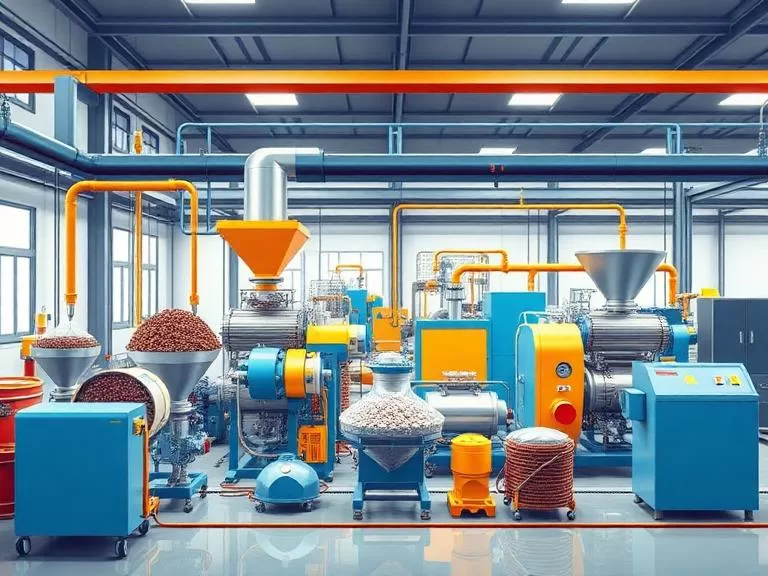
With advanced twin screw machines from Germany and decades of experience in Masterbatch processing and pigment dispersion technology, Charming provides stable high quality color Masterbatch and creative functional Masterbatch solutions for our customers.
Charming Masterbatch is well known in China market, and exports to Europe, South America, Southeast Asia, Middle East, North Africa etc about 18 countries and markets worldwide.
Not only products, Charming provides complete technical support service and individual development cooperation, which can help our customers solve practical problems and develop new projects with creative solutions. We are so proud that we can share our experience and technology with customers and grow up together.
Scaling up production requires a transition from isolated, single-batch methods to systematic, highly efficient industrial procedures. Whether you are extruding complex polymers or formulating botanical cosmetics, the principles of chemical concentration and dispersion remain identical. For cold process and hot process soap makers, learning how to master batch lye for soap is the critical operational leap that separates hobbyists from high-volume professional manufacturers.
At Charming Masterbatch, we specialize in the science of concentrated chemical batches. While our core focus centers on polymer additives, the methodology behind creating a stable, homogenous, and highly concentrated solution applies universally across manufacturing disciplines. When you master batch lye for soap, you are essentially creating a foundational chemical concentrate. From our experience, preemptively mixing sodium hydroxide (NaOH) with water in large, controlled quantities not only drastically reduces production time but also minimizes the thermal hazards associated with exothermic reactions during peak manufacturing hours. In this comprehensive guide, we will outline the precise chemistry, mathematical calculations, safety protocols, and storage requirements necessary to safely master batch lye for soap.
Table of Contents
- 1. Understanding the Chemistry: What Does It Mean to Master Batch Lye for Soap?
- 2. Industrial Benefits of Creating a Lye Masterbatch
- 3. Essential Safety Protocols and Equipment
- 4. Step-by-Step Guide: How to Master Batch Lye for Soap
- 5. Formulation Math: Using Your Masterbatch in Recipes
- 6. Bridging Industrial Concepts: From Polymer Masterbatch to Soap
- 7. Summary Table: Master Batch Lye Concentration Ratios
- 8. Frequently Asked Questions (FAQs)
- 9. Academic and Industrial References
1. Understanding the Chemistry: What Does It Mean to Master Batch Lye for Soap?
To master batch lye for soap means to prepare a large volume of sodium hydroxide (or potassium hydroxide for liquid soap) and distilled water solution in advance, storing it securely for future use. Saponification, the chemical reaction that transforms oils and fats into soap, requires precise stoichiometric ratios of alkali to lipids. When sodium hydroxide is introduced to water, an aggressive exothermic reaction occurs, frequently raising the temperature of the solution to over 200 degrees Fahrenheit (93 degrees Celsius) and releasing caustic fumes.
By choosing to master batch lye for soap, manufacturers isolate this hazardous, heat-generating step. Instead of enduring the lengthy cooling process for every individual log of soap, the pre-mixed solution drops to ambient room temperature during storage. This allows formulators to access a ready-to-use, room-temperature lye solution at any given moment, ensuring immediate progression to the emulsification and trace stages of soap making.
2. Industrial Benefits of Creating a Lye Masterbatch
From our experience in high-volume manufacturing, workflow optimization is the cornerstone of profitability. When you master batch lye for soap, the operational benefits mirror the advantages we see when utilizing concentrated polymer additives in our own facilities.
Time Efficiency and Thermal Management
Waiting for a freshly mixed caustic solution to cool down to the optimal soaping temperature (typically between 85 and 110 degrees Fahrenheit) constitutes the most significant bottleneck in cold process manufacturing. When you master batch lye for soap, you eliminate this waiting period entirely. Furthermore, utilizing a room-temperature lye solution allows for advanced techniques, such as working with high-stearic butters or sensitive fragrance oils that accelerate trace at elevated temperatures.
Precision and Consistency
Measuring raw sodium hydroxide beads or flakes introduces the risk of moisture absorption from the atmosphere (hygroscopy) and weighing errors. Preparing a large, precisely calculated master batch lye for soap ensures chemical uniformity across dozens of subsequent product runs. Consistency is the hallmark of professional manufacturing.
3. Essential Safety Protocols and Equipment
Handling concentrated alkali solutions requires uncompromising safety standards. At Charming Masterbatch, chemical safety is integrated into every level of our operations, and we recommend applying this same rigor when you master batch lye for soap.
Personal Protective Equipment (PPE)
Sodium hydroxide can cause severe chemical burns and permanent ocular damage. Before attempting to master batch lye for soap, you must equip yourself with heavy-duty nitrile gloves, a chemical-resistant apron, and full-seal safety goggles. We also recommend utilizing an OSHA-approved vapor respirator if you are mixing extremely large volumes, as the initial effervescence produces highly irritating respiratory fumes.
Appropriate Mixing and Storage Vessels
The exothermic heat and extreme alkalinity of the solution will instantly degrade improper materials. Never use glass to master batch lye for soap. Over time, sodium hydroxide etches glass, causing invisible micro-fractures that will eventually lead to catastrophic shattering. Additionally, aluminum must be strictly avoided, as lye reacts with aluminum to rapidly produce highly flammable hydrogen gas.
We recommend utilizing High-Density Polyethylene (HDPE) containers, which are marked with the recycling number 2. Polypropylene (PP, number 5) is also acceptable. Ensure the storage vessel has a tight-fitting, secure lid and a heavy-duty spigot if you are storing large volumes. Stainless steel is acceptable for mixing, but long-term storage is best suited to commercial-grade HDPE carboys.
4. Step-by-Step Guide: How to Master Batch Lye for Soap
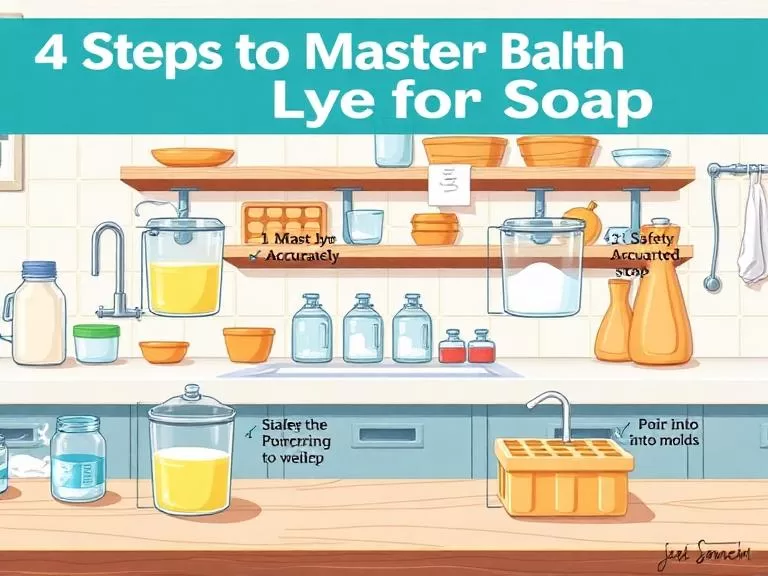
The industry standard for a master batch lye for soap is a 50/50 concentration. This means the solution consists of exactly 50 percent sodium hydroxide and 50 percent distilled water by weight. This specific ratio is highly favored because it simplifies recipe calculations and prevents the lye from crystallizing out of solution at normal room temperatures.
Step 1: Calculating the Total Volume
Determine the capacity of your HDPE storage container. If you have a container that safely holds 100 ounces of liquid, you will measure exactly 50 ounces of distilled water and 50 ounces of sodium hydroxide beads. All measurements must be conducted by weight using a calibrated digital scale, never by volumetric cups.
Step 2: Preparing the Environment
Ensure your workspace is heavily ventilated. From our experience, performing this task under an industrial fume hood or outdoors is optimal. Place your mixing vessel on a stable, heat-resistant surface.
Step 3: The Mixing Procedure
Weigh your distilled water and place it into the mixing vessel. Separately, weigh your sodium hydroxide. The golden rule of chemical mixing must be strictly observed: Always add the lye to the water. Never add water to dry lye, as this will cause a volatile, volcanic eruption of caustic material. Slowly pour the sodium hydroxide into the water while stirring continuously with a heavy-duty silicone or stainless steel spatula.
Step 4: Cooling and Securing
The solution will rapidly heat up and emit fumes. Continue stirring gently until the liquid transitions from cloudy to completely clear, indicating that the sodium hydroxide has fully dissolved. Allow the master batch lye for soap to cool to room temperature in a safe, undisturbed area before transferring it into your long-term HDPE storage container. Label the container prominently with the date, the 50/50 concentration ratio, and clear hazardous chemical warnings.
5. Formulation Math: Using Your Masterbatch in Recipes
Once you have successfully created your master batch lye for soap, utilizing it in a standard recipe requires a simple mathematical adjustment. Because your masterbatch is exactly half water and half lye, you must account for the water content when scaling your formulas.
For example, if your soap recipe requires 10 ounces of dry lye and 25 ounces of water:
- You need 10 ounces of lye. Because your masterbatch is a 1:1 ratio, you will weigh out 20 ounces of your master batch lye for soap.
- This 20 ounces of solution contains exactly 10 ounces of lye and 10 ounces of water.
- Your recipe calls for a total of 25 ounces of water. Since 10 ounces of water are already present in the masterbatch solution, you must add an additional 15 ounces of distilled water to reach the target volume.
We recommend adding this extra 15 ounces of distilled water directly to your melted oils before carefully pouring in the master batch lye for soap. This ensures rapid, even dispersion of the alkali throughout the lipid matrix.
6. Bridging Industrial Concepts: From Polymer Masterbatch to Soap
At Charming Masterbatch, our expertise lies in engineering highly concentrated additives that dictate the final properties of manufactured goods. We offer an extensive portfolio, including Color Masterbatch for vibrant aesthetics, and specialized lines for 纤维 / 长丝 / BCF / 无纺布 and 薄膜 / 塑料 extrusion. Furthermore, we develop Functional Masterbatch solutions, utilizing active agents to provide 抗菌防霉, 抗静电, 阻燃剂, and 抗UV老化 properties to base polymers.
The correlation between polymer masterbatching and the decision to master batch lye for soap is profound. In plastics manufacturing, adding raw, un-dispersed pigment or raw UV stabilizers directly into an extruder leads to inconsistent coloring, mechanical failure, and poor distribution. By creating a concentrated “masterbatch” where the active ingredients are flawlessly pre-dispersed in a carrier resin via advanced twin screw machines, we guarantee perfect homogeneity when the masterbatch is finally introduced to the bulk plastic.
Similarly, when you master batch lye for soap, you are creating a flawless, pre-dissolved chemical concentrate. You eliminate the risk of undissolved lye crystals remaining in your final soap bars—a dangerous defect known as “lye heavy” pockets. By relying on a homogenous liquid concentrate, your saponification process becomes as precise, predictable, and scalable as modern industrial polymer extrusion.
7. Summary Table: Master Batch Lye Concentration Ratios
To assist formulators in selecting the correct hydration levels, we have compiled a summary matrix of common master batch lye for soap ratios.
| Concentration Type | Ratio (Lye to Water) | Primary Advantage | Industrial Recommendation |
|---|---|---|---|
| 50/50 Method | 1 Part Lye : 1 Part Water | Easiest mathematical scaling; takes up minimal storage space. | Highly recommended. Requires the addition of supplemental water during formulation. |
| 33% Solution | 1 Part Lye : 2 Parts Water | Ready to pour directly into recipes without calculating supplemental water. | Bulky to store. Less flexible if a recipe requires a steep water discount. |
| 40% Solution | 1 Part Lye : 1.5 Parts Water | Excellent balance of water reduction for faster curing times. | Recommended for advanced cold process makers optimizing unmolding times. |
8. Frequently Asked Questions (FAQs)
How long can I store my master batch lye for soap?
From our experience, a properly sealed HDPE container of lye solution will remain stable for up to a year. However, sodium hydroxide readily reacts with carbon dioxide in the air to form sodium carbonate (soda ash). You must ensure the container is airtight to prevent this crust from forming on the surface of your master batch lye for soap.
Can I master batch lye for soap using potassium hydroxide (KOH)?
Yes. Potassium hydroxide, used exclusively for liquid soap making, can also be master batched. However, KOH formulations typically utilize a lower concentration, such as a 33% solution, as it generates intense heat and requires careful handling just like sodium hydroxide.
What should I do if my master batch lye for soap crystallizes?
If the ambient temperature of your storage area drops significantly, a 50/50 master batch lye for soap may precipitate crystals at the bottom of the container. We recommend placing the sealed container in a warm water bath to gently elevate the temperature, allowing the sodium hydroxide to fully dissolve back into the solution before use.
Why does Charming Masterbatch care about soap formulation?
As experts in dispersion technology, formulation scaling, and chemical manufacturing, the principles we utilize to engineer Antimicrobial, Antistatic, and Flame Retardant additives apply universally to chemical processing. We are proud to share our knowledge of precision manufacturing to help all industries scale their production safely and efficiently.