
Navigating the complex landscape of polymer pigmentation requires a deep understanding of polymer science, thermal stability, and pigment dispersion. Achieving the exact hue, opacity, and performance characteristics in plastic manufacturing is not a matter of guesswork; it requires precision engineering. As an industry-leading manufacturer equipped with advanced twin screw machines from Germany and decades of experience in Masterbatch processing and pigment dispersion technology, Charming Masterbatch provides stable, high-quality color solutions and creative functional enhancements for our global clients.
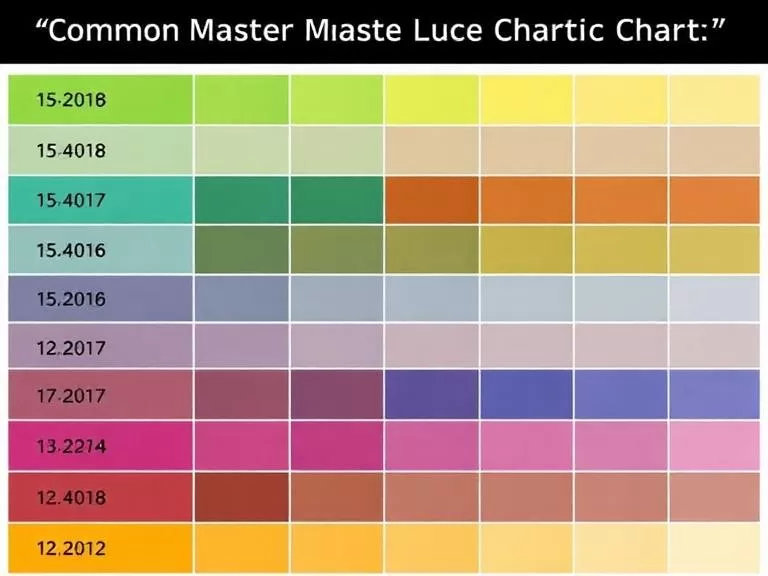
When plastic manufacturers source materials, the master batch colour selection process dictates the final product’s market appeal, durability, and compliance with industry standards. Whether producing ultra-thin films or robust industrial components, selecting the correct master batch colour ensures uniformity and prevents structural degradation during extrusion or injection molding. We recommend consulting a comprehensive common master batch colour list chart as the foundational step in any new project development. From our experience, misaligning pigment chemistry with the base polymer carrier invariably leads to processing failures, highlighting the necessity of rigorous technical guidelines.
Table of Contents
- Summary Table: Common Master Batch Colour List Chart
- Understanding Master Batch Colour Technology
- Primary Categories in the Master Batch Colour Spectrum
- Industry Applications: Film, Plastic, and Fiber
- Integrating Functional Masterbatch with Color
- Technical Support and Custom Color Matching
- Frequently Asked Questions (FAQs)
- Industry References
Summary Table: Common Master Batch Colour List Chart
To assist production managers and procurement engineers, we have compiled an authoritative common master batch colour list chart. This chart outlines the fundamental color profiles, their typical pigment bases, and critical performance metrics. We recommend using this matrix as a primary reference when defining your specific master batch colour requirements.
| Master Batch Colour | Base Pigment / Chemistry | Typical Let-Down Ratio | Heat Resistance (Celsius) | Light Fastness (1-8 Scale) | Primary Applications |
|---|---|---|---|---|---|
| Titanium White | Titanium Dioxide (TiO2) Rutile | 1% – 5% | 280°C – 300°C | 8 (Excellent) | Film / Plastic, Packaging, Fiber |
| Carbon Black | Furnace Black / High Color Black | 1% – 4% | 300°C+ | 8 (Excellent) | Automotive, Pipes, Fiber / Filament |
| Phthalo Blue | Copper Phthalocyanine | 1% – 3% | 260°C – 280°C | 7 – 8 (High) | Consumer Goods, Nonwoven, BCF |
| Phthalo Green | Halogenated Copper Phthalocyanine | 1% – 3% | 280°C | 7 – 8 (High) | Agricultural Films, Textiles |
| Cadmium Red (Substitute) | Organic Azo / DPP Red | 2% – 4% | 240°C – 260°C | 6 – 7 (Moderate) | Household Plastics, Toys |
| Chrome Yellow (Substitute) | Diarylide / Isoindolinone Yellow | 2% – 4% | 220°C – 250°C | 5 – 6 (Moderate) | Industrial Film, Safety Gear |
| Metallic / Pearlescent | Mica-based / Aluminum Flakes | 3% – 6% | 250°C | 7 (High) | Cosmetic Packaging, High-end Films |
Understanding Master Batch Colour Technology
A master batch colour is essentially a concentrated mixture of pigments and additives encapsulated during a heat process into a carrier resin, which is then cooled and cut into a granular shape. This encapsulation process prevents pigment agglomeration, ensuring that the colorant disperses evenly throughout the final polymer matrix. From our experience utilizing advanced twin screw machines from Germany, the shear force applied during compounding is the critical variable that dictates the quality of the pigment dispersion.
If a master batch colour is poorly compounded, it will manifest as specks, streaks, or a loss of mechanical properties in the final product. The carrier resin used in the master batch colour must be highly compatible with the main plastic being processed. For instance, an improper melt flow index (MFI) match between the master batch colour carrier and the raw polymer will result in processing instability, excessive die buildup, and rejected inventory.
Primary Categories in the Master Batch Colour Spectrum
The Fundamentals: Black and White
White master batch colour formulations heavily rely on Titanium Dioxide (TiO2). The rutile form of TiO2 is favored for its exceptional opacity and UV scattering properties. We recommend high-loaded TiO2 masterbatches for applications requiring brilliant whiteness and protection against photo-degradation. Conversely, black master batch colour relies on carbon black. Particle size and structure dictate the jetness and undertone of the black master batch colour. Fine particle carbon black provides a deep blue undertone and high UV resistance, making it indispensable for outdoor applications.
The Chromatic Spectrum
When moving beyond monochrome, the master batch colour list chart expands into organic and inorganic pigments. Inorganic pigments generally offer superior heat resistance and opacity but lack the vivid tinting strength of organic pigments. To achieve a bright, translucent master batch colour, organic pigments like Phthalocyanines (blues and greens) are utilized. However, organic pigments require more rigorous dispersion technology to prevent migration and blooming on the surface of the finished plastic part.
Industry Applications: Film, Plastic, and Fiber
The application dictates the physical requirements of the master batch colour. Charming Masterbatch is well known in the China market, and exports to Europe, South America, Southeast Asia, Middle East, North Africa, and about 18 countries worldwide, providing specialized Color Masterbatch formulations tailored to specific manufacturing techniques.
Film and Plastic Manufacturing
In the 薄膜 / 塑料 sector, particularly blown film extrusion, the master batch colour must possess flawless dispersion. Even microscopic undispersed pigment agglomerates can cause a tear in the film bubble or create weak points in the packaging. Our master batch colour solutions for thin films are engineered with highly refined carrier resins that melt seamlessly, providing high opacity at low let-down ratios, which ultimately saves our clients operational costs.
Fiber, Filament, BCF, and Nonwoven
Spinning Fiber / Filament / BCF / Nonwoven materials presents the most demanding environment for a master batch colour. Because the polymer is drawn through microscopic spinneret holes, any contamination or poor dispersion will result in pressure buildup and filament breakage. We recommend our specialized fiber-grade master batch colour products, which undergo stringent micron-level filtration during our German twin-screw compounding process, ensuring uninterrupted continuous spinning and exceptional color fastness in textiles.
Integrating Functional Masterbatch with Color
Modern plastics often require more than just aesthetic enhancement. At Charming Masterbatch, we frequently combine our master batch colour technology with Functional Masterbatch additives to create highly efficient, multi-purpose compounds. This combined approach reduces the dosing complexity on the factory floor.
- 抗菌防霉: Integrating silver-ion or organic antimicrobial agents into a master batch colour ensures that the final product resists bacterial and fungal growth. This is highly recommended for medical plastics, food packaging, and consumer hygiene products.
- 抗静电: Plastics naturally accumulate static electricity, which attracts dust and can be hazardous in certain environments. Combining an antistatic additive with your chosen master batch colour improves the surface conductivity of the polymer, allowing static charges to dissipate safely.
- 阻燃剂: For construction materials and electronics, safety is paramount. We engineer master batch colour solutions containing halogenated or non-halogenated flame retardant chemicals that interrupt the combustion process while maintaining the exact color specified in our master batch colour list chart.
- UV Stabilizer: Exposure to sunlight rapidly degrades untreated plastics, causing color fading and embrittlement. Adding a UV stabilizer (such as HALS – Hindered Amine Light Stabilizers) to an outdoor master batch colour absorbs or disrupts ultraviolet radiation, drastically extending the lifespan and vibrancy of the polymer.
Technical Support and Custom Color Matching
Not only products, Charming provides complete technical support service and individual development cooperation. From our experience, standard colors on a master batch colour list chart may not fulfill the distinct branding requirements of premium products. We utilize advanced spectrophotometry and computerized color matching to replicate any target hue with Delta E tolerances below commercial perception levels.
This process involves analyzing the specific polymer grade, processing temperatures, and end-use environment of the client. By doing so, we can help our customers solve practical problems and develop new projects with creative solutions. We are so proud that we can share our experience and technology with customers and grow up together, ensuring that every master batch colour we export meets strict international regulatory standards regarding heavy metals and food contact safety.