
The Expert Guide: How is Master Batch Rubber Compound Manufactured and Utilized?
In the highly technical worlds of polymer engineering, plastics manufacturing, and elastomer processing, the demand for precise coloration and advanced functional properties has never been higher. Manufacturers constantly face the challenge of uniformly dispersing pigments and active chemical additives into raw base materials without compromising the structural integrity of the final product. The solution to this complex industrial challenge lies in the utilization of specialized additive concentrates. Understanding how a master batch rubber compound functions, how it is expertly manufactured, and how it dramatically improves production efficiency is critical for any procurement manager or process engineer aiming to elevate their product line.
At Charming Masterbatch, we have built a global reputation based on uncompromising quality and technological innovation. With advanced twin screw machines from Germany and decades of experience in Masterbatch processing and pigment dispersion technology, Charming provides stable, high-quality color Masterbatch and creative functional Masterbatch solutions for our customers. Charming Masterbatch is well known in the China market, and exports to Europe, South America, Southeast Asia, the Middle East, North Africa, and roughly 18 countries and markets worldwide. From our experience assisting global manufacturers, transitioning to a high-quality master batch rubber compound or polymer masterbatch significantly reduces defect rates and raw material waste. In this authoritative guide, we will explore the intricate manufacturing processes behind these compounds, detail their functional applications, and demonstrate how our comprehensive technical support service can help you develop creative solutions for your most pressing production challenges.
Table of Contents
- 1. What is a Master Batch Rubber Compound?
- 2. The Manufacturing Process of a Master Batch Rubber Compound
- 3. Core Operational Benefits for Manufacturers
- 4. Color and Functional Additives: Elevating the Matrix
- 5. Cross-Industry Applications and Custom Formulations
- 6. The Importance of Individual Development Cooperation
- 7. Summary Table: Functional Properties and Applications
- 8. Frequently Asked Questions (FAQs)
- 9. References
1. What is a Master Batch Rubber Compound?
To fully grasp the utility of these products, we must first define the core terminology. A master batch rubber compound, much like a plastic masterbatch, is a solid or liquid additive used for imparting specific properties to a raw polymer or elastomer matrix. It consists of a highly concentrated mixture of pigments, fillers, or chemical additives that have been optimally dispersed and encapsulated into a carrier resin during a rigorous thermal process. This carrier resin is specifically selected to be perfectly compatible with the main polymer or rubber being processed at your facility.
When you introduce a master batch rubber compound into your production line, you are essentially bypassing the hazardous and inefficient process of handling raw, dry powder pigments or raw chemical additives. The concentrated masterbatch is let down or diluted into the natural polymer at a predetermined ratio (often between 1 percent and 5 percent) during the final extrusion, molding, or mixing phase. This guarantees that the active ingredients are distributed flawlessly throughout the end product, eliminating weak spots, color streaks, and inconsistent functional performance.
2. The Manufacturing Process of a Master Batch Rubber Compound
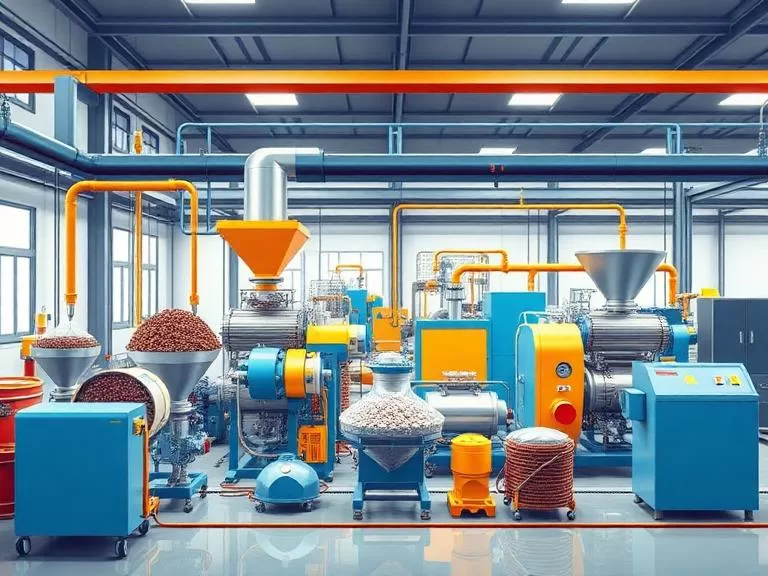
The creation of a premium master batch rubber compound is an exact science that relies heavily on advanced machinery and profound chemical knowledge. We recommend looking closely at a supplier’s manufacturing infrastructure before committing to a partnership. At Charming Masterbatch, our production lines are anchored by advanced twin screw machines imported from Germany, which are globally recognized as the gold standard for compounding and dispersion.
The manufacturing process begins with the precise formulation of raw materials: the carrier resin, the active additives or pigments, and various dispersing agents. These ingredients are fed into the sophisticated twin screw extruder. Unlike standard single-screw machines, twin screw extruders feature two intermeshing screws rotating within a heated barrel. This design generates immense, highly controlled shear forces. From our experience, this extreme shear is absolutely mandatory to break down pigment agglomerates and distribute the active chemicals uniformly on a microscopic level within the carrier resin.
As the mixture travels down the heated barrel, it transitions into a homogenous melt. It is then extruded through a die head, cooled rapidly via water baths or air cooling systems, and finally cut into uniform, dust-free pellets. The resulting master batch rubber compound is a highly stable, easy-to-handle pellet that is ready for immediate integration into your proprietary manufacturing processes.
3. Core Operational Benefits for Manufacturers
Transitioning from raw powder additives to a concentrated master batch rubber compound yields profound operational efficiencies. First and foremost is workplace safety and cleanliness. Raw powdered pigments and chemical additives are notoriously difficult to handle; they become airborne instantly, creating severe respiratory hazards for factory workers and causing cross-contamination across different production lines. A master batch rubber compound traps these particles safely inside a solid polymer pellet, ensuring a clean, dust-free manufacturing environment.
Secondly, a master batch rubber compound provides absolute dosing precision. Because the additives are already perfectly dispersed within the carrier pellet, automated volumetric or gravimetric feeders on your production line can distribute the exact amount of concentrate required for each batch. This eliminates the costly trial-and-error associated with manual powder mixing, drastically reducing batch-to-batch variations, rejected parts, and raw material waste.
4. Color and Functional Additives: Elevating the Matrix
The true power of a master batch rubber compound or plastic masterbatch lies in its versatility. While coloration is the most visually obvious application, modifying the physical and chemical behavior of the base polymer is equally critical for modern industrial applications.
4.1 Color Masterbatch Precision
Our 着色母粒 formulations are engineered to provide exceptional opacity, brilliant hues, and profound color consistency. Whether you are extruding Film / Plastic packaging or spinning synthetic yarns, color uniformity is non-negotiable. From our experience, poor pigment dispersion leads to streaking and reduced tensile strength in the final product. Our German twin screw technology ensures that our Color Masterbatch provides a flawless, streak-free finish every time, enhancing the aesthetic appeal and market value of your products.
4.2 Functional Masterbatch Solutions
Beyond aesthetics, we specialize in advanced Functional Masterbatch solutions that transform standard polymers into high-performance engineering materials. We recommend integrating the following specialized masterbatch additives into your master batch rubber compound or plastic formulations depending on your end-use requirements:
- 抗菌防霉: In healthcare, food packaging, and agricultural films, preventing the growth of bacteria and fungi is paramount. Our antimicrobial masterbatch slowly releases active agents that inhibit microbial cellular reproduction, extending the lifespan and safety of the final product.
- 抗静电: Polymers are natural insulators and tend to accumulate static electricity, which can damage sensitive electronics or create spark hazards in industrial settings. Our antistatic masterbatch migrates to the surface of the polymer, attracting ambient moisture to dissipate static charges safely and continuously.
- 阻燃剂: For automotive, aerospace, and construction applications, strict fire safety regulations must be met. Our flame retardant masterbatch interrupts the combustion process chemically, preventing the spread of flames and reducing toxic smoke emissions during a fire event.
- 抗UV老化: When polymers are exposed to direct sunlight, ultraviolet radiation breaks down the molecular chains, leading to discoloration, embrittlement, and structural failure. Our UV stabilizer masterbatch absorbs or reflects harmful UV rays, massively extending the outdoor lifespan of agricultural films, stadium seating, and automotive exteriors.
5. Cross-Industry Applications and Custom Formulations
The applications for a high-quality master batch rubber compound and plastic masterbatch are virtually limitless. At Charming Masterbatch, our products are heavily utilized in the Fiber / Filament / BCF / Nonwoven sectors. In these applications, the masterbatch must be filtered meticulously to ensure that no large agglomerates block the microscopic spinnerets during the extrusion of synthetic fibers. Our unparalleled dispersion technology guarantees smooth, uninterrupted fiber spinning.
Furthermore, in the Film / Plastic sector, our functional and color masterbatches provide the crucial properties required for everything from ultra-thin agricultural mulch films to heavy-duty industrial packaging. The carrier resins are carefully formulated to ensure perfect compatibility with your specific base materials, whether you are processing PE, PP, PET, or complex elastomer blends.
6. The Importance of Individual Development Cooperation
Not only providing products, Charming Masterbatch provides complete technical support service and individual development cooperation. We understand that purchasing a master batch rubber compound off the shelf is rarely sufficient for highly specialized manufacturing applications. From our experience, the most successful client relationships are built on collaborative engineering.
Our dedicated R&D team works directly with your process engineers to diagnose production bottlenecks and formulate bespoke masterbatches. Whether you need to pass a specific international flame retardant certification or achieve a precise pantone color match for a high-end consumer product, our individual development cooperation can help our customers solve practical problems and develop new projects with creative solutions. We are so proud that we can share our experience and technology with customers and grow up together, forging partnerships that span across 18 countries globally.
7. Summary Table: Functional Properties and Applications
To assist your procurement and engineering teams in identifying the correct additive concentrates for your specific production lines, we have compiled a summary table of our core Functional Masterbatch offerings and their primary industrial applications.
| Masterbatch Type | Primary Function within Polymer/Rubber Matrix | Ideal Target Industries & Applications |
|---|---|---|
| 着色母粒 | Provides uniform, brilliant, and opaque coloration with high dispersion. | Film / Plastic packaging, Fiber / Filament textiles, consumer goods. |
| 抗菌防霉 | Inhibits the growth of bacteria, fungi, and mold on the product surface. | Medical devices, food packaging films, athletic wear (Nonwoven). |
| 抗静电 | Dissipates electrical charge accumulation to prevent sparking and dust attraction. | Electronic component packaging, cleanroom materials, industrial films. |
| 阻燃剂 | Chemically interrupts combustion, reducing fire spread and smoke generation. | Automotive interiors, construction materials, wire and cable jacketing. |
| 抗UV老化 | Protects polymer chains from degradation caused by ultraviolet radiation. | Agricultural films, outdoor furniture, synthetic turf (BCF), automotive exteriors. |
8. Frequently Asked Questions (FAQs)
9. References
For further technical reading on polymer compounding, dispersion technologies, and international manufacturing standards, please consult the following authoritative industry resources: