
Understanding the difference between pigment and master batch is essential for professionals across the plastics, fiber, textile, and packaging industries. Although pigment and masterbatch share the same purpose—adding color or functional enhancement to polymer materials—they differ dramatically in structure, processing behavior, dispersion quality, and final product performance.
This comprehensive 2025 guide explores everything manufacturers, engineers, and procurement teams need to know. You will learn how each material works, the advantages and disadvantages of pigments vs. masterbatch, industrial applications, cost-efficiency considerations, and how to select the correct solution for your production line.
Table of Contents
- Introduction
- What Are Pigments?
- What Is Master Batch?
- Difference Between Pigment and Master Batch
- Processing Performance Comparison
- Applications in Modern Manufacturing
- Company Spotlight: Charming Masterbatch
- Summary Comparison Table
- Frequently Asked Questions
- References
Introduction
Pigments and masterbatch are both critical to achieving color, functionality, and performance in plastic and fiber production. However, the difference between pigment and master batch goes far beyond appearance or form.
Pigments are raw coloring agents—fine powders that require skillful dispersion. Masterbatch, on the other hand, is a fully processed, pellet-based concentrate that embeds pigments or functional additives into a carrier resin. This results in easier handling, cleaner processing, stronger performance, and consistent results across high-volume manufacturing.
Choosing the wrong material can cause issues such as streaking, inconsistent color, mechanical weakness, processing difficulties, or contamination. For this reason, understanding the detailed differences is essential for manufacturers seeking high-performance solutions.
What Are Pigments?
Pigments are fine, insoluble powders used to color plastics, fibers, coatings, inks, and other materials. They may be organic or inorganic and must be dispersed into the polymer matrix during processing.
Characteristics of Pigments
- Extremely fine particle size
- High tinting strength
- Typically offered in dry powder form
- Require professional dispersion techniques
- Cost-effective but operationally challenging
Advantages of Pigments
- Lower material cost compared to masterbatch
- High color strength
- Suitable for specialized or small-run applications
Limitations of Pigments
- Prone to dust contamination
- Inconsistent color if dispersion is poor
- Higher labor and mixing requirements
- Can stain production equipment
- Difficult for automated feeding systems
What Is Master Batch?
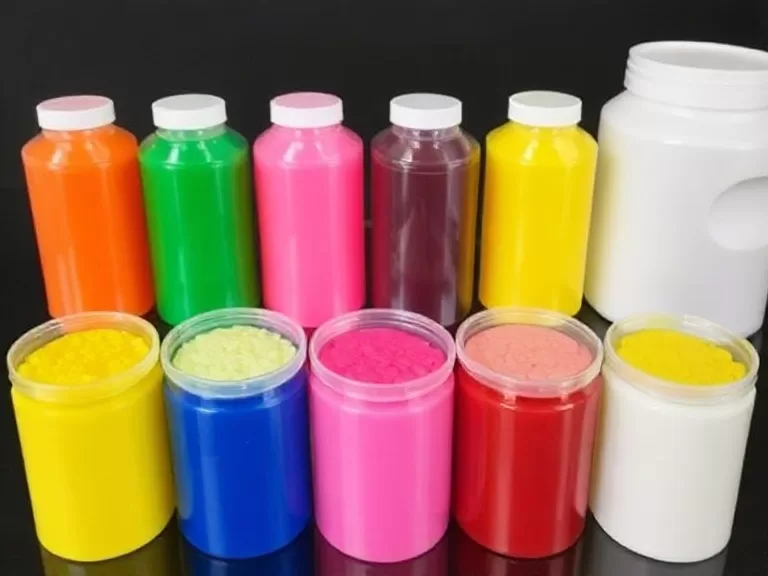
Master batch (or masterbatch) is a concentrated mixture of pigments or additives that are encapsulated into a carrier resin. It is produced through high-temperature mixing and twin-screw extrusion, resulting in uniform, dust-free pellets.
Characteristics of Masterbatch
- Pellet or granular form for easy handling
- Highly controlled pigment dispersion
- Cleaner production environment
- Customizable color and functionality
- Ideal for high-speed, automated manufacturing
Types of Masterbatch
- 着色母粒 – Pure, consistent coloration
- 功能母粒 – Enhances performance (UV, antistatic, flame retardant, antimicrobial)
- Additive Masterbatch – Improves processability or durability
Why Masterbatch Is Preferred in Industry
- Increases production efficiency
- Minimizes waste and contamination
- Ensures uniform and repeatable color results
- Compatible with various resins (PP, PE, PET, etc.)
Difference Between Pigment and Master Batch
The central difference between pigment and master batch lies in preparation, handling, and performance behavior. Pigment is raw powder, while masterbatch is a professionally compounded mixture that improves consistency and efficiency.
1. Form and Handling
- Pigment: Dry powder, messy, requires careful handling.
- Masterbatch: Clean, pellet form that is easy to feed and measure.
2. Dispersion Quality
- Pigment: Depends heavily on operator skill and equipment.
- Masterbatch: Pre-dispersed, uniform, highly stable during processing.
3. Color Consistency
- Pigment: Variation is common between batches.
- Masterbatch: Highly consistent due to professional compounding.
4. Production Efficiency
- Pigment: Slower setup, more downtime from contamination.
- Masterbatch: Faster production with reduced cleaning times.
5. Cost Considerations
- Pigment: Lower purchase price but higher operational cost.
- Masterbatch: Higher upfront cost but major savings in efficiency and quality.
6. Final Product Quality
- Pigment: May lead to streaks or spots.
- Masterbatch: Smooth, uniform appearance with strong mechanical performance.
Processing Performance Comparison
Pigment in Production
- Requires high shear mixing
- Not ideal for thin films or fibers
- Increased risk of clogging filters
- Color variation across production runs
Masterbatch in Production
- Superior melt-flow characteristics
- Consistent dosing and feeding
- Ideal for extrusion, molding, blow molding, and spinning
- Better compatibility with recycled materials
Applications in Modern Manufacturing
Common Applications for Pigments
- Paints and coatings
- Printing inks
- Specialty plastics with low-volume production
- Custom artistic or craft applications
Common Applications for Masterbatch
- Packaging films
- Fibers and filaments
- Injection-molded parts
- Blow-molded containers
- Automotive components
- Consumer goods
- Electrical housings
These applications highlight how the difference between pigment and master batch affects both product quality and manufacturing performance.
Company Spotlight: Charming Masterbatch
Charming Masterbatch — Global Leader in Color & Functional Masterbatch Solutions
Charming Masterbatch operates with advanced German twin-screw machinery and decades of experience in pigment dispersion technology. The company delivers stable, high-quality color masterbatch and innovative functional masterbatch solutions for a wide range of industries.
Charming is well recognized throughout the China market and exports to over 18 countries worldwide, including:
- Europe
- South America
- Southeast Asia
- Middle East
- North Africa
Technical Support & Joint Development
More than a manufacturer, Charming provides full technical support and individualized product development to solve practical customer challenges. Their expertise helps businesses optimize product performance, lower production cost, and accelerate new project development.
Product Lines Offered by Charming
Charming proudly partners with global customers, sharing experience and technology to support long-term growth and innovation.
Summary Comparison Table
| Category | Pigment | Master Batch |
|---|---|---|
| Physical Form | Dry powder | Granules/pellets |
| Dispersion | Requires skill and equipment | Excellent, pre-dispersed |
| Cleanliness | Dusty, messy | Dust-free, clean handling |
| Production Speed | Slower | Faster and more efficient |
| Color Stability | Variable | Highly stable and repeatable |
| Cost | Lower upfront | Higher upfront but cost-effective long term |
Frequently Asked Questions
1. What is the main difference between pigment and master batch?
The main difference is that pigment is raw powder, while masterbatch is a processed, pelletized color or additive concentrate with superior dispersion and handling.
2. Is masterbatch better than pigment?
For most high-volume or high-quality production, yes. Masterbatch offers better consistency, cleaner processing, and improved product appearance.
3. Can pigment be used without a masterbatch?
Yes, but it requires professional mixing equipment and may reduce product consistency.
4. Why is masterbatch more expensive?
Because it includes resin carriers, processing, dispersion, and quality control—resulting in better overall manufacturing performance.
5. Does masterbatch work with recycled plastics?
Yes, and it often improves color uniformity when working with recycled materials.